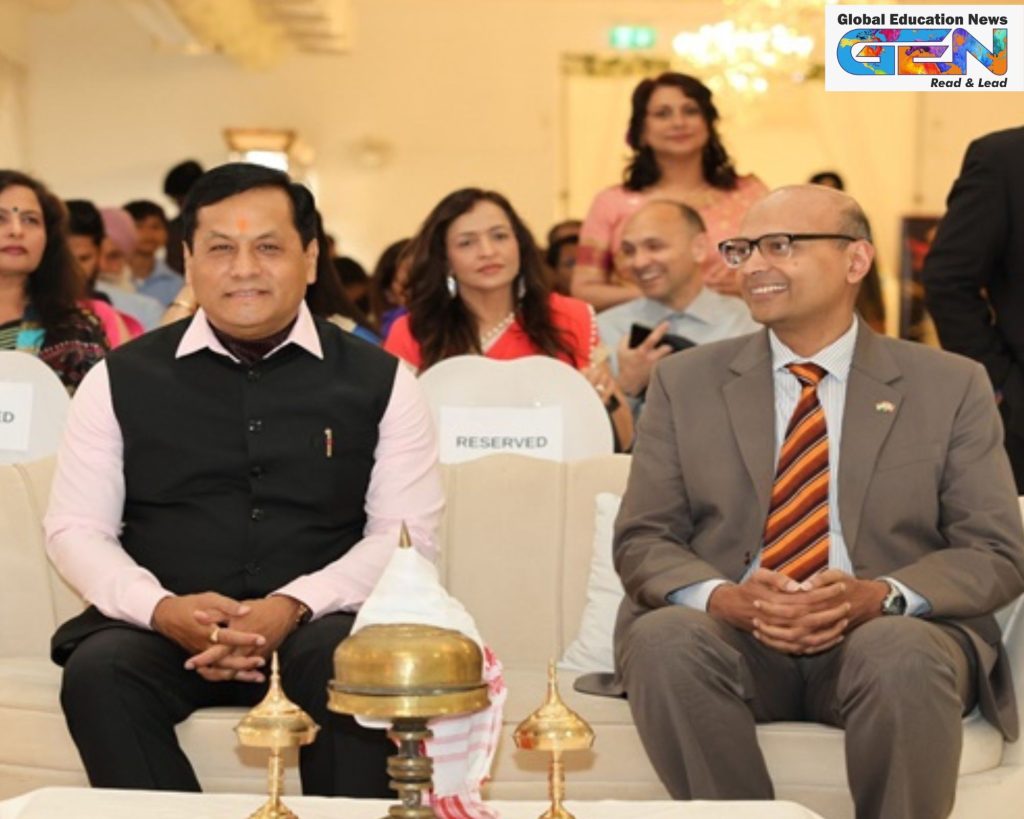
On June 3, 2025, Union Minister of Ports, Shipping, and Waterways Sarbananda Sonowal advanced India’s maritime ambitions during his visit to Oslo for Nor-Shipping 2025. Engaging with the Norwegian Shipowners’ Association (NSA), he showcased investment opportunities under the Sagarmala programme and $2.9 billion Maritime Development Fund. A landmark MoU between GRSE and Kongsberg marked the start of India’s first Polar Research Vessel (PRV), aligning with the MAHASAGAR vision for sustainable maritime growth and global scientific collaboration.
- Event: Union Minister Sarbananda Sonowal’s five-day visit to Norway and Denmark, starting June 2, 2025, for Nor-Shipping 2025.
- Key Highlight: MoU signed between Garden Reach Shipbuilders and Engineers Limited (GRSE) and Norway’s Kongsberg for India’s first indigenous Polar Research Vessel (PRV).
- Vision: MAHASAGAR initiative to drive sustainable maritime growth and global collaboration.
MoU for India’s First Polar Research Vessel
- Agreement: Signed between Kolkata-based GRSE and Norway’s Kongsberg on June 3, 2025, at Nor-Shipping 2025 in Oslo.
- Purpose: Build India’s first indigenous Polar Research Vessel (PRV) for research in Arctic, Antarctic, and Southern Ocean realms.
- Features: Equipped with advanced scientific tools for climate research, oceanography, and marine ecosystem studies.
The MoU is a milestone for India’s shipbuilding sector, leveraging Kongsberg’s design expertise and GRSE’s experience in constructing warships and research vessels. The PRV, to be built in Kolkata, aligns with the Make in India initiative and supports the National Centre for Polar and Ocean Research (NCPOR). Sonowal hailed it as “a legacy of innovation, exploration, and international cooperation,” reducing India’s reliance on chartered vessels for polar missions.
MAHASAGAR Vision: India’s Maritime Blueprint
- Evolution: Builds on SAGAR (Security and Growth for All in the Region), introduced in 2015, to MAHASAGAR (Mutual and Holistic Advancement for Security Across Regions).
- Objectives: Economic cooperation, capacity building, disaster management, information sharing, and environmental stewardship.
- Impact: Leverages India’s 7,500 km coastline, strategic location, and maritime heritage for regional prosperity and sustainability.
Announced by Prime Minister Narendra Modi, MAHASAGAR expands India’s maritime vision to foster inclusive growth, regional security, and sustainable development. It emphasizes green shipping, smart ports, and global partnerships, positioning India as a maritime leader by 2047 under the Maritime Amrit Kaal Vision (MAKV).
International Ministerial Meeting
- Event: High-level ministerial meeting on “The Role of Shipping in Shaping the Future” at Nor-Shipping 2025.
- Participants: Ministers from Brazil, Japan, USA, China, Norway, and UN officials.
- Focus: Establishing a stable, long-term regulatory environment for inclusive and decarbonized ocean-based trade.
Sonowal reaffirmed India’s commitment to sustainability and innovation, highlighting the need for global collaboration to achieve IMO-aligned net-zero goals. He showcased India’s progress, with 87% of ship recycling yards now compliant with the Hong Kong Convention (HKC), and invited Norway to join green shipping corridors.
Investment Opportunities in India’s Maritime Sector
- Norwegian Shipowners’ Roundtable: Sonowal invited investments, noting Indian shipyards hold 11% of NSA’s order book.
- Key Areas:
- Shipbuilding: Expand orders with Indian shipyards, leveraging the ship-breaking credit note scheme.
- Seafarer Workforce: India’s second-largest seafaring workforce in NSA’s global fleet, ideal for recruitment partnerships.
- Green Initiatives: Collaboration in green ports, alternative fuels (e.g., green hydrogen), and ship recycling.
- Digital Innovation: Platforms like ONOP (Ocean Network Operations Platform) and MAITRI (Maritime Artificial Intelligence for Transformation and Resilience in India) to drive efficiency.
Sonowal emphasized India’s Maritime Vision 2047, aiming to increase port capacity to 10,000 million tonnes per annum and position India among the top five shipbuilding nations.
Sagarmala Programme and Maritime Development Fund
- Sagarmala 2.0:
- Investment: ₹5,79,000 crore (US$67.12 billion) for 839 projects; 272 completed at ₹1,41,000 crore (US$16.35 billion).
- Focus: Port modernization (230 MTPA added), connectivity (1,500 km of port links), and coastal community development (30,000+ fishermen benefited).
- Future: ₹12,00,000 crore (US$139.11 billion) planned over the next decade for shipbuilding, repair, and recycling.
- Maritime Development Fund: $2.9 billion to incentivize investments in shipbuilding, ports, and logistics.
- Achievements: Coastal shipping up 118%, inland waterway cargo up 700%, and nine Indian ports in the global top 100.
The Sagarmala Startup Innovation Initiative (S2I2) fosters innovation in green shipping, smart ports, and logistics, aligning with India’s goal to become a global maritime hub.
India-Norway Collaboration: A Shared Vision
- Current Ties: Indian shipyards deliver next-gen vessels to Norwegian firms, holding 11% of NSA’s order book.
- Future Goals:
- Expand shipbuilding orders and leverage India’s ship-breaking credit note scheme.
- Collaborate on green shipping corridors and HKC-compliant ship recycling (87% of Indian yards compliant).
- Enhance seafarer training and offshore renewables for a sustainable Blue Economy.
- Strategic Alignment: Both nations prioritize sustainability, innovation, and global partnerships.
Sonowal’s discussions with Norway’s Minister of Fisheries and Ocean Policy, HE Marianne Sivertsen Næss, emphasized cooperation in sustainable fisheries, offshore renewables, and ship recycling, strengthening Indo-Norwegian maritime ties.
Why This Matters
- Scientific Advancement: The PRV reduces India’s dependence on foreign vessels, boosting polar research in climate, oceanography, and logistics.
- Economic Growth: Investments via Sagarmala and the Maritime Development Fund create jobs and enhance infrastructure.
- Sustainability: Commitment to green ports, alternative fuels, and HKC-compliant recycling aligns with global net-zero goals.
- Global Leadership: MAHASAGAR positions India as a trusted, cost-effective maritime hub, fostering partnerships like the GRSE-Kongsberg MoU.
Call to Action
- Investors: Explore opportunities in India’s $2.9 billion Maritime Development Fund and Sagarmala 2.0 at sagarmala.gov.in.
- Stakeholders: Join the S2I2 initiative for innovation in green shipping and smart ports.
- Follow Updates: Track India’s maritime progress via @sarbanandsonwal or @PIB_India on X.
The GRSE-Kongsberg MoU, MAHASAGAR vision, and Sagarmala 2.0 mark India’s bold steps toward a sustainable, innovative maritime future. With Norway’s collaboration, India is poised to lead in shipbuilding, polar research, and green shipping. Let’s sail toward a Viksit Bharat by 2047