For thousands of students arriving in Delhi in search of education, a paying guest accommodation is more than a rented room. It is their temporary home, often for several crucial years of their academic journey. Yet the rapid expansion of the PG accommodation market has created a system where demand has grown faster than regulation.
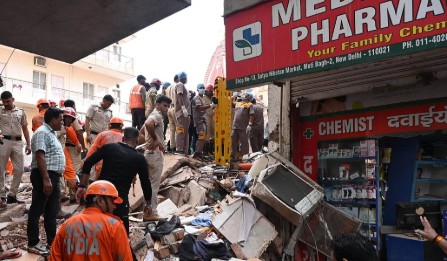
The debate has gained fresh urgency after the deadly building collapse at Satya Niketan, which killed seven people, including students. The tragedy has brought a basic question back into focus: who is ultimately responsible for ensuring that the buildings in which students live are safe, fairly priced and properly monitored?
The answer cannot rest solely with individual municipal departments or occasional inspections. Delhi needs a dedicated institutional mechanism for PG regulation, with clearly defined responsibility and public accountability. Recent proposals for a comprehensive regulatory framework point in that direction, including licensing, police verification, structural and fire-safety clearances, registration and grievance redressal.
A Housing Market That Outgrew Its Rules
Delhi’s student neighbourhoods have witnessed an extraordinary expansion of private accommodation around universities, colleges and coaching centres. Areas such as Mukherjee Nagar, Rajendra Nagar, Laxmi Nagar and the South Campus belt have become major centres of student housing.
But the regulatory framework has struggled to keep pace with this transformation. Delhi’s earlier paying-guest arrangements were designed largely around homeowners accommodating a limited number of guests. The modern PG market is different: large properties can accommodate dozens of students, turning residential buildings into commercial housing operations.
That mismatch has created a regulatory grey zone.
Recent assessments have estimated that around 2 lakh PG accommodations operate in key student areas without comprehensive formal records. The proposed regulatory framework seeks to move these establishments into a licensing and inspection system.
Safety Cannot Be an Optional Extra
For students and their parents, the first question about a PG should not be whether the room has air-conditioning or how close it is to a metro station. It should be whether the building is structurally sound and capable of being evacuated safely during an emergency.
The proposed system would require PG operators to obtain municipal licences, police clearance and safety-related no-objection certificates. Plans have also included measures such as CCTV surveillance, security arrangements and wardens for larger establishments.
Structural audits are particularly important in older buildings and high-density student neighbourhoods. Regulation should not begin only after a wall collapses or a fire breaks out. Periodic inspections, documented safety certificates and meaningful penalties for violations should become routine.
Affordability Is the Other Half of the Problem
Safety is only one side of the student housing crisis. For many families, rent has become a significant part of the cost of higher education.
Students have also raised concerns over high rents, arbitrary electricity charges, rental agreements that are not honoured and inadequate safety checks.
This is where a proposed regulatory board could have a wider role. A transparent system could publish approved PGs, occupancy details, safety certifications and applicable charges. Area-based rent benchmarks or regulated rent bands could also reduce the information imbalance between operators and students.
The objective should not be to eliminate private accommodation. It should be to ensure that a student looking for a room is not forced to choose between affordability and safety.
Why a Dedicated Board Could Make a Difference
The strongest case for a dedicated PG regulatory board is the fragmented nature of the existing system. Building permissions, fire safety, policing, local administration and consumer grievances can fall under different authorities.
For a student, however, these distinctions mean little when something goes wrong.
A single regulatory body could maintain a central registry of PGs, verify licences, coordinate inspections, monitor complaints and publish compliance information. A public digital portal could allow students and families to check whether a property is registered before signing an agreement. The proposed Delhi framework already envisages unique registration numbers and a public portal for PG establishments.
Such a system could also make enforcement more transparent. Instead of relying on complaints after an incident, authorities would have a continuously updated database of establishments, occupancy and safety compliance.
Keep Political Interests Out of Student Housing
The proposal to keep politicians away from the PG business raises an equally important issue: regulation becomes difficult when those expected to enforce rules have direct or indirect commercial interests in the sector.
Student housing should not become an extension of political influence or patronage. Ownership and beneficial interests in PG establishments should be disclosed publicly, particularly where politically connected individuals or entities are involved.
This is not about targeting a particular political party. It is about establishing a basic principle of governance: those who make, administer or enforce the rules should not have undisclosed financial interests in the businesses being regulated.
Public disclosure can create an additional layer of accountability and help prevent conflicts of interest.
Students Need a Voice, Too
Any new system will remain incomplete if students are treated merely as occupants rather than stakeholders.
A credible student housing policy should provide a simple mechanism for reporting unsafe conditions, excessive charges, harassment, overcrowding or violations of rental agreements. Complaints should be trackable, and residents should be protected from retaliation.
Educational institutions can also play a role. Proposed rules have considered institutional accommodation committees that could monitor housing concerns and support students facing difficulties with private accommodation.
This is particularly important for students who have moved from other States and may have little understanding of local rules or limited support networks in the city.
From Reaction to Prevention
Delhi has attempted to regulate paying-guest accommodation in different forms for decades. Earlier arrangements, however, were designed for a very different housing market and did not anticipate the enormous commercial student-hostel ecosystem that developed around universities and coaching centres.
The present moment therefore offers an opportunity to move beyond another temporary policy announcement.
A meaningful PG accommodation regulation framework must combine safety audits, licensing, transparent ownership, reasonable pricing, occupancy standards, grievance redressal and regular enforcement. It must also make compliance visible to the public.
For students, a room near a college is not simply a commodity. It is part of the infrastructure that makes education possible.
Delhi has invested heavily in becoming an education hub. The city now needs to recognise that student housing is part of its education infrastructure. A dedicated regulator, transparent ownership and enforceable safety standards could help ensure that the search for education does not expose students to avoidable risks.
The real test of any new PG policy will not be the number of rules written on paper. It will be whether a student can enter a registered accommodation with reasonable confidence that the building is safe, the rent is transparent and someone will answer when something goes wrong.