Himachal Pradesh has reached a significant milestone in its education journey, recording a 99.55 per cent literacy rate and receiving national recognition for its progress on International Literacy Day. The achievement places the hill state among India’s leading performers in literacy and reflects the impact of sustained efforts to expand educational access beyond school-age learners.
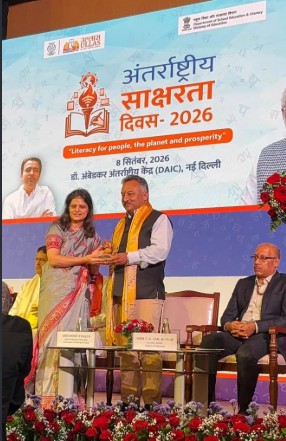
The state was felicitated with a national award on September 8, with Himachal Pradesh Education Minister Rohit Thakur receiving the honour in New Delhi. The recognition comes after the state was officially declared fully literate in 2025, when its literacy rate stood at 99.3 per cent.
Himachal Pradesh Becomes India’s Second-Most Literate State
With its literacy rate now at 99.55 per cent, Himachal Pradesh stands second among Indian states, behind Goa, which has recorded a literacy rate of 99.7 per cent. The latest figure represents further progress from the state’s earlier fully literate status.
The achievement is significant because literacy is not only an indicator of the education system but also an important foundation for economic participation, social inclusion and lifelong learning.
For a geographically challenging state such as Himachal Pradesh, expanding access to education across scattered and remote communities has required sustained institutional and community-level efforts.
ULLAS Plays a Key Role in Adult Literacy
A major component of the state’s recent progress has been the Understanding of Lifelong Learning for All in Society (ULLAS) programme.
Launched nationally in 2022, ULLAS focuses on providing basic education and functional literacy to non-literate adults aged 15 years and above. The programme broadens the idea of education beyond conventional schooling by giving adults opportunities to develop essential literacy and learning skills.
The Himachal Pradesh experience demonstrates how adult education programmes can contribute to wider literacy goals. Rather than measuring educational progress only through school enrolment, such initiatives attempt to ensure that people who missed formal educational opportunities can also acquire foundational skills.
From School Education to Lifelong Learning
The state’s literacy milestone also highlights an important shift in how education is viewed.
Literacy is often associated with children entering school and completing basic education. However, adult literacy is equally important because it can influence an individual’s ability to access information, use public services, participate in economic activity and support the education of younger family members.
Programmes such as ULLAS therefore connect adult literacy with lifelong learning, making education a continuing process rather than something limited to childhood and adolescence.
Teachers and Communities Remain Central
The latest achievement has also been credited to the collective efforts of teachers, students and government officials.
While government programmes provide the framework and resources, literacy campaigns ultimately depend on people working within communities. Teachers and volunteers often serve as the bridge between formal policy and learners who may have had limited exposure to organised education.
This community dimension is particularly important in adult literacy, where learners may require flexible and locally relevant approaches rather than conventional classroom structures.
International Literacy Day Highlights a Larger Mission
Himachal Pradesh’s recognition coincided with International Literacy Day, observed every year on September 8. The day serves as a global reminder that literacy is a fundamental component of inclusive education and lifelong learning.
The state’s achievement therefore carries significance beyond a single statistic. It demonstrates how literacy can remain a continuing policy priority even after conventional school education has expanded substantially.
India’s wider education agenda increasingly focuses on foundational learning, adult education, digital literacy and skills. Himachal Pradesh’s progress offers an example of how these goals can be pursued together.
What the Milestone Means for Himachal Pradesh
Reaching a literacy rate of 99.55 per cent does not mean the state’s educational journey is complete. Maintaining literacy levels, ensuring meaningful learning and expanding digital and functional literacy will remain important challenges.
The next stage is likely to involve moving from literacy to lifelong learning and skills. Reading and writing provide the foundation, but today’s education landscape also requires people to navigate digital services, understand information, develop employable skills and participate confidently in society.
Himachal Pradesh’s latest recognition thus represents both an achievement and a benchmark. Its experience shows that sustained investment in education can produce measurable results — while also demonstrating that the goal of literacy extends beyond classrooms and into every stage of life.