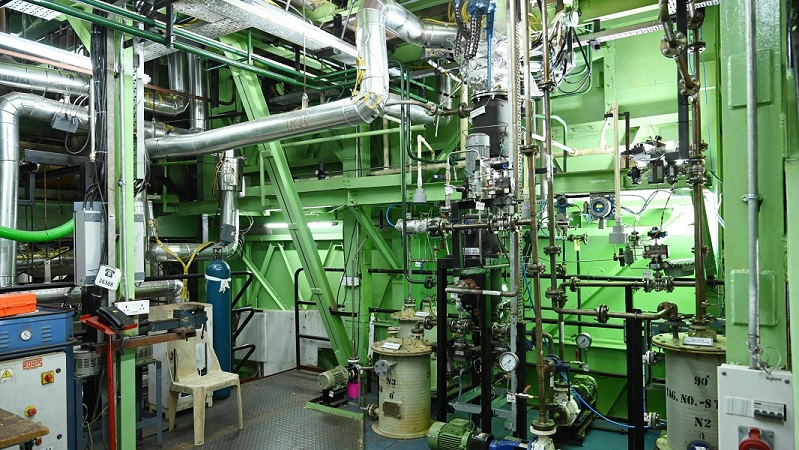
In a landmark achievement for clean energy and nuclear innovation, India has commissioned the world’s first hydrogen production facility powered by nuclear process heat, setting a new global benchmark in sustainable hydrogen generation.
The cutting-edge facility has been established at the Indira Gandhi Centre for Atomic Research (IGCAR), Kalpakkam, Tamil Nadu, and was inaugurated by Dr. Ajit Kumar Mohanty, Secretary of the Department of Atomic Energy (DAE) and Chairman of the Atomic Energy Commission (AEC).
Unlike conventional hydrogen plants that rely on electricity, this facility harnesses high-temperature process heat from the Fast Breeder Test Reactor (FBTR) to produce hydrogen through the Copper-Chlorine (Cu-Cl) Thermochemical Cycle. The project represents a major technological breakthrough and demonstrates India’s growing expertise in integrating nuclear energy with next-generation clean fuel production.
What Makes This Facility a Global First?
Hydrogen is widely regarded as the fuel of the future because it produces only water when used in fuel cells or burned, making it a key solution for reducing greenhouse gas emissions.
However, producing hydrogen efficiently and sustainably has remained a global challenge.
India’s newly commissioned facility introduces a revolutionary approach by replacing electricity-intensive hydrogen production with high-temperature nuclear process heat.
This makes it the first operational facility in the world to demonstrate hydrogen production using the Cu-Cl thermochemical process powered directly by nuclear reactor heat, significantly improving energy efficiency while reducing carbon emissions.
Understanding the Copper-Chlorine (Cu-Cl) Thermochemical Cycle
The heart of this innovation is the Copper-Chlorine (Cu-Cl) Thermochemical Cycle, an advanced multi-step chemical process developed indigenously by BARC.
Instead of relying on electricity for water electrolysis, the Cu-Cl cycle uses heat from a nuclear reactor to split water molecules into hydrogen and oxygen through a sequence of chemical reactions.
Key Advantages of the Cu-Cl Process
- Requires lower temperatures than many other thermochemical cycles.
- Consumes significantly less electricity.
- Improves overall hydrogen production efficiency.
- Enables continuous large-scale hydrogen generation.
- Reduces greenhouse gas emissions associated with hydrogen production.
This approach combines the reliability of nuclear power with the environmental benefits of clean hydrogen.
The Role of the Fast Breeder Test Reactor (FBTR)
The facility draws thermal energy from the Fast Breeder Test Reactor (FBTR) located at Kalpakkam.
Unlike conventional nuclear reactors that primarily generate electricity, the FBTR also produces high-temperature process heat, which can now be utilized for industrial applications such as hydrogen production.
This demonstrates how nuclear reactors can serve multiple purposes beyond electricity generation, improving overall energy utilization and increasing the economic value of nuclear infrastructure.
Why Nuclear Hydrogen Matters
Globally, most hydrogen is still produced using fossil fuels through processes such as steam methane reforming, which releases substantial amounts of carbon dioxide.
Even green hydrogen produced through electrolysis requires large quantities of renewable electricity.
Nuclear-assisted hydrogen production offers several advantages:
High Energy Efficiency
Direct utilization of reactor heat reduces electricity consumption.
Continuous Production
Unlike solar or wind energy, nuclear reactors operate continuously, enabling uninterrupted hydrogen generation
Low Carbon Emissions
The process produces hydrogen with minimal greenhouse gas emissions.
Better Resource Utilization
It maximizes the use of heat generated by nuclear reactors, increasing overall plant efficiency.
A Major Boost for India’s Green Hydrogen Mission
The project aligns closely with India’s ambition to become a global leader in green hydrogen production.
Hydrogen is expected to play a critical role in decarbonizing sectors that are difficult to electrify, including:
- Steel manufacturing
- Fertilizer production
- Petroleum refining
- Heavy transportation
- Shipping
- Aviation
- Long-duration energy storage
By combining indigenous nuclear technology with advanced hydrogen production, India is expanding the range of clean energy solutions available for achieving net-zero emissions.
Strategic Significance for India’s Energy Security
India currently imports a substantial portion of its fossil fuel requirements.
Developing domestic hydrogen production technologies can:
- Reduce dependence on imported fuels.
- Improve long-term energy security.
- Support industrial decarbonization.
- Promote indigenous clean technology.
- Strengthen India’s position in the emerging global hydrogen economy.
The project also complements India’s long-term strategy of expanding both nuclear energy and renewable energy infrastructure.
Technology Developed Through Indigenous Expertise
One of the most remarkable aspects of the project is its indigenous development.
The hydrogen production process has been designed and engineered jointly by:
- Bhabha Atomic Research Centre (BARC)
- Indira Gandhi Centre for Atomic Research (IGCAR)
The successful commissioning reflects years of research in:
- Nuclear engineering
- Chemical process development
- Advanced materials
- Reactor technology
- Hydrogen science
It also showcases India’s growing capability to develop globally competitive clean energy technologies without relying on imported solutions.
Potential Future Applications
The successful demonstration opens the door for multiple future applications.
Industrial Hydrogen Production
Large-scale hydrogen generation for chemical and manufacturing industries.
Clean Transportation
Hydrogen fuel for heavy vehicles, buses, railways, and shipping.
Energy Storage
Hydrogen can store surplus renewable electricity for later use.
Future Nuclear Power Plants
Upcoming advanced reactors may integrate hydrogen production directly into their design.
Hydrogen Export
India could eventually emerge as an exporter of clean hydrogen and related technologies.
Challenges Ahead
Despite the technological success, commercial deployment will require:
- Scaling up production capacity.
- Reducing production costs.
- Expanding hydrogen storage and transport infrastructure.
- Developing hydrogen distribution networks.
- Creating industrial demand through supportive policies.
Addressing these challenges will be crucial for widespread adoption.
The Road Ahead
The commissioning of the world’s first nuclear process heat-based hydrogen production facility represents far more than a scientific milestone—it signals a new direction for the global clean energy transition.
As countries search for sustainable alternatives to fossil fuels, India’s innovation demonstrates that nuclear energy can play a significant role beyond electricity generation.
If successfully scaled, the technology could transform hydrogen production worldwide, making clean hydrogen more affordable, efficient, and reliable.