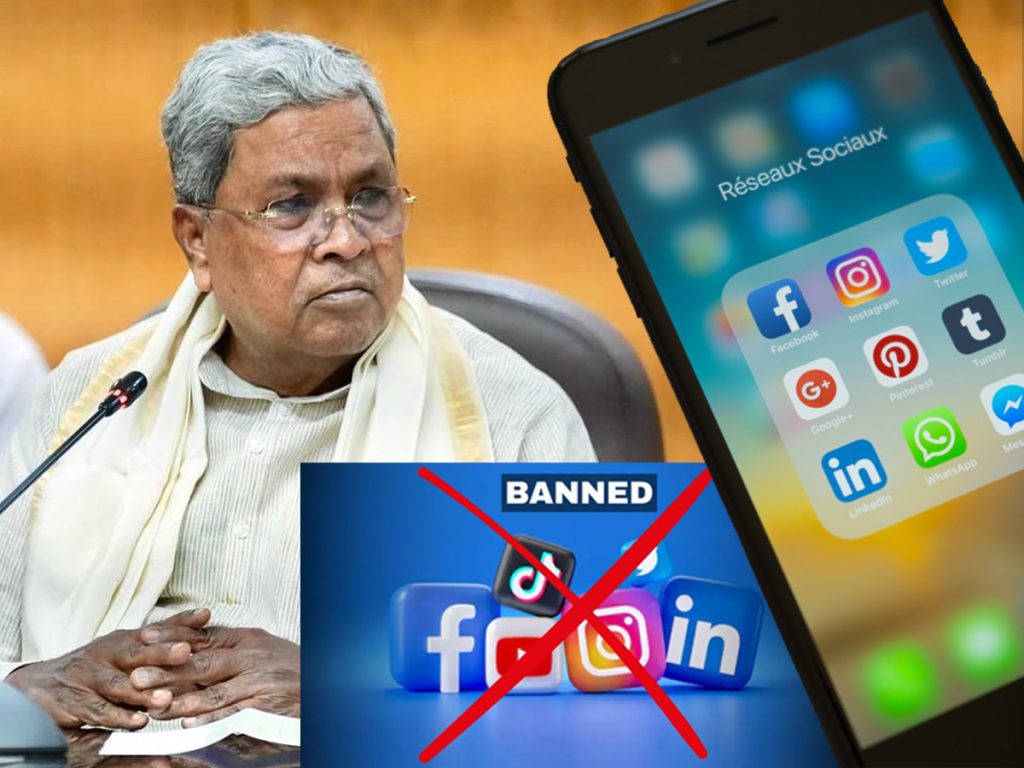
The government of Siddaramaiah, Chief Minister of Karnataka, has announced plans to ban social media use for children under the age of 16.
The announcement was made during the 2026–27 state budget presentation in the legislative assembly. The decision aims to address concerns about excessive smartphone use, digital addiction, and online safety risks among minors.
If implemented, Karnataka will become the first Indian state to impose such a restriction on social media access for minors.
Why the Karnataka Government Is Taking This Step
The state government has cited growing concerns about the negative impact of social media and excessive screen time on children.
Major concerns raised by the government
- Increasing mobile phone addiction among school children
- Negative effects on mental health and sleep patterns
- Declining academic focus and productivity
- Exposure to cyberbullying and unsafe online content
During the budget speech, the Chief Minister said the ban aims “to prevent adverse effects of increasing mobile usage among children.”
How the Ban May Work
The government has announced the policy intention, but detailed rules have not yet been released.
Key aspects still unclear include:
- Implementation mechanism
- Age verification systems
- Penalties for violations
- Exact timeline for enforcement
Officials have indicated that a law or regulatory framework may be introduced later to enforce the restriction.
Global Trend: Governments Regulating Social Media for Children
Karnataka’s proposal reflects a growing global debate about children’s access to social media platforms.
Countries and regions considering or implementing similar rules include:
- Australia – strict limits on social media for minors
- European Union – discussions on raising the minimum age to 16
- United Kingdom – consultations on online safety rules for children
Governments worldwide are exploring regulations to reduce online harm and digital addiction among young users.
Concerns Raised by Experts and Tech Companies
While many parents support the idea, experts warn that a blanket ban may be difficult to enforce.
Key concerns
- Children may bypass restrictions using VPNs or false age details
- Enforcement could raise privacy and surveillance issues
- Teens may move to less regulated online platforms
Companies such as Meta, which owns platforms like Facebook, Instagram, and WhatsApp, have warned that strict bans could push teenagers toward unregulated or unsafe digital spaces.
Possible Impact on Education and Society
If implemented successfully, the policy could lead to:
- Reduced screen time among school children
- Improved academic concentration
- Better mental health and sleep patterns
- Increased parental supervision of digital use
However, the effectiveness of the ban will depend heavily on implementation, parental cooperation, and digital education efforts.