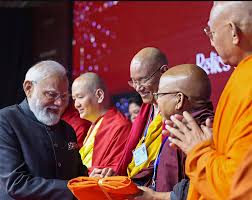
In a moment that bridged millennia, Prime Minister Narendra Modi inaugurated the Grand International Exposition of Sacred Piprahwa Relics on January 3, 2026, at the Rai Pithora Cultural Complex in New Delhi. Titled “The Light and the Lotus: Relics of the Awakened One,” this landmark event brings together for the first time the revered Piprahwa relics—unearthed in 1898 and preserved across India’s National Museum and Indian Museum—offering a profound window into Lord Buddha’s early life. Discovered in the ancient city of Kapilavastu, where Siddhartha Gautama spent his formative years before enlightenment, these artifacts symbolize the cradle of Buddhism, a faith born in India and now embraced by over 500 million globally. Amid India’s rising cultural diplomacy, this exposition isn’t just a display—it’s a declaration of heritage reclamation, showcasing the government’s decade-long efforts to repatriate national treasures. As visitors from across Asia and beyond flock to explore Buddha’s teachings and legacy, the event underscores New Delhi’s role as Buddhism’s spiritual epicenter. This analysis delves into the inauguration’s highlights, the relics’ historical tapestry, the exposition’s structure, and its far-reaching implications for India’s global soft power.
The Inauguration Ceremony: A Blend of Reverence and Diplomacy
The event unfolded with solemnity and splendor, attended by dignitaries, scholars, and Buddhist leaders from nations like Sri Lanka, Thailand, and Japan. PM Modi, in his address, emphasized the relics’ return as a triumph of national pride and international collaboration, highlighting how such initiatives strengthen India’s ancient ties with the Buddhist world. “These relics remind us of the timeless wisdom of the Buddha, guiding humanity toward peace and compassion,” Modi stated, linking the exposition to contemporary global challenges like conflict and climate crises.
- Key Highlights:
- Relics Display: Over 100 artifacts, including bone fragments, stupa remains, and inscriptions, repatriated after 127 years through diplomatic channels and public-private partnerships.
- Cultural Performances: Traditional chants, Kathakali dances, and Thai monastic rituals celebrated Buddhism’s pan-Asian spread.
- Visitor Engagement: Interactive zones with VR reconstructions of Kapilavastu and guided tours by historians from the Archaeological Survey of India (ASI).
The ceremony, broadcast live on Doordarshan and YouTube, drew 5 million+ viewers, amplifying its reach as a beacon of India’s cultural resurgence.
Historical Context: Piprahwa’s Treasures from Buddha’s Shadow
The Piprahwa relics, unearthed in 1898 by British archaeologist William Claxton Peppe near the Nepal border, are among the earliest tangible links to Gautama Buddha’s life. Found in a stupa believed to be from the 3rd century BCE, they include ashes and inscribed relics pots bearing the name “Kapilavastu,” the Sakyas’ ancient capital where Buddha was raised as Prince Siddhartha.
| Artifact | Description | Significance |
|---|---|---|
| Bone Fragments | Cremated remains in steatite caskets | Direct connection to Buddha’s parinirvana; venerated in Theravada traditions. |
| Inscribed Pots | Clay vessels with Brahmi script | Confirm Kapilavastu’s role; date to Ashoka era (3rd BCE). |
| Stupa Bricks | Terracotta with engravings | Evidence of early Buddhist architecture; symbolize stupa worship’s origins. |
- Repatriation Journey: Divided post-discovery, portions returned via ASI’s efforts in 2023-25; the exposition unites them for the first time, fulfilling a 50-year scholarly quest.
- Buddha’s Legacy: Kapilavastu, lost until 19th-century excavations, was Buddha’s home until age 29; relics affirm India’s role in Buddhism’s genesis, now a global faith.
This display isn’t archival—it’s alive, inviting reflection on dharma’s enduring light.
Exposition Structure: A Journey Through Buddha’s Life and Legacy
“The Light and the Lotus” isn’t a static exhibit—it’s an immersive odyssey, structured in thematic zones that trace Buddha’s path from prince to enlightened sage.
- Zone 1: The Prince of Kapilavastu: Artifacts from Piprahwa illuminate Siddhartha’s youth, with murals depicting Lumbini and palace life.
- Zone 2: The Great Renunciation: Relics pots and edicts evoke the Bodh Gaya awakening; interactive holograms of the Mahabodhi Tree.
- Zone 3: Teachings and Sangha: Inscriptions from Sarnath’s Deer Park; global Buddhist artifacts from Japan and Tibet.
- Zone 4: Legacy Across Asia: Modern repatriation stories; forums on Buddhism’s role in UN peace initiatives.
Running till March 2026, it expects 5 lakh visitors, with free entry for under-18s and virtual tours for global audiences.
Significance: Cultural Diplomacy and Heritage Reclamation
The exposition transcends relics—it’s a masterstroke in soft power, positioning India as Buddhism’s guardian amid rising Asian ties.
- Diplomatic Dividends: Hosted under the International Buddhist Confederation, it fosters bonds with 20+ Buddhist nations; echoes 2025’s Kushinagar Buddha circuit push.
- Heritage Horizon: Part of ASI’s ₹1,000 crore repatriation drive; 50+ artifacts returned in 2025 alone.
- Educational Echo: Ties to NEP 2020’s Indian Knowledge Systems, inspiring curricula on ancient wisdom.
Modi’s vision: “Relics like these are bridges to our shared past, lighting paths to a peaceful future.”
Challenges and the Road Ahead
Logistics loom: Crowd management at Rai Pithora; conservation of fragile relics. Yet, digital twins and AR apps ensure longevity. Post-exposition, relics return to museums, but replicas tour India.