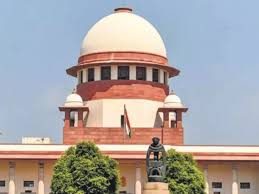
In a landmark judgment that strengthens the integrity of public recruitment in India, the Supreme Court of India has ruled that higher educational qualifications cannot substitute mandatory eligibility criteria in government job appointments. The verdict came while adjudicating a dispute involving the Himachal Pradesh Board of School Education, and it is expected to have far-reaching implications for recruitment processes across the country.
Background of the Case
The case centered on the appointment of a Computer Hardware Engineer by HPBOSE. The selected candidate possessed an advanced technical qualification—an M.Tech degree—but fell short of the minimum work experience required for the post.
Despite this shortfall, the candidate was appointed, raising concerns about whether higher academic qualifications can compensate for lack of essential experience. The issue escalated legally, ultimately reaching the Supreme Court.
Supreme Court’s Key Observations
The apex court drew a clear distinction between essential qualifications and additional or desirable qualifications:
- Essential qualifications (such as minimum years of experience) are non-negotiable
- Desirable qualifications (such as higher degrees) may enhance merit but cannot replace mandatory requirements
The court emphasized that recruitment must strictly adhere to notified rules and eligibility conditions, and any deviation from these norms undermines fairness and transparency.
Why the Appointment Was Invalid
Upon reviewing the facts, the court found that:
- The job required at least five years of relevant experience
- The selected candidate had significantly less experience
- The M.Tech degree was listed as a desirable qualification, not a substitute for experience
Based on these findings, the court declared the appointment invalid, reiterating that eligibility criteria cannot be diluted under any circumstances.
Reinforcing Rule-Based Recruitment
This judgment sends a strong message to government bodies and recruiting agencies:
Recruitment processes must be conducted strictly in accordance with established rules, without arbitrary relaxations.
The court also observed that allowing such deviations could open the door to favoritism, inconsistency, and legal disputes, thereby weakening the credibility of public institutions.
Implications for Job Aspirants
For millions of government job aspirants across India, this ruling provides critical clarity:
- Holding a higher degree does not guarantee eligibility
- Candidates must meet all essential criteria mentioned in job notifications
- Experience requirements are as important as academic qualifications
- Preparation strategies must align with official eligibility norms
Broader Legal Perspective
The ruling aligns with previous judicial interpretations that stress the sanctity of recruitment rules. Courts have consistently held that eligibility conditions form the foundation of merit-based selection, and any compromise can invalidate the entire process.