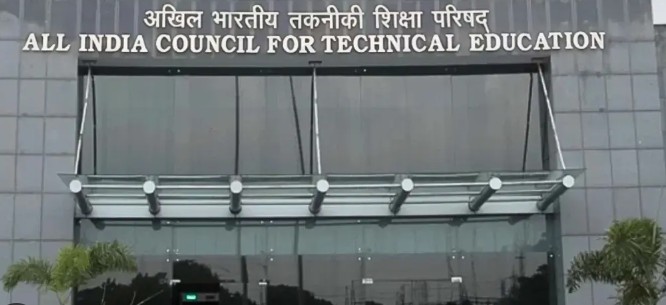
AICTE orders progressive closure of engineering institutions as declining admissions and quality concerns reshape India’s technical education sector
In a significant development for India’s higher education sector, the All India Council for Technical Education (AICTE) has announced the progressive closure of 58 engineering and technical colleges during the 2025-26 academic year. The move is part of the regulator’s efforts to improve the quality of technical education by phasing out institutions that fail to meet prescribed academic and operational standards.
According to official data, Uttar Pradesh and Maharashtra recorded the highest number of closures, with 12 institutions each, highlighting ongoing challenges faced by engineering colleges in attracting students and maintaining quality benchmarks.
What Does ‘Progressive Closure’ Mean?
AICTE clarified that these colleges are not being shut down overnight.
Under the progressive closure policy:
- No new admissions will be allowed in the affected institutions.
- Students already enrolled will be permitted to complete their degree programmes.
- Colleges will gradually cease operations once the existing batches graduate.
This approach ensures that currently enrolled students do not face disruption in their education while allowing institutions to wind down in a structured manner.
State-wise Engineering College Closures
The closures are spread across several states, with some regions witnessing a sharper decline than others.
| State | Number of Colleges Closed |
|---|---|
| Uttar Pradesh | 12 |
| Maharashtra | 12 |
| Madhya Pradesh | 8 |
| Telangana | 4 |
| Punjab | 4 |
| Andhra Pradesh | 3 |
| Rajasthan | 3 |
| Gujarat | 2 |
| Karnataka | 2 |
| Tamil Nadu | 2 |
| Haryana | 1 |
| Odisha | 1 |
| Uttarakhand | 1 |
| West Bengal | 1 |
Among the 58 institutions, only three were government-aided, while the remaining colleges were privately managed.
More Than 950 Technical Courses Also Discontinued
The closures extend beyond institutions themselves.
AICTE has also confirmed that over 950 engineering and technical courses were discontinued during the same academic year as part of its quality rationalisation exercise.
The decision reflects the regulator’s broader strategy of reducing programmes with persistently low demand while encouraging institutions to focus on relevant, industry-oriented disciplines.
Why Were These Engineering Colleges Closed?
According to AICTE officials, several factors contributed to the closures.
Key Reasons Include:
- Declining student admissions.
- Shortage of qualified faculty members.
- Failure to comply with AICTE infrastructure norms.
- Non-compliance with operational and academic standards.
- Inability to sustain institutional quality over time.
The regulator periodically reviews institutions to ensure that technical education maintains minimum quality benchmarks and remains aligned with industry expectations.
Changing Trends in Engineering Education
The closures reflect broader changes taking place within India’s engineering education ecosystem.
Over the past decade, students have increasingly preferred institutions that offer:
- Strong placement records.
- Industry-aligned curriculum.
- Emerging technology programmes such as Artificial Intelligence, Data Science, Cybersecurity, Robotics, and Semiconductor Engineering.
- Better infrastructure and research opportunities.
- National and international collaborations.
As a result, many institutions with consistently low enrolment have struggled to remain operational.
Impact on Students
AICTE has assured students that those already studying in colleges under progressive closure will be able to complete their courses.
The phased approach ensures:
- No interruption in ongoing academic programmes.
- Continuation of teaching for existing batches.
- Protection of students’ academic interests.
- Compliance with regulatory safeguards during the closure process.
Focus on Improving Quality
The closure of underperforming institutions is part of AICTE’s larger mission to strengthen technical education across India.
Recent reforms have focused on:
- Improving faculty quality.
- Encouraging industry partnerships.
- Promoting innovation and entrepreneurship.
- Strengthening accreditation and quality assurance.
- Introducing future-ready engineering programmes.
- Aligning technical education with evolving workforce needs.
The regulator aims to create a more sustainable ecosystem where institutions can deliver high-quality education and better career outcomes for graduates.
What This Means for Engineering Aspirants
For students preparing for JEE Main, state engineering entrance examinations, or other technical programmes, the closures underline the importance of choosing institutions with strong academic credentials and regulatory compliance.
The move is also expected to:
- Improve the overall quality of engineering education.
- Reduce the number of underutilised institutions.
- Encourage consolidation within the technical education sector.
- Enhance employability by promoting better-equipped colleges.
While the total number of engineering seats may see some rationalisation, education experts believe that strengthening institutional quality will benefit students in the long run.
Looking Ahead
The closure of 58 engineering colleges signals a shift from expanding the number of institutions to improving their quality and relevance. As India’s technical education system evolves to meet the demands of emerging technologies and industry requirements, regulators are increasingly prioritising academic standards, infrastructure, faculty strength, and student outcomes over mere capacity expansion.
With continued reforms and stricter compliance measures, AICTE aims to build a stronger, more competitive engineering education ecosystem capable of preparing graduates for the future workforce.