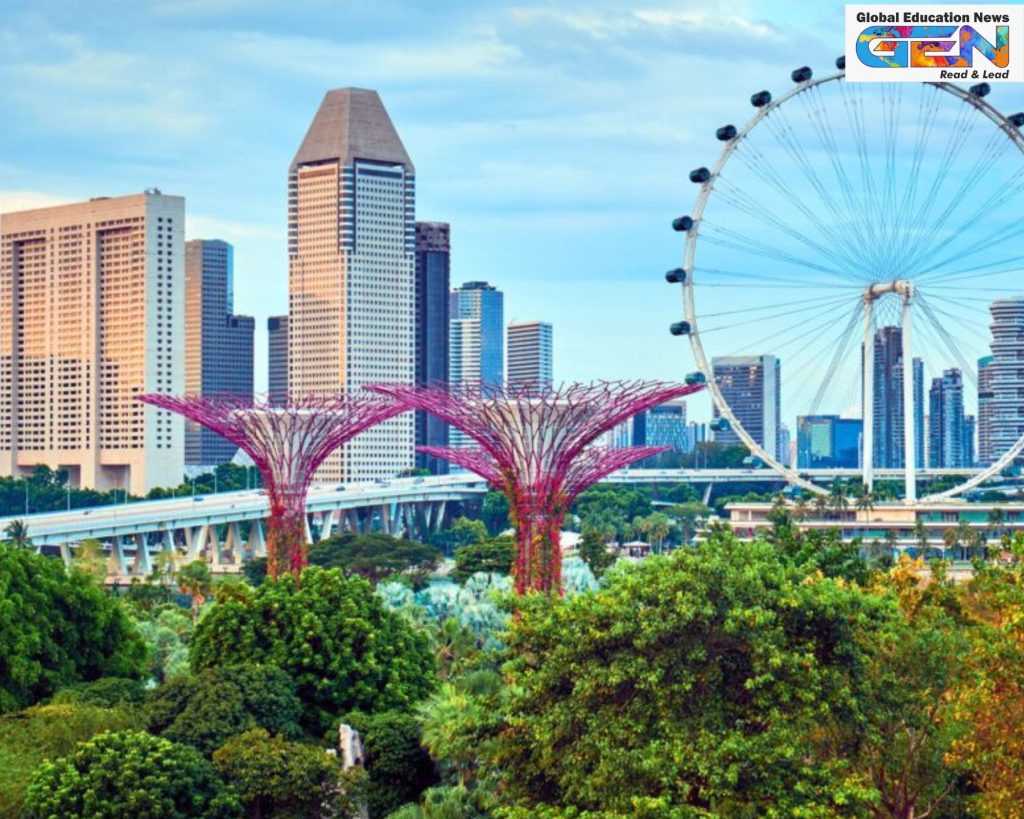
In a world where cities and countries often blur in megapolitan sprawls, one standout anomaly redefines sovereignty: Singapore. As of 2025, this Southeast Asian gem remains the only entity universally recognized as both a bustling metropolis and an independent republic. Spanning just 734 square kilometers, Singapore isn’t merely a city-state—it’s a blueprint for efficient, high-octane governance amid limited space. From its dramatic 1965 independence to its status as a global trade titan, Singapore’s story captivates geographers, economists, and urban planners alike.
This guide dives into why Singapore claims this unique title, its historical evolution, economic prowess, cultural vibrancy, and future outlook. Whether you’re prepping for competitive exams or curious about micro-nations, these insights highlight Singapore’s role as the epitome of “city-country” fusion.
Why Singapore? Defining the World’s Sole City-Country
Singapore’s dual identity stems from its compact geography and self-contained sovereignty, setting it apart from traditional nations.
Key Defining Features
- Geographic Uniqueness: An island nation comprising one main island and 63 islets, located at the southern tip of the Malay Peninsula. It bridges the Indian Ocean and South China Sea, controlling vital trade chokepoints.
- Sovereign Status: Officially the Republic of Singapore, it’s a UN member with full diplomatic relations, a parliamentary democracy, and its own military (Singapore Armed Forces).
- Urban-National Overlap: Unlike sprawling countries, Singapore’s entire population (5.92 million in 2025) resides in one interconnected urban fabric—no rural hinterlands, just seamless city planning.
- Global Distinction: While Vatican City and Monaco are micro-states with urban cores, Singapore alone functions as a comprehensive “city-country” with diverse industries, airports, and ports—all within city limits.
In essence, Singapore proves that small size doesn’t limit ambition; it amplifies innovation.
Historical Evolution: From British Colony to Independent Powerhouse
Singapore’s path to becoming the only city-country is a tale of resilience, marked by pivotal separations and strategic pivots.
Timeline of Key Milestones
| Year | Event | Impact on City-Country Status |
|---|---|---|
| 1819 | Founded as a British trading post by Sir Stamford Raffles. | Laid foundations for a global port-city hub. |
| 1824-1942 | Part of Straits Settlements; boomed as a free port under British rule. | Attracted diverse migrants, shaping multicultural core. |
| 1942-1945 | Japanese occupation (Syonan-to); post-WWII return to Britain. | Sparked independence fervor amid hardships. |
| 1959 | Self-governance within British Commonwealth; first elections. | Began building national institutions in urban confines. |
| 1963 | Merged into Malaysia as a state. | Tensions over race and economy led to exit. |
| 1965 | Independence on August 9; separated from Malaysia. | Birth of the Republic—solidifying city-state model. |
| 2025 | Celebrates 60 years; hosts ASEAN Summit amid green urban initiatives. | Reinforces status as a resilient, adaptive nation. |
- Post-Independence Vision: Under founding PM Lee Kuan Yew, Singapore transformed from a “third-world” outpost to a first-world miracle through ruthless efficiency and foreign investment.
This compact history underscores how colonial legacies birthed a sovereign urban entity.
Economic Engine: How Singapore Thrives as a Global City-Country
Singapore’s economy is a masterclass in leveraging location, turning constraints into competitive edges.
Core Economic Pillars
- Key Sectors: Finance (world’s 3rd-largest forex center), manufacturing (electronics, biotech), technology (AI hubs like Block71), and logistics (Port of Singapore handles 20% of global container transshipment).
- 2025 Stats: GDP per capita ~$88,450 (highest in Asia); unemployment at 2.1%; ranks #1 in IMD World Competitiveness.
- Trade Gateway: Changi Airport (7th busiest globally, voted world’s best 12 years running) and the port drive $1 trillion+ annual trade.
- Sustainability Focus: Green initiatives like the 2025 “30 by 30” biodiversity goal aim for 30% local food production despite no farmland.
| Metric | Singapore (2025) | Global Rank/Context |
|---|---|---|
| GDP (Nominal) | $515 billion | Top 30 worldwide; 4th in Asia. |
| Ease of Doing Business | 2/190 | World Bank score: 86.2/100. |
| Innovation Index | 7/132 | WIPO; excels in patents per capita. |
Singapore’s model: Meritocracy meets multiculturalism, fueling endless growth.
Cultural Mosaic: Harmony in a Sovereign Cityscape
As the only city-country, Singapore weaves ethnic diversity into national fabric without ethnic enclaves.
Vibrant Demographics
- Population Breakdown: 74% Chinese, 13% Malay, 9% Indian, 3% Eurasian/others; 40% expatriates.
- Languages: English (official for business/education), Mandarin, Malay (national anthem), Tamil—promoting seamless integration.
- Festivals & Cuisines: Diwali, Hari Raya, Chinese New Year; hawker centers offer Peranakan fusion, symbolizing “unity in diversity.”
- Social Policies: Strict laws on harmony (e.g., no hate speech) ensure the city-nation’s social cohesion.
This blend makes Singapore a living lab for inclusive urbanism.