Students in Uttar Pradesh government schools could soon receive a different kind of classroom guidance — directly from young civil servants.
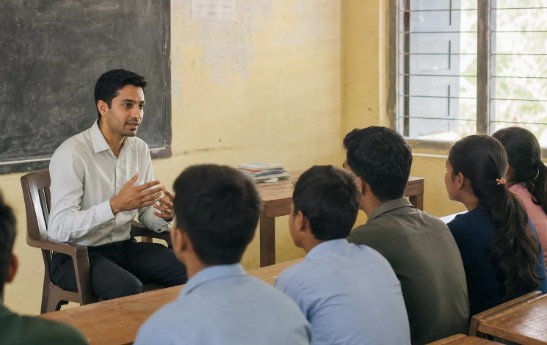
Under a new initiative, young civil servants will visit government schools in Uttar Pradesh every month to mentor students on careers, competitive examinations and future opportunities.
The programme comes as the state government looks to strengthen career awareness among school students and expose them to pathways that may otherwise remain unfamiliar, particularly for learners from rural and economically disadvantaged backgrounds.
Rather than limiting career counselling to conventional professions, the initiative is expected to help students understand the wider range of opportunities available through higher education, government examinations and public service.
Why the Initiative Matters
For many school students, especially those studying outside major cities, career decisions are often shaped by limited information.
Students may know about commonly discussed professions but have little exposure to:
- Civil services and other government examinations
- Different undergraduate and postgraduate pathways
- Scholarships and higher-education opportunities
- Competitive examination strategies
- Public-sector careers
- Emerging professional fields
- Skills required for different careers
A regular interaction with serving civil servants could bridge part of this information gap.
The idea is not simply to encourage students to become civil servants. The larger objective is to show students what career possibilities exist and how they can prepare for them.
What Will Civil Servants Do During School Visits?
The proposed mentoring model is expected to focus on direct interaction between students and young officers.
These sessions can provide students with practical information about:
Career Choices
Officers can explain how different educational qualifications connect with various career paths and professional opportunities.
Competitive Examinations
Students can be introduced to the broad structure of competitive examinations and the importance of building strong academic foundations.
Study Habits
Young civil servants can share experiences about reading, time management, consistency and preparation.
Goal Setting
Regular mentoring can encourage students to identify realistic academic and career goals instead of making choices without adequate information.
Exposure to Public Service
Students can gain a first-hand understanding of what government officers do and how public administration affects everyday life.
From Classroom Lessons to Real-World Career Guidance
One of the strongest features of the initiative is the opportunity for students to interact with people who have themselves navigated highly competitive selection processes.
For a school student, meeting a young officer can make a distant career aspiration appear more tangible.
A civil servant can explain not only what an examination is, but also what preparation actually involves, what subjects matter, how long-term preparation works and why academic fundamentals are important.
This kind of first-hand interaction can complement classroom teaching without replacing the role of school teachers.
Focus on Government Schools Could Help Reduce the Information Gap
The initiative is particularly relevant for government schools, where students may have fewer opportunities to interact with professionals from different fields.
Career counselling is often easier to access in large urban centres where schools can organise dedicated counselling programmes, alumni interactions and professional workshops.
A structured government-led mentoring programme can potentially extend some of that exposure to students in smaller towns and rural areas.
This is important because access to information can influence educational choices just as much as access to infrastructure.
A student who knows about a scholarship, entrance examination or career pathway early enough has more time to prepare for it.
Why Young Civil Servants?
The choice of young civil servants as mentors has a practical advantage.
These officers are relatively close to the age of students’ older siblings and recent graduates. They can therefore potentially communicate their experiences in a way that students find relatable.
Their own educational journeys can also provide examples of:
- Long-term preparation
- Handling academic pressure
- Learning from setbacks
- Choosing subjects
- Developing reading habits
- Preparing for competitive examinations
- Maintaining consistency
The mentoring relationship could therefore go beyond formal career counselling and become a source of motivation.
Competitive Exam Awareness Begins Before Graduation
Competitive examinations such as the UPSC Civil Services Examination require long-term preparation and broad awareness.
However, school students do not necessarily need to begin intensive examination preparation at an early age.
What matters at the school level is building a foundation.
Young civil servants can help students understand the importance of:
Strong fundamentals → Reading habits → General awareness → Communication skills → Analytical thinking → Higher education → Career-specific preparation
This approach can prevent students from viewing competitive examinations simply as coaching-centre-driven goals.
Mentoring Could Also Encourage Higher Education
Career guidance can have a wider impact than competitive-exam preparation.
A student who learns about different colleges, courses, scholarships and professional pathways may be more likely to consider higher education as a realistic option.
Mentors can help students understand the relationship between:
School subjects → College courses → Skills → Careers
For example, students interested in science can learn about engineering, medicine, pure sciences, technology and research. Students interested in humanities can explore law, social sciences, civil services, teaching, journalism and other fields.
Such exposure can help students make better-informed choices later.
The Initiative Comes Amid a Broader Push to Strengthen School Education in UP
The mentoring programme fits into a broader effort to improve educational participation and outcomes in Uttar Pradesh.
The state’s School Chalo Abhiyan, for example, has focused on bringing children into school and reducing dropout levels, while emphasising community participation and continued engagement with education.
But enrolment alone cannot determine educational success.
Once students are in school, they also need:
- Quality teaching
- Career information
- Academic support
- Digital and technological exposure
- Mentoring
- Information about higher education
- Awareness of scholarships and examinations
The civil-servant mentoring programme addresses one part of this larger ecosystem — career and aspiration building.
A Mentor Can Make a Career Feel Possible
For students, career choices are often influenced by the people they see around them.
If a student has never personally met an engineer, researcher, doctor, civil servant or entrepreneur, some careers may seem distant or inaccessible.
Regular interaction with professionals can change that perception.
A civil servant visiting a school can tell students something that a textbook cannot easily convey: where education can take them.
This is especially valuable for students who may not have family members working in professional sectors.
What Could Make the Programme More Effective?
Monthly visits are a promising starting point, but the impact will depend on how consistently and systematically the programme is implemented.
Several elements could strengthen the initiative.
1. Structured Mentoring Sessions
Visits should follow age-appropriate themes rather than becoming one-time motivational talks.
2. Career Information Resources
Students should receive reliable information about courses, scholarships and examinations discussed during sessions.
3. Follow-Up
Mentoring should continue between visits so that students can track their academic goals.
4. Teacher Participation
School teachers can help mentors understand students’ needs and continue guidance after officers leave.
5. Rural and Remote School Coverage
The programme’s success will depend on ensuring that students outside major urban centres are not left behind.
6. Measuring Outcomes
The government could track indicators such as student participation, career awareness, scholarship applications and higher-education aspirations to evaluate the programme.
Civil Servants as Role Models — But Not the Only Career Path
There is also an important distinction to maintain.
The presence of civil servants in schools should not unintentionally suggest that government service is the only desirable career.
Students have different interests and abilities.
A strong career-mentoring programme should therefore present multiple pathways, including higher education, research, technology, healthcare, law, teaching, entrepreneurship, skilled professions and public service.
The objective should be informed choice rather than directing every student towards one examination.
What This Means for Students in Uttar Pradesh
For school students, the initiative could offer three major benefits:
Better awareness: Students can learn about opportunities they may not know exist.
Real-world guidance: Officers can explain their own educational and professional journeys.
Greater ambition: Regular exposure to professionals can encourage students to set longer-term academic goals.
The greatest potential benefit may come from reaching students before they have made major academic choices.
Early awareness can give students time to explore interests and prepare appropriately.