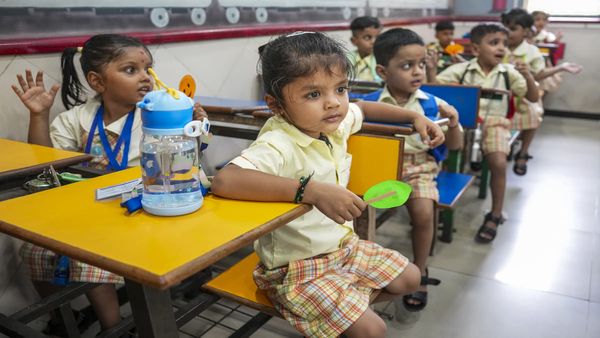
In a landmark decision, the Telangana government has announced that Nursery, LKG, and UKG classes will be introduced in government schools from the 2026–27 academic session.
This reform aims to bridge the gap between private and public schooling, ensuring that children from all socio-economic backgrounds have access to early childhood education within the government system.
Key Highlights of the Policy
- 🏫 Pre-primary classes (Nursery, LKG, UKG) to begin in govt schools
- 📅 Implementation from 2026–27 academic year
- 👶 Covers children aged 3–6 years
- 🍽️ Provision of nutritious meals from early years
- 🎯 Goal: Improve enrolment and learning outcomes
This move aligns government schools with private institutions, where early education already starts from nursery level.
Background: Why This Reform Was Needed
1. 📉 Declining Enrolment in Government Schools
- Around 18 lakh students in 26,000 govt schools
- Compared to 33 lakh students in just 11,000 private schools
2. 🎓 Late Entry into Formal Education
Government schools traditionally start from Class 1, forcing parents to send children to private schools for early learning.
3. 💸 Financial Burden on Families
Even low-income families often spend heavily on private nursery education due to lack of alternatives.
👉 The absence of pre-primary education in government schools has been a major structural gap, now being addressed.
Policy Objective: Strengthening Foundational Learning
The reform is strongly aligned with the National Education Policy (NEP 2020), which emphasizes:
- A foundational stage (ages 3–8)
- Early development of cognitive, language, and social skills
- Seamless transition from pre-primary to primary education
🎯 Core Goals:
- Improve learning outcomes from early years
- Reduce dropout rates
- Ensure school readiness
- Promote equity in education access
Implementation Strategy: Phased and Scalable Approach
The Telangana government has already begun groundwork:
- Pre-primary sections introduced in select schools as pilot projects
- Expansion planned across thousands of government schools
- Proposal to introduce UKG in thousands of schools with teacher recruitment
👩🏫 Human Resource Plan:
- Recruitment of teachers and support staff
- Training aligned with early childhood pedagogy
Social Impact: Why This Move Matters
✅ 1. Equal Access to Early Education
Children from rural and low-income families will now get free foundational education.
✅ 2. Reduced Dependence on Private Schools
Parents will no longer be forced to enroll children in private institutions at an early age.
✅ 3. Improved Learning Outcomes
Early education improves:
- Language skills
- Cognitive development
- Social behaviour
✅ 4. Long-Term Retention in Govt Schools
Students starting in government schools are more likely to continue till higher classes.
Challenges & Concerns
⚠️ Infrastructure Readiness
- Need for child-friendly classrooms
- Play-based learning resources
⚠️ Teacher Training
- Pre-primary education requires specialized teaching methods
⚠️ Implementation Consistency
- Ensuring uniform quality across rural and urban schools
Analytical Insight: Reform vs Existing System
| Aspect | Before Reform | After Reform |
|---|---|---|
| Entry Level | Class 1 | Nursery onwards |
| Accessibility | Limited early education | Universal access |
| Cost for Parents | High (private schools) | Free/affordable |
| Learning Foundation | Weak start | Strong early base |
| Enrolment Trend | Declining | Expected to rise |
Broader Perspective: A Step Towards Systemic Transformation
This reform is not just about adding classes—it reflects a systemic redesign of public education.
It complements other initiatives like:
- Residential integrated schools (Nursery to Class 12)
- Focus on skill development and future-ready education
👉 Telangana is positioning itself as a model state for holistic school education reforms.