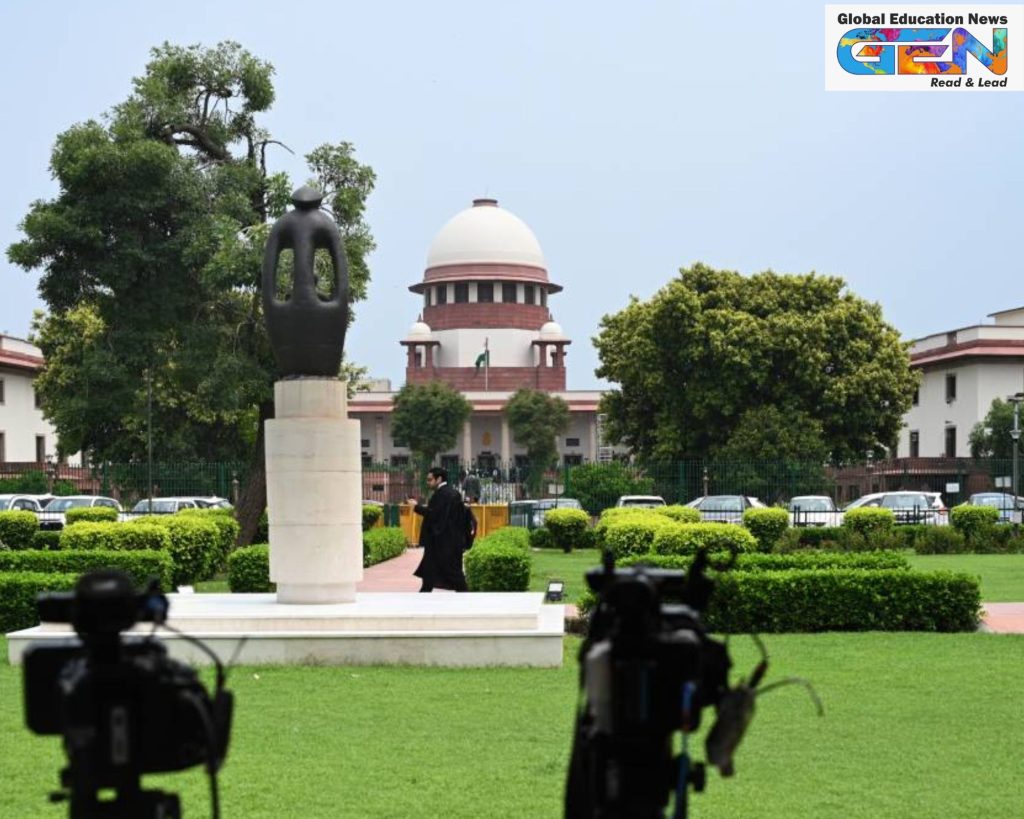
In a groundbreaking move, the Supreme Court of India has taken a significant step toward addressing gaps in the nation’s education system by seeking responses from the Central Government, the National Council of Educational Research and Training (NCERT), and six states—Maharashtra, Andhra Pradesh, Telangana, Punjab, Tamil Nadu, and Karnataka—on a Public Interest Litigation (PIL) filed on September 1, 2025. The plea, initiated by Kaavya Mukherjee Saha, a 16-year-old Class 12 student from Delhi’s Vasant Valley School, demands the integration of transgender-inclusive Comprehensive Sexuality Education (CSE) into school curricula nationwide. This case underscores the urgent need for inclusive education that respects gender diversity and upholds constitutional rights, marking a pivotal moment in India’s journey toward social justice.
A Student’s Bold Stand for Change
Kaavya Mukherjee Saha’s PIL is a powerful call to action, highlighting the absence of transgender-inclusive content in NCERT and State Councils of Educational Research and Training (SCERT) textbooks. The petition argues that this omission perpetuates stigma, misinformation, and discrimination, violating fundamental rights to equality, dignity, and education under Articles 14, 15, 19(1)(a), 21, and 21A of the Indian Constitution, as well as the Transgender Persons (Protection of Rights) Act, 2019.
- Systemic Gaps Identified: A review of textbooks across states like Maharashtra, Andhra Pradesh, Telangana, Punjab, and Tamil Nadu revealed a lack of structured content on gender identity, gender diversity, and the distinction between sex and gender, with Kerala being a partial exception.
- Legal Mandates Ignored: The plea cites non-compliance with the 2014 NALSA v. Union of India judgment, which recognized transgender individuals as a “third gender” and mandated inclusive policies, as well as the 2019 Act’s requirements for inclusive education.
- Low Transgender Literacy: With a transgender literacy rate of just 57.06% compared to the national average of 74%, the petition emphasizes the impact of social exclusion and policy inaction.
Why Transgender-Inclusive Education Matters
The push for transgender-inclusive CSE aligns with global standards, such as the International Technical Guidance on Sexuality Education (ITGSE) by UNESCO and WHO, endorsed by the Supreme Court in its 2024 judgment. This framework emphasizes age-appropriate education that covers gender diversity, consent, and equality, fostering inclusive school environments.
- Combating Stigma: Excluding transgender perspectives in curricula reinforces stereotypes and discrimination, contributing to harassment and high dropout rates among transgender students.
- Preventing Social Issues: The Supreme Court’s 2024 ruling highlighted CSE’s role in tackling issues like child marriage, underscoring the need for comprehensive education that includes gender sensitization.
- Empowering Students: Inclusive education equips all students with the knowledge to respect diverse identities, promoting a culture of acceptance and equality.
The Supreme Court’s Response and Next Steps
On September 1, 2025, a bench led by Chief Justice B.R. Gavai and Justice K. Vinod Chandran issued notices to the respondents, seeking their replies within a specified timeframe. The court acknowledged the legal and constitutional issues raised, particularly NCERT’s admission in a May 7, 2025, RTI reply that it had “no information” on implementing transgender-inclusive CSE or conducting teacher training on the subject.
- Court’s Directive: The respondents, including NCERT and the six states, must submit counter-affidavits, with the case slated for further hearing once replies are received.
- Legal Precedents: The petition builds on prior rulings, including the 2024 Supreme Court directive to integrate CSE and the NALSA judgment, emphasizing the urgency of implementation.
- Nationwide Impact: With 23 states and Union Territories relying heavily on NCERT textbooks, the inclusion of transgender-inclusive content could transform education across India.
Challenges and Opportunities
Despite legal strides, such as the Transgender Persons (Protection of Rights) Act, 2019, and the National Education Policy (NEP) 2020, which introduced a Gender Inclusion Fund, challenges persist. Transgender students face familial rejection, bullying, and systemic exclusion, contributing to a literacy rate significantly below the national average.
- Policy Gaps: NCERT’s Department of Gender Studies, renamed in 2014 to reflect the “third gender” ruling, has yet to fully integrate transgender-inclusive content into core curricula.
- Teacher Training: The lack of training on gender sensitization, as confirmed by NCERT’s RTI response, hinders effective implementation.
- Positive Steps: Initiatives like Kerala’s partial inclusion of gender diversity and the NEP’s focus on inclusive school cultures offer hope for progress.