India’s school education system has made measurable progress in reducing the number of schools functioning with only one teacher. Yet the latest government data shows that the problem remains substantial.
According to the UDISE+ 2025–26 report, 1,00,843 schools across India were operating with a single teacher during the academic year 2025–26.
The figure represents a decline from 1,04,125 schools in 2024–25, meaning the country reduced the number of single-teacher schools by 3,282 in one year, or roughly 3%.
The improvement is encouraging, but the scale of the remaining problem raises important questions about teacher deployment, school accessibility and the quality of classroom learning—especially for children studying in small and remote schools.
Single-Teacher Schools Decline, But the Challenge Is Far From Over
The latest UDISE+ figures show a clear downward trend:
| Academic Year | Single-Teacher Schools |
|---|---|
| 2022–23 | 1,18,190 |
| 2023–24 | 1,10,971 |
| 2024–25 | 1,04,125 |
| 2025–26 | 1,00,843 |
Between 2022–23 and 2025–26, the number has fallen by more than 17,000 schools.
The trend suggests that teacher deployment and school rationalisation measures are having some impact. However, having more than one lakh schools dependent on a single teacher remains a significant concern for a country with such a large and diverse school system.
What Is a Single-Teacher School?
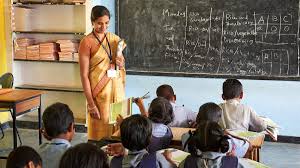
A single-teacher school is a school where only one teacher is available to teach the enrolled students.
This does not necessarily mean that the school has only one student or a very small enrolment. A single teacher may have to handle several grades or multiple subjects, depending on the school’s structure.
In primary schools particularly, one teacher may be responsible for teaching children at different learning levels simultaneously.
That creates a difficult classroom environment because students may require different teaching methods, learning materials and levels of attention.
Why One Teacher for an Entire School Is a Concern
The issue is not simply about the number of teachers.
It is also about the quality and range of educational support available to children.
A school operating with one teacher can face several challenges:
Multi-grade teaching
One teacher may need to teach students from different classes at the same time.
Limited subject support
As students progress into higher grades, they need exposure to different subjects and specialised teaching. A single teacher cannot easily provide the same breadth of expertise as a properly staffed school.
Administrative burden
Teachers are not responsible only for classroom teaching. They may also have administrative, assessment and other school-related responsibilities.
Reduced individual attention
When one teacher is responsible for students with different learning needs, providing individual academic support becomes more difficult.
Continuity risks
If the sole teacher is absent for any reason, the school may effectively be left without regular teaching support unless substitute arrangements are available.
The Rural Education Challenge
The problem of single-teacher schools is closely connected with India’s geographical and demographic diversity.
Small schools in remote villages, tribal regions, hilly areas and sparsely populated communities can have relatively low enrolment. Recruiting and retaining teachers in such locations can be difficult.
At the same time, these schools can be extremely important because they provide children with access to education close to their homes.
This creates a difficult policy balance:
Should a small school be retained locally despite low enrolment, or should students be shifted to a larger nearby school with better staffing and infrastructure?
There is no single answer for every location.
For a child living in a remote village, closing or merging a neighbourhood school can increase the distance to school and potentially create a new barrier to education.
Andhra Pradesh, Jharkhand and Maharashtra Among States With Large Numbers
The latest UDISE+ data shows substantial variation between states.
Reports based on the 2025–26 dataset indicate that Andhra Pradesh had the highest number of single-teacher schools, at 16,357, followed by Jharkhand with 9,827 and Maharashtra with 9,269.
The distribution demonstrates that the issue is not limited to one region or one type of school.
Different states face different combinations of challenges involving enrolment, geography, teacher recruitment, transfers and school infrastructure.
Uttar Pradesh Has the Highest Student Enrolment in Single-Teacher Schools
Another important distinction emerges when looking beyond the number of schools.
Uttar Pradesh has reported the highest number of students studying in single-teacher schools, with more than 6.2 lakh students in the 2024–25 data.
This illustrates why simply counting single-teacher schools can be misleading.
A school with a handful of students and a school with several dozen or hundreds of students may both be classified as single-teacher schools, but their challenges are very different.
Therefore, policymakers need to consider both:
- Number of single-teacher schools
- Number of students affected
Teacher Numbers Are Rising Overall
There is an important positive development in the latest UDISE+ report.
India’s total school-teacher workforce crossed 1.02 crore during 2025–26, marking the first time the national teacher count crossed the 10-million threshold.
The teacher workforce has increased steadily since 2022–23, with an overall rise of around 8.3% over three years.
This suggests that India’s problem is not simply a shortage of teachers at the national level.
The bigger challenge is where teachers are posted and whether staffing matches the needs of individual schools.
In other words, increasing the total number of teachers does not automatically eliminate single-teacher schools.
Teacher Deployment Matters as Much as Teacher Recruitment
The latest numbers point towards an important policy question: How efficiently are teachers being distributed?
A state may have a large teaching workforce overall while some schools continue to operate with one teacher.
This can happen because of:
- Uneven student enrolment
- Rural and urban differences
- Vacant posts
- Delays in recruitment
- Teacher transfers
- Geographical difficulties
- Small and scattered habitations
- Schools with very low enrolment
This is why teacher recruitment and teacher rationalisation need to work together.
The government has indicated that UDISE+ data can help states plan teacher allocation while balancing pupil-teacher ratios.
UDISE+ Shows Another Positive Trend: Zero-Enrolment Schools Are Falling
The latest data also records a sharp decline in schools with zero enrolment.
The number of zero-enrolment schools fell from 7,993 in 2024–25 to 5,663 in 2025–26, a reduction of around 29%.
The trend is important because schools with no students create questions about the efficient use of public resources.
At the same time, a school with very low enrolment can still serve an important social purpose if it provides the only accessible education facility for a remote community.
The policy challenge is therefore not simply to close small schools, but to determine which schools need staffing support, consolidation, better transport or infrastructure investment.
NEP 2020 and the School Complex Approach
The issue also connects with the broader vision of the National Education Policy (NEP) 2020.
NEP encourages school complexes or clusters that can allow neighbouring schools to share resources, teachers and infrastructure.
For small schools, such an approach could potentially provide access to:
- Specialist teachers
- Sports facilities
- Laboratories
- Digital learning resources
- Libraries
- Counselling support
- Teacher collaboration
However, any consolidation or school-cluster strategy must consider the distance students have to travel and the specific needs of rural and disadvantaged communities.
Is School Merger the Answer?
School merger or rationalisation is sometimes proposed as a solution to the single-teacher-school problem.
A larger school can potentially provide:
- More teachers
- Better infrastructure
- More subjects
- Better peer interaction
- Greater access to laboratories and digital facilities
But consolidation also carries risks.
If students have to travel substantially farther to attend school, the change could make education less accessible, particularly for younger children and students living in remote locations.
Therefore, school rationalisation should not be treated as a numbers-only exercise.
The right approach may differ from one district to another.
Digital Education Can Help—But It Cannot Replace Teachers
Technology can provide useful support to understaffed schools.
Digital classrooms, recorded lessons, online resources and educational platforms can supplement classroom teaching.
But technology cannot completely replace the role of a teacher.
Young learners especially need:
- Explanation
- Feedback
- Classroom interaction
- Motivation
- Assessment
- Social development
- Individual guidance
Digital infrastructure should therefore be viewed as a support mechanism, rather than a substitute for adequate teacher deployment.
The Bigger Picture: India’s School Education Is Improving, But Unevenly
The latest UDISE+ report presents a mixed picture of Indian school education.
On one side, the country is seeing:
- More teachers
- Fewer single-teacher schools
- Fewer zero-enrolment schools
- Lower dropout rates
- Improved transition rates
- Better access to digital infrastructure
On the other side, major disparities remain between schools, regions and communities.
A national average can therefore hide significant differences at the district and school levels.
The real test of education reform is not simply whether national indicators improve, but whether a child in a remote village receives the same quality of learning opportunity as a child in a well-resourced urban school.