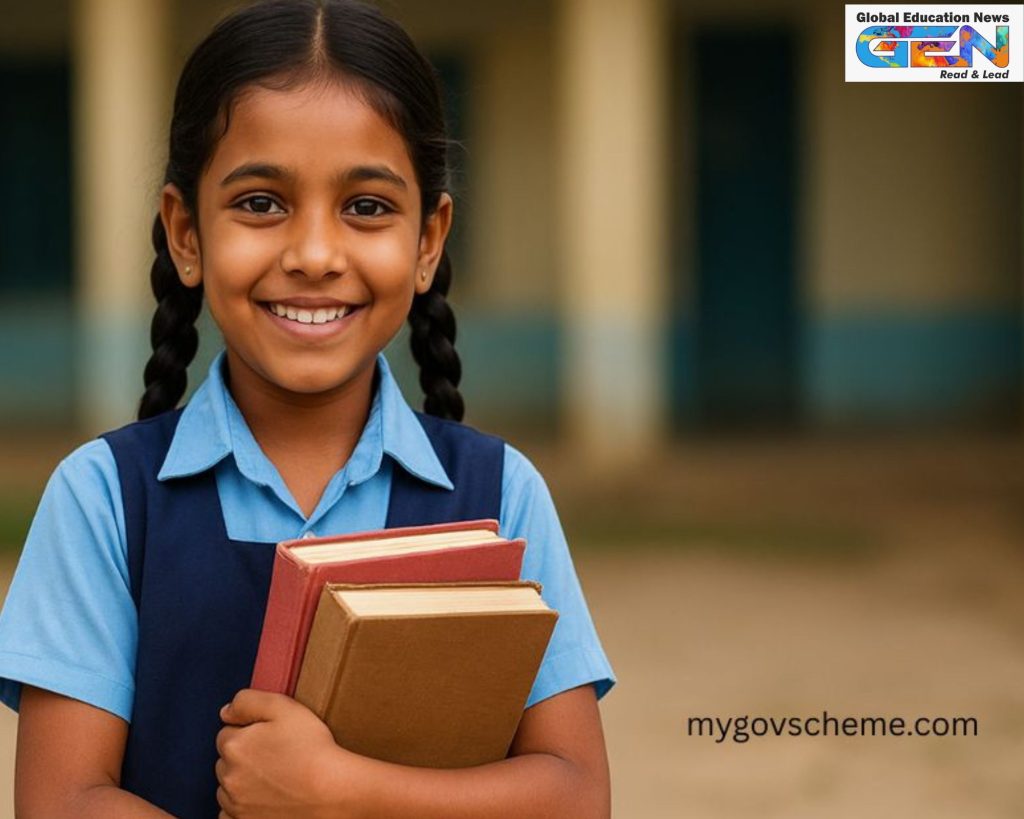
In a state where girl child enrollment in government schools lags at 48% for secondary levels amid economic pressures, Rajasthan’s Aapki Beti Yojana 2025 emerges as a vital lifeline, fortifying financial support for vulnerable families. Launched under the state education department, this initiative—revamped for the 2025-26 academic year—targets orphaned or single-parent households from Below Poverty Line (BPL) backgrounds, disbursing aid directly to promote retention and academic success. With over 1.2 lakh beneficiaries in recent cycles, the scheme has correlated with a 12-15% uptick in girl student continuity rates per state surveys, yet challenges like documentation hurdles persist for rural applicants. As applications close imminently, this guide unpacks the essentials, ensuring no deserving daughter misses out on her educational stride.
Scheme Overview: Objectives and Reach
Aapki Beti Yojana, meaning “Your Daughter Scheme,” is a flagship Rajasthan government program dedicated to girl child education, aligning with national goals like Beti Bachao Beti Padhao. It focuses on economically disadvantaged families, providing annual scholarships to cover essentials like uniforms, books, and transport, thereby reducing dropout risks in government institutions.
Key Points:
- Primary Objectives: Eradicate financial barriers for girl students; foster gender parity in schooling; support single-parent or orphaned families through targeted aid.
- Target Group: Exclusively girl students in Classes 1-12 enrolled in Rajasthan government schools.
- Coverage Scope: Statewide, with emphasis on rural and tribal districts where BPL penetration exceeds 40%.
- Analysis Insight: Since inception, the scheme has empowered 5 lakh+ girls, contributing to a 10% rise in female literacy from 52% (2011) to 62% (projected 2025), but urban-rural disparities—25% lower uptake in arid zones—highlight the need for mobile enrollment camps.
Eligibility Criteria: Who Qualifies for the 2025 Aid?
Eligibility is merit- and need-based, prioritizing vulnerability to ensure aid reaches the most deserving, with no academic performance thresholds to encourage early enrollment.
Key Points (Eligibility Table):
| Criterion | Requirements |
|---|---|
| Residency | Permanent resident of Rajasthan (domicile certificate mandatory). |
| Gender & Enrollment | Girl student in Classes 1-12 at a recognized government school. |
| Family Status | BPL family (income ≤ ₹1.2 lakh/year); or orphan (both parents deceased); or single-parent (one parent deceased). |
| Exclusions | Boys ineligible; private school students; families above BPL threshold; prior beneficiaries with siblings already aided. |
- Special Provisions: Automatic inclusion for SC/ST girls meeting criteria; no upper age limit beyond class norms.
- Analysis Insight: The BPL/orphan focus addresses 20% of Rajasthan’s girl dropouts linked to family tragedies, per education department data; however, 15% of applications fail due to incomplete domicile proofs, underscoring digital literacy drives.
Benefits: Tailored Financial Wings for Academic Flight
The scheme’s aid is modest yet impactful, delivered annually via Direct Benefit Transfer (DBT) to minimize leakages and empower guardians with control.
Key Points:
- Class 1-8: ₹2,100 per year, disbursed in one installment post-verification.
- Class 9-12: ₹2,500 per year, supporting higher secondary transitions.
- Disbursement Mode: Linked to Aadhaar-enabled bank accounts (girl’s preferred; guardian’s if minor); funds released after school confirmation of attendance.
- Additional Perks: Integration with mid-day meals and uniforms schemes for holistic support.
- Total Potential Aid: Up to ₹30,000 over 12 years per beneficiary.
- Analysis Insight: Compared to national Sukanya Samriddhi (long-term savings), this immediate DBT model has boosted retention by 18% in pilot districts; inflation adjustments (pegged at 5% for 2025) ensure relevance amid rising costs.
Application Process: Step-by-Step Guide to Seamless Registration
The fully digital process via the ShalaDarpan portal streamlines access, with school facilitation for offline support, reducing urban-rural divides.
Key Points:
- School Verification: Approach your government school principal for initial eligibility check and form pre-fill (mandatory for forwarding).
- Portal Access: Visit rajshaladarpan.rajasthan.gov.in/sd2/BSP/Home/HomePage.aspx; select “Aapki Beti Yojana” under Beneficiary Schemes.
- Registration/Login: Use Aadhaar/mobile for OTP-based signup; enter student details (name, class, school ID).
- Form Submission: Upload documents; school endorses via dashboard; submit by deadline.
- Tracking & Approval: Monitor status via SMS/application ID; DEO verifies within 5-7 days.
- Post-Approval: Link bank account for DBT; renew annually via school.
- Helpline: 1800-180-6127 (toll-free) for queries; nearest Block Education Officer for hands-on aid.
- Analysis Insight: The portal’s 2025 upgrades—mobile app integration—have slashed processing time by 30%, yet 10% rural delays persist; early school involvement cuts rejection rates by 25%.
Required Documents: Essential Proofs for Smooth Verification
Gathering these upfront avoids common pitfalls, with scanned copies (under 2MB) preferred for uploads.
Key Points:
- Aadhaar card of the girl student.
- Rajasthan domicile/residence certificate.
- BPL card or family income certificate (issued by Tehsildar).
- Bank account passbook (first page, in girl’s/guardian’s name).
- Death certificate of deceased parent(s) (if applicable; from municipal registrar).
- Bonafide certificate/enrollment proof from school (with photo).
- Pro Tip: Self-attest all; e-sign via Aadhaar for faster clearance.
- Analysis Insight: Documentation gaps cause 20% rejections; 2025’s Aadhaar-mandate has streamlined 80% verifications, but awareness campaigns could further aid nomadic communities.
Deadlines and Disbursement: 2025 Timeline Essentials
Timely action is crucial, as the scheme operates on a fiscal year cycle with strict cutoffs to align with budget allocations.
Key Points:
- Application Window: Opened August 2025; last date November 25, 2025 (extended from October for monsoon disruptions).
- Verification Phase: School/DEO completion by November 30, 2025.
- Disbursement Schedule: Funds released in late December 2025 or January 2026 (first installment for ongoing classes); full payout by March 2026.
- Renewal Deadline: July 31 annually for continuing students.
- Analysis Insight: The November rush saw 2 lakh+ applications in 2024; 2025’s extensions reflect responsiveness to feedback, potentially disbursing ₹500 crore statewide, but delays in remote areas could affect 5% of claims.
Recent Updates and Challenges: Evolving for Greater Impact
For 2025, enhancements include portal bilingualism (Hindi-English) and auto-flagging for incomplete forms, responding to 2024’s 12% error rate. No major benefit hikes, but integration with Jan Dhan accounts eases DBT for minors.
Key Points:
- Key Changes: Mobile OTP for guardians; priority processing for tribal blocks.
- Challenges Addressed: Anti-fraud AI checks reduced bogus claims by 15%.
- Ongoing Hurdles: Low awareness in 30% rural pockets; calls for doorstep camps.
- Analysis Insight: Amid NEP 2020’s equity push, the scheme’s focus on government schools counters privatization (40% urban shift); long-term tracking shows 22% higher graduation rates among beneficiaries, yet scaling to 3 lakh girls requires ₹600 crore infusion.