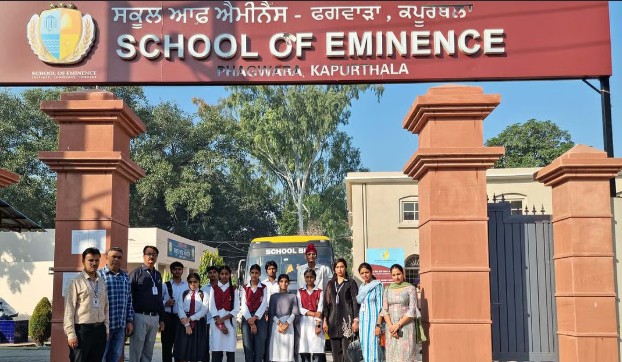
In a development that has drawn nationwide attention, Punjab has overtaken Kerala in the latest NITI Aayog school education rankings, marking a historic milestone for the state’s education system. Long regarded as India’s benchmark for educational excellence, Kerala has now been surpassed by Punjab, reflecting the latter’s rapid improvements in learning outcomes, school governance, digital infrastructure, and student performance.
The achievement highlights how sustained policy reforms, investments in government schools, and a strong focus on foundational learning can transform public education within a relatively short period.
————————————————–
A Historic Shift in India’s Education Rankings
For decades, Kerala has consistently been recognised as one of India’s leading states in literacy, school enrolment, and educational outcomes.
The latest assessment, however, indicates that Punjab has taken the lead by demonstrating stronger performance across several key indicators, including:
- Foundational literacy and numeracy
- Student learning outcomes
- School infrastructure
- Governance and accountability
- Technology integration
- Student retention and transition rates
The rankings underline that educational excellence today depends not only on enrolment and literacy but also on measurable learning achievements and efficient school administration.
————————————————–
Key Factors Behind Punjab’s Rise
Education experts attribute Punjab’s improved ranking to a combination of policy reforms and targeted investments.
1. Strong Foundational Learning
Punjab recorded exceptional improvements in early-grade learning.
According to the latest assessment:
- Grade 3 Language Proficiency: 82% (Kerala: 75%)
- Grade 3 Mathematics: 78% (Kerala: 70%)
- Grade 9 Mathematics: 52% (Kerala: 45%)
These gains reflect sustained efforts to strengthen foundational literacy and numeracy in primary schools.
2. Improved Government School Infrastructure
Significant investments have transformed government schools across Punjab.
The report highlights that:
- 99.9% of government schools have electricity.
- 99% have functional computers.
- More than 80% are equipped with smart classrooms.
- Nearly 89% have internet connectivity.
These improvements have expanded access to digital learning and modern classroom resources.
3. Better Student Retention
Punjab has also improved student progression through secondary education.
According to the findings:
- More than 90% of Class 10 students now continue to Class 11.
- The state has significantly reduced dropout rates.
- The student-teacher ratio has improved to approximately 22:1, enabling more personalised learning.
————————————————–
Governance Reforms Drive Educational Success
Experts note that Punjab’s progress is not solely the result of increased spending but also of better governance.
The state’s education reforms have focused on:
- Regular monitoring of school performance.
- Teacher training and professional development.
- Digital tracking of learning outcomes.
- Improved school leadership.
- Greater accountability at district and school levels.
Such governance measures have helped ensure that policy initiatives translate into measurable improvements in classrooms.
————————————————–
Digital Learning and Technology Integration
Technology has emerged as a major pillar of Punjab’s education strategy.
Key initiatives include:
- Smart classrooms.
- Digital teaching aids.
- Computer-enabled learning.
- Internet connectivity in schools.
- Technology-assisted classroom management.
These interventions have expanded learning opportunities while reducing the digital divide between urban and rural schools.
————————————————–
Government Schools Produce Competitive Exam Success
Another indicator of Punjab’s improving education ecosystem is the growing success of government school students in national competitive examinations.
According to state data referenced in the report:
- 786 government school students qualified JEE Main.
- 1,284 students cleared NEET.
These outcomes suggest that strengthened public education is translating into better opportunities for higher education and professional careers.
————————————————–
What the Rankings Mean for Kerala
Although Kerala has been overtaken in this assessment, it continues to perform strongly on several education indicators, including literacy, access to schooling and long-standing investments in public education.
The latest rankings do not diminish Kerala’s achievements but rather highlight increasing competition among states striving to improve learning outcomes through innovative policies and evidence-based reforms.
Education experts believe that healthy competition between states can encourage greater investment in quality education nationwide.
————————————————–
Why These Rankings Matter
The NITI Aayog assessment serves as an important benchmark for policymakers because it evaluates not only infrastructure but also the quality of education delivered in classrooms.
The rankings help states:
- Measure learning outcomes.
- Identify strengths and gaps.
- Improve governance.
- Promote best practices.
- Encourage data-driven policy decisions.
- Enhance accountability in school education.
————————————————–
Lessons for Other States
Punjab’s rise demonstrates that sustained educational reform requires:
- Strong political commitment.
- Investment in foundational learning.
- Modern school infrastructure.
- Teacher capacity building.
- Technology-enabled classrooms.
- Continuous monitoring of student outcomes.
These strategies can serve as valuable lessons for other states seeking to improve educational quality and equity.