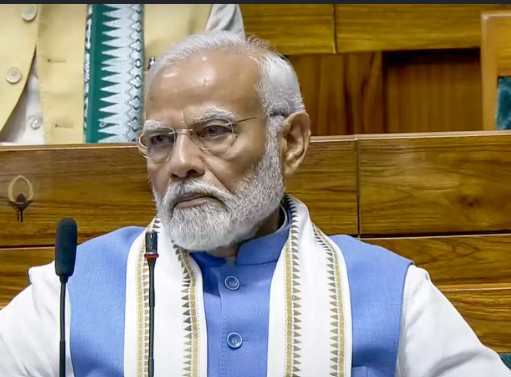
Prime Minister Narendra Modi has reaffirmed the government’s commitment to protecting the integrity of India’s examination system, stating that swift action was taken immediately after reports of the alleged NEET paper leak emerged. Addressing members of the NDA Parliamentary Party, the Prime Minister described paper leaks as a national concern and appealed to the legal fraternity to help ensure that those responsible receive the strictest possible punishment under the law.
The remarks come amid growing national concern over examination malpractices and their impact on millions of students. The government maintained that strong enforcement and coordinated efforts across states are essential to safeguard the credibility of competitive examinations.
Key Highlights
- Prime Minister Modi said the government acted immediately after the alleged NEET paper leak came to light.
- Thirteen accused have been arrested and sent to jail, according to the government.
- The Prime Minister urged lawyers to help ensure the harshest legal penalties for those involved in paper leak rackets.
- He described exam paper leaks as a national issue, not one confined to any single state or political party.
- The government reiterated its commitment to protecting students’ futures and strengthening the integrity of competitive examinations.
Paper Leaks Are a National Concern, Says PM Modi
During the meeting, Prime Minister Modi stressed that examination paper leaks affect the future of millions of students and therefore require a united response.
According to Union Parliamentary Affairs Minister Kiren Rijiju, who briefed the media after the meeting, the Prime Minister said that the issue should not be viewed through a political lens. Instead, he called upon all states, institutions, and stakeholders to work together to eliminate examination fraud and restore public confidence in the education system.
Government Highlights Swift Action in NEET Paper Leak Case
Referring to the alleged NEET paper leak, the Prime Minister said authorities responded immediately after reports surfaced.
The government stated that:
- Investigative agencies launched prompt action.
- 13 individuals linked to the alleged racket were arrested.
- The accused have been sent to judicial custody.
- Authorities prioritised conducting the NEET re-examination while ensuring that the overall examination schedule and declaration of results were not significantly disrupted.
The government presented these steps as evidence of its commitment to preserving fairness in one of India’s largest entrance examinations.
Call for the Strictest Punishment
One of the key messages from the Prime Minister’s address was the need for strong legal deterrence.
He appealed to members of the legal fraternity to support efforts aimed at securing stringent punishment for those involved in paper leak conspiracies.
According to the government, exemplary legal action would help discourage organised examination fraud and strengthen trust in public recruitment and admission processes.
Why Exam Paper Leaks Have Become a Major Issue
Paper leak incidents have increasingly emerged as one of the biggest challenges facing India’s examination system.
Such incidents can have wide-ranging consequences, including:
- Loss of public trust in examinations.
- Emotional stress and uncertainty for students.
- Delays in admissions and recruitment.
- Financial and administrative burden of re-examinations.
- Legal disputes and prolonged investigations.
With millions of candidates appearing for competitive examinations every year, even isolated instances can have a significant nationwide impact.
Strengthening Examination Security
In recent years, examination authorities have introduced several measures to reduce the risk of malpractice.
These include:
- Enhanced digital surveillance at examination centres.
- Multi-layer encryption of question papers.
- Biometric and identity verification.
- Artificial intelligence-based monitoring.
- Stronger coordination among examination agencies and law enforcement.
- Tougher legal provisions against organised examination fraud.
Education experts believe continued investment in technology and robust enforcement will be essential to preserving the credibility of large-scale examinations.
Protecting Students’ Future
Prime Minister Modi also highlighted the achievements of India’s youth across education, science, sports, and innovation.
He said the government’s focus remains on creating opportunities for young people while ensuring that honest students are not disadvantaged by criminal activities such as paper leaks. According to the government’s account of the meeting, safeguarding the integrity of examinations is a crucial part of protecting students’ aspirations and maintaining confidence in merit-based selection.
Need for Collective Action
Experts have long argued that preventing paper leaks requires collaboration among multiple stakeholders.
Effective reforms may include:
- Stronger cyber and physical security for examination systems.
- Faster investigation and prosecution of offenders.
- Improved coordination between central and state agencies.
- Regular audits of examination processes.
- Greater awareness among students regarding fraudulent practices.
Many education specialists believe that sustained institutional reforms, combined with swift legal action, are necessary to ensure long-term integrity.