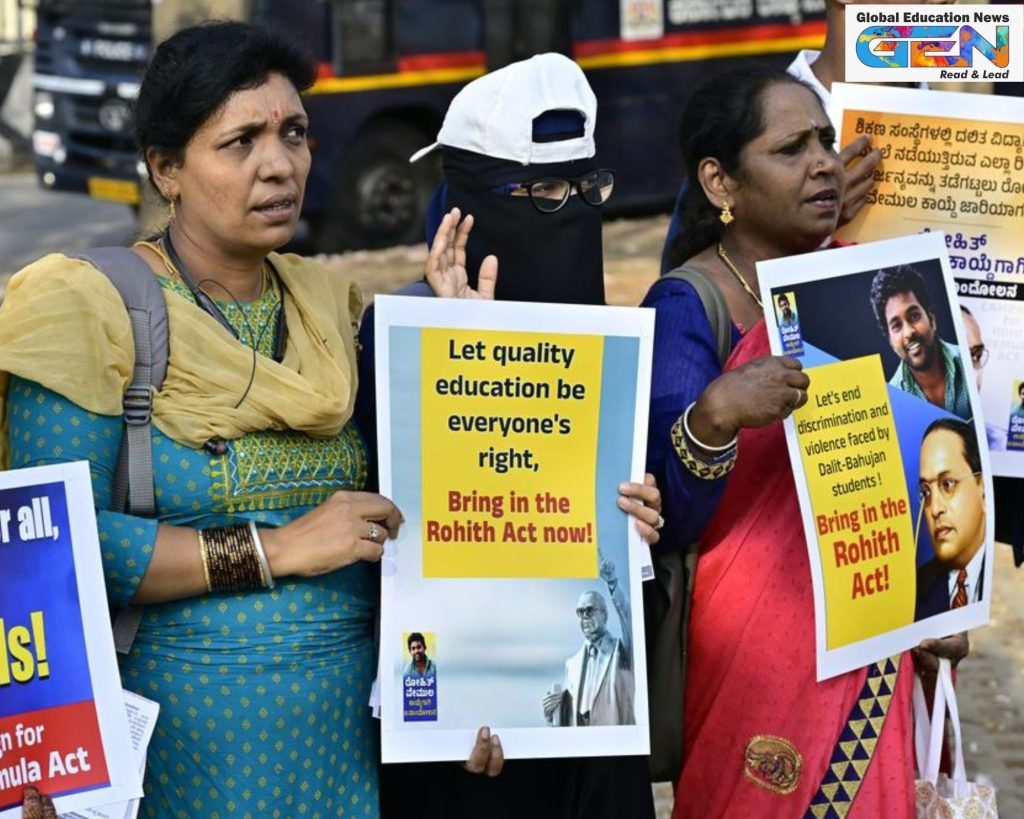
In a pivotal move to address longstanding inequities, the Parliamentary Standing Committee on Education, chaired by Congress MP Digvijaya Singh, has tabled a comprehensive report on December 8, 2025, scrutinizing autonomous bodies under the Ministry of Education. The report sharply criticizes the University Grants Commission (UGC) for its narrow definition of caste-based discrimination—currently limited to Scheduled Castes (SCs) and Scheduled Tribes (STs)—and urges its expansion to encompass bias against Other Backward Classes (OBCs). This recommendation comes amid broader concerns over the implementation of Economically Weaker Sections (EWS) reservations at senior faculty levels and the prolonged vacancy in UGC’s chairperson position since April 2025. As India races toward the National Education Policy (NEP) 2020’s 50% Gross Enrolment Ratio (GER) target by 2030, the panel’s directives aim to fortify inclusive practices in higher education institutions (HEIs), ensuring marginalized groups are protected from subtle and overt biases.
Background: Persistent Challenges for OBCs in Higher Education
The report emerges against a backdrop of evolving yet uneven access to higher education for OBCs, who constitute about 52% of India’s population but face systemic barriers beyond quotas. While reservation policies have boosted enrollment, subtle discrimination—ranging from curriculum biases to faculty prejudices—persists, often unaddressed under current UGC frameworks. The Draft UGC (Promotion of Equity in Higher Educational Institutions) Regulations, 2025, released in March 2025, explicitly confined “caste-based discrimination” to SCs and STs, prompting backlash from at least 10 states and civil society groups.
A September 2025 Supreme Court directive further amplified calls for reform, instructing UGC to incorporate stakeholder inputs and notify rules within eight weeks, emphasizing comprehensive anti-discrimination measures. The panel’s review, informed by stakeholder consultations and a study visit to Varanasi, highlights how such gaps waste resources and erode trust, particularly as NEP shifts to four-year undergraduate programs demand diverse faculty and inclusive environments.
Key Recommendations: A Roadmap for UGC Reforms
The 100-page report outlines targeted actions to embed equity, urging immediate implementation to align with NEP goals. Key proposals include:
- Broaden Discrimination Definition: Classify bias against OBCs as caste-based discrimination in the Promotion of Equity rules, extending protections to all reserved categories.
- Reassess EWS Reservations: Evaluate feasibility at Associate Professor and Professor levels, where income criteria (below ₹8 lakh annually) clash with mandatory prior experience in higher-paying roles, rendering positions “nearly impossible” to fill.
- Leadership and Consultation: Appoint a UGC Chairperson without delay; consult the Central Advisory Board of Education (CABE) on Draft UGC Regulations, 2025, incorporating feedback from concerned states.
- Incorporate Additional Axes: Add disability as a core dimension of discrimination, alongside caste, to foster holistic inclusivity.
- Institutional Mandates: Require annual public disclosures of discrimination cases in HEIs; enforce mandatory sensitization programs for faculty and staff; provide mental health support and legal aid; ensure Equity Committees comprise over 50% SC, ST, and OBC representatives.
- NEP Support Mechanisms: Bolster Multiple Entry Multiple Exit (MEME) frameworks with curriculum design for marketable skills; lift funding restrictions on capital projects; introduce seed grants for newly recruited faculty in central universities and UGC-funded institutions (excluding IITs and NITs).
These steps, if adopted, could prevent resource wastage—such as prolonged recruitment drives for unfilled EWS posts—and promote a discrimination-free academic ecosystem.
Data and Statistics: Trends in Reserved Category Enrollment
Recent data underscores the transformative impact of reservations, with SC/ST/OBC students now dominating higher education enrollment, yet highlighting gaps in faculty representation and private sector equity.
Enrollment Trends (AISHE 2010-11 to 2022-23)
| Year | SC/ST/OBC Share (%) | Total Enrollment (Million) | Key Notes |
|---|---|---|---|
| 2010-11 | 43.1 | ~25.2 | Baseline pre-NEP surge; OBCs at ~35%. |
| 2014-15 | 48.5 | ~28.5 | Steady rise in public institutions. |
| 2019-20 | 55.2 | ~38.4 | COVID impacts minimal on quotas. |
| 2022-23 | 60.8 | ~43.3 | Historic majority; OBCs contribute 45%. |
- Private vs. Public Divide: In private universities, SC/ST/OBC representation reached 62.2% in 2022-23, up from 50% in 2014, but remains “abysmal” in elite privates (under 30% for OBCs in some southern institutions).
- Faculty Gaps: OBC faculty in central universities hover at 20-25%, far below student proportions, fueling bias claims.
- GER Progress: Overall GER at 28.4% in 2022-23, with reserved categories driving a 17% increase since 2014, yet NEP’s 50% target demands accelerated equity measures.
These figures, from the All India Survey on Higher Education (AISHE), reveal a “flipped” demographic but persistent upstream barriers like discrimination.
Implications: Broader Impact on NEP and Social Justice
The panel’s urgings could reshape UGC policies, compelling HEIs to prioritize OBC inclusion and curb “invisible” biases that undermine NEP’s equity pillars. Economically, addressing EWS flaws would optimize budgets, freeing funds for infrastructure amid the four-year degree transition. Socially, sensitization and disclosures may reduce dropout rates among OBC students (currently 15-20% higher than general category) and enhance mental health support. However, challenges persist: UGC’s funding curbs threaten NEP ambitions, and state-level variations (e.g., Karnataka’s anti-discrimination bill) highlight the need for uniform enforcement. Experts warn that without swift action, enrollment gains risk stalling, perpetuating cycles of exclusion.