Published on October 13, 2025
Delhi, India
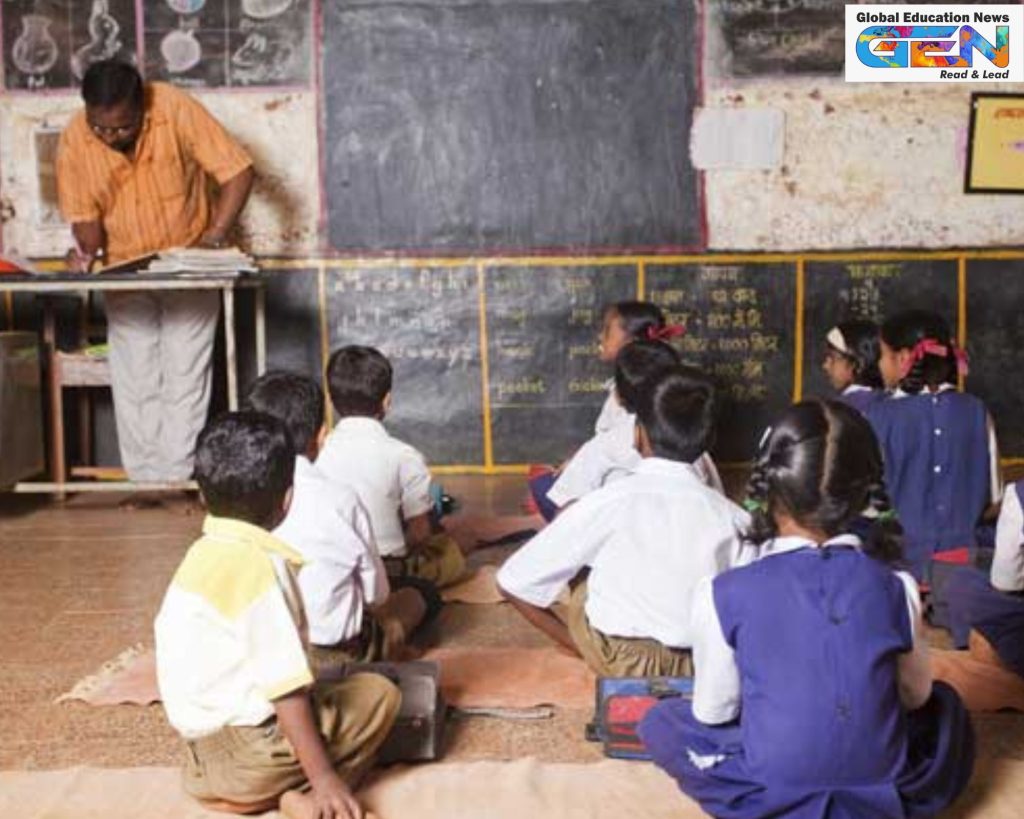
India’s school education system grapples with a persistent challenge: single-teacher schools, where one educator shoulders the burden of teaching multiple grades and subjects. As per the Ministry of Education’s data for the 2024-25 academic year, 1,04,125 such schools serve over 33.7 lakh students, averaging 34 pupils per school. This setup starkly violates the Right to Education (RTE) Act, 2009, which mandates a pupil-teacher ratio (PTR) of 30:1 for primary classes and 35:1 for upper primary. While progress is evident—with a 6% decline from 2023-24—these institutions, often in rural and marginalized areas, perpetuate learning gaps and inequities. The Unified District Information System for Education Plus (UDISE+) 2024-25 report underscores this issue, highlighting the need for urgent reforms amid India’s push for equitable education under the National Education Policy (NEP) 2020.
Key Statistics: Numbers Behind the Single-Teacher Phenomenon
The UDISE+ 2024-25 data paints a clearer picture of the scale and trends in single-teacher schools, revealing both improvements and lingering concerns.
- Total Single-Teacher Schools: 1,04,125, down from 1,10,971 in 2023-24 (a 6% reduction) and 1,18,190 in 2022-23.
- Students Impacted: Over 33.7 lakh enrolled, with an average of 34 students per school—far exceeding RTE norms in many cases.
- Overall Teacher Milestone: India’s total school teachers crossed 1 crore (1,01,22,420) for the first time, a 6.7% rise from 2022-23, improving the national PTR to 21:1 at secondary level (below NEP’s 30:1 recommendation).
- Related Trends: Zero-enrolment schools dropped 38% to 7,993, signaling better resource rationalization, while female teachers now make up 54.2% of the workforce.
- Data Source: Ministry of Education’s UDISE+ 2024-25 report, covering 15 lakh schools and 26.5 crore students.
These figures reflect gradual gains but underscore the uneven distribution of educational resources.
Regional Distribution: Where the Crisis Hits Hardest
Single-teacher schools are disproportionately concentrated in certain states, often correlating with rural poverty and infrastructure deficits. Urban centers and some UTs fare better, but disparities fuel regional inequities.
- States with Highest Number of Single-Teacher Schools: Andhra Pradesh leads, followed by Jharkhand, Maharashtra, Karnataka, Madhya Pradesh, and Lakshadweep.
- States with Highest Student Enrolment: Uttar Pradesh (over 6.2 lakh students), Jharkhand (4.36 lakh), West Bengal (2.35 lakh), Madhya Pradesh (2.29 lakh), Karnataka (2.23 lakh), Andhra Pradesh (1.97 lakh), and Rajasthan (1.72 lakh).
- States/UTs with Lowest Incidence: Delhi (9 schools), Andaman & Nicobar Islands (4 schools); zero in Puducherry, Ladakh, Dadra & Nagar Haveli and Daman & Diu, and Chandigarh.
- Average Enrolment Variations: Highest in Chandigarh (1,222 students/school) and Delhi (808); lowest in Ladakh (59), Mizoram (70), Meghalaya (73), and Himachal Pradesh (82).
- Regional Insights: Northern and western states account for nearly 60% of such schools, per historical UDISE trends, with Jharkhand showing 30.9% of government primary schools as single-teacher in earlier data.
This uneven spread highlights the need for targeted interventions in high-burden states.
Challenges: The Hidden Toll on Learning and Equity
Single-teacher schools exacerbate systemic flaws, leading to subpar outcomes and perpetuating cycles of disadvantage, especially for underprivileged children.
- Overburdened Educators: One teacher managing all grades/subjects results in divided attention, rote learning, and neglected skill-building, hindering conceptual understanding.
- Quality and Retention Issues: High dropout rates (e.g., 8.2% at secondary level nationally) and poor learning outcomes—70% of government school students are often unprepared for their grade level.
- Infrastructure and Access Gaps: Many lack basics like electricity (93.6% coverage nationally but lower in rural single-teacher setups), internet (63.5%), or ramps (54.9%), worsening inclusivity for girls and disabled students.
- Teacher Shortages and Absenteeism: Around 10 lakh vacancies nationwide (7.5 lakh at primary level), with 60-70% unfilled in some states; absenteeism is rampant due to non-academic duties and low motivation.
- Equity Concerns: Predominantly in marginalized areas, affecting SC/ST/OBC students (45.2% OBC enrolment nationally) and girls (48.3% enrolment, up slightly), amplifying gender and social divides.
Experts warn these schools “fail children with little learning and even less hope,” as seen in public hearings in states like Jharkhand.
Government Initiatives: Steps Toward Rationalization and Reform
The government is addressing the crisis through data-driven policies and schemes, focusing on teacher deployment, infrastructure, and inclusive education.
- School Consolidation and Redeployment: Merging low/zero-enrolment schools to redistribute teachers; surplus educators from empty institutions are shifted to single-teacher ones for better PTR compliance.
- Samagra Shiksha Abhiyan (SSA): Centrally sponsored scheme for holistic development—improves infrastructure, trains teachers, and supports underprivileged students; integrates SSA, RMSA, and Teacher Education for pre-primary to higher secondary coverage.
- NEP 2020 Alignment: Emphasizes experiential learning, digital integration (64.7% schools with computers), and vocational skills; PTR improvements at foundational (10:1) and preparatory (13:1) levels show progress.
- Other Key Schemes: Beti Bachao Beti Padhao for girls’ retention; PM SHRI Schools for model institutions; National Programme on Technology Enhanced Learning (NPTEL) for digital tools; incentives like mid-day meals to boost attendance.
- Teacher Capacity Building: Parliamentary Committee (August 2025) recommends permanent hiring, ending contractual reliance, and NCTE oversight; SSA funds for training on inclusive, outcome-based teaching.
- Monitoring via UDISE+: Real-time data collection ensures accountability, with 99.3% schools having drinking water and 97.3% girls’ toilets.
A senior official noted: “We’re rationalizing resources to achieve balanced distribution and effective infrastructure use.”