The Union government is preparing a nationwide youth outreach initiative that could take Union ministers directly to university campuses as part of a proposed “One Day, One University” programme.
Under the plan, a Union minister would visit an assigned university each day, interact with students, listen to their concerns and understand their views on issues affecting young people and the country. The initiative is being positioned as a direct engagement mechanism between the government and India’s younger generation.
The proposed programme comes at a time when education, competitive examinations, employment, skills and future career opportunities are among the major issues occupying the attention of university students.
What Is the ‘One Day, One University’ Initiative?
The proposed One Day, One University initiative is designed around direct interaction between Union ministers and students.
During campus visits, ministers are expected to:
- Interact directly with university students
- Listen to students’ concerns and views
- Discuss issues related to education and youth development
- Explain government schemes and programmes aimed at young people
- Understand students’ perspectives on issues facing the country
- Strengthen communication between policymakers and the younger generation
The programme is expected to involve universities across the country rather than being restricted to a particular region or group of institutions.
Pralhad Joshi and Mansukh Mandaviya to Coordinate the Programme
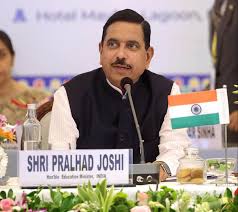
According to reports, Education Minister Pralhad Joshi and Youth Affairs and Sports Minister Mansukh Mandaviya have been assigned responsibility for coordinating with universities and Union ministers for the proposed campus visits.
The initiative was also discussed at a Union Cabinet meeting chaired by Prime Minister Narendra Modi, according to reports citing sources familiar with the plan.
The proposed coordination mechanism could be important given the size and diversity of India’s higher education system. The University Grants Commission has reported around 1,300 universities, including central, State, deemed and private universities, although the precise number and classification can change over time.
Why Is the Government Focusing on Gen Z?
The proposed university outreach programme reflects a broader effort by the government to strengthen its engagement with Generation Z, particularly through direct communication and social media.
Young Indians are highly active on digital platforms, while university students are increasingly vocal about issues such as examination systems, career opportunities, education costs, employment and skill development.
The government has also been encouraging Union ministers to strengthen their social media presence and communicate more effectively with younger audiences. Reports said the performance and reach of ministers’ social media accounts were discussed at a recent Cabinet meeting.
The combination of digital outreach and face-to-face university visits could give the government two channels through which it can communicate with young people.
Education and Employment Likely to Remain Key Discussion Points
For university students, the value of such an initiative will largely depend on whether campus conversations address the issues that directly affect their academic and professional futures.
Among the subjects likely to attract attention are:
Examination and Admission Systems
Competitive examinations remain a major concern for students seeking admission to professional and higher education programmes. Recent examination-related controversies have further increased demands for transparency and reliability.
Jobs and Employability
Students are also looking for clearer pathways from higher education to employment. Discussions around internships, industry exposure, entrepreneurship and emerging sectors could therefore become an important component of youth outreach.
Skills and Emerging Technologies
Artificial intelligence, digital skills and advanced technologies are rapidly changing employment patterns. Government programmes aimed at AI skilling and future-ready employment are likely to feature prominently in conversations with students.
Government Schemes for Youth
The university visits could also provide an opportunity for ministers to explain scholarships, skill-development programmes, employment initiatives and other government schemes directly to students.
Initiative Comes Amid Student Concerns Over Education
The proposed outreach programme comes against the backdrop of recent student protests and public debate over issues in the education and examination system, including the NEET UG 2026 paper-leak controversy.
Reports have noted that student protests over examination-related issues have been among the circumstances surrounding the government’s renewed focus on communicating directly with young people.
This makes the proposed university visits particularly significant. Students could use such interactions not only to learn about government initiatives but also to raise questions about policies and problems affecting them.
For the initiative to establish credibility among students, however, listening to concerns would need to be accompanied by clear responses and follow-up action.
From Social Media to University Campuses
The proposed programme represents a shift towards a more direct form of government youth outreach.
Social media allows ministers to communicate with large audiences instantly, but university visits offer something digital platforms cannot fully replicate: face-to-face interaction.
Campus discussions can potentially provide policymakers with a better understanding of how national policies are perceived by students and what problems they encounter in their everyday academic lives.
At the same time, universities provide a natural setting for discussions about education, employment, innovation, entrepreneurship and India’s future workforce.
Youth-Focused Initiatives Announced by the Government
The proposed campus outreach also comes after several youth-oriented initiatives highlighted by Prime Minister Narendra Modi in his Independence Day address.
These included free online coaching, an AI skilling programme, a sports talent hunt and an expansion of the civil defence network, alongside emphasis on opportunities for young people in sectors such as manufacturing, space, nuclear energy and semiconductors.
Taking information about such programmes directly to university campuses could help students understand how they can access available opportunities.
Will ‘One Day, One University’ Make a Difference?
The effectiveness of the One Day, One University programme will ultimately depend on what happens beyond the campus visits.
A successful youth outreach programme would need to create space for students to ask difficult questions as well as hear about government schemes. It would also need mechanisms to record concerns, communicate responses and track whether issues raised during interactions lead to concrete action.
For universities, the programme could become a platform for students to engage directly with senior policymakers. For the government, it could offer first-hand insight into the aspirations and concerns of a generation that will form a major part of India’s future workforce and electorate.
The initiative’s long-term impact will therefore depend less on the number of university visits and more on the quality of student-government dialogue that emerges from them.
A New Model of Government-Student Engagement
The proposed One Day, One University initiative signals an effort to bring government outreach closer to India’s university campuses.
With Union ministers expected to meet students, discuss their concerns and explain youth-focused schemes, the programme could create a more visible channel for communication between policymakers and Gen Z.
As India’s higher education system expands and young people navigate changing examination systems, new technologies and an evolving employment market, direct engagement between students and policymakers is increasingly important.
The next stage will be to see how the programme is implemented, which universities are selected and, most importantly, whether the concerns raised by students translate into meaningful policy responses.