India’s National Testing Agency (NTA) is preparing for a significant transformation in how it conducts, secures and manages competitive examinations. The agency is not only looking at changes to major Indian entrance tests such as NEET-UG, but is also exploring the possibility of taking India’s examination technology and expertise to other countries.
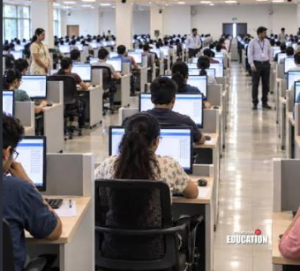
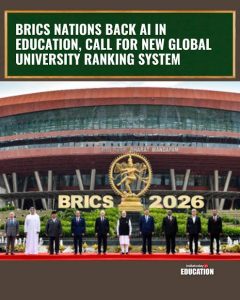
The latest roadmap places particular emphasis on learning from examination systems in other BRICS nations, with China’s Gaokao emerging as an important reference point. At the same time, the NTA has indicated that NEET-UG is expected to move from the traditional pen-and-paper format to Computer-Based Testing (CBT), bringing it closer to the digital model already used for examinations such as JEE Main, CUET and UGC-NET.
The proposed changes come at a critical moment.
India’s entrance examination system has faced questions over paper leaks, impersonation, answer-sheet security, examination-centre management and the reliability of large-scale testing. The NTA’s challenge is therefore much bigger than simply putting an examination on computers.
It must build a system in which technology, security, transparency and public confidence work together.
The agency’s current vision is particularly ambitious: first strengthen India’s examination infrastructure and processes, and eventually develop a model that could potentially be offered as a digital public good to other countries.
NTA Looks Beyond India: From Examination Agency to Global Testing Partner
The NTA was established as an independent organisation to conduct efficient, transparent and internationally comparable examinations. Its own strategic plan identifies scientific testing, research-based assessment and the development of fair and reliable testing instruments among its core objectives.
Its proposed international expansion represents a logical extension of that mandate.
According to NTA Director General Abhishek Singh, the agency’s immediate priority is to strengthen its domestic examination framework before moving into cross-border testing. The long-term objective is to create a system that other countries, including BRICS members, could potentially adopt.
The proposed roadmap can broadly be understood in three stages:
| Stage | NTA’s emerging priority |
|---|---|
| 1. Domestic consolidation | Improve examination processes, security and reliability |
| 2. Technology-led transformation | Expand CBT, AI, biometric verification and data analytics |
| 3. International expansion | Share examination technology and potentially conduct assessments for global institutions |
This sequencing is important.
International expansion will only be credible if India’s own candidates have confidence that the examination system is secure and dependable.
The NTA itself has acknowledged that domestic strengthening has to come first.
That makes the proposed global role less about immediately “exporting” examinations and more about developing an examination architecture that can eventually operate at international standards.
Why China’s Gaokao Is Being Studied
China’s National College Entrance Examination, commonly known as Gaokao, is one of the world’s most prominent examples of a high-stakes national examination.
The comparison with NEET is natural because both systems operate at enormous scale and can have major consequences for students’ educational futures.
But the systems are not identical.
NEET and Gaokao: Different exams, similar logistical challenges
| Feature | NEET-UG | China’s Gaokao |
|---|---|---|
| Main purpose | Admission to undergraduate medical education and specified related programmes | University admission |
| Scale | Conducted nationally across India | Conducted across China |
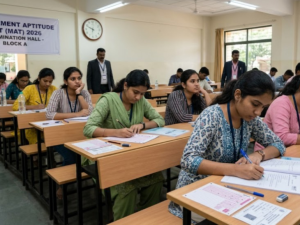
| Current format | Pen-and-paper for NEET-UG 2026 | Traditionally paper-based |
| Central challenge | Security, scale, fairness and standardisation | Scale, security, standardisation and intense competition |
| Technology focus | Increasing use of biometric, facial and digital security systems | Strong administrative and security coordination |
| Broader lesson | Managing a huge common entrance examination | Managing a massive high-stakes national examination |
The point of studying Gaokao is therefore not necessarily to reproduce China’s system in India.
Instead, the NTA appears interested in understanding how another country manages examination security, question-paper generation, logistics and large-scale coordination.
NTA DG Abhishek Singh specifically referred to Gaokao while discussing international knowledge-sharing, noting that examination authorities across countries face common challenges even when their systems differ.
What makes Gaokao relevant?
The examination is famously associated with extraordinary logistical preparation. During the examination period, authorities have historically implemented measures involving traffic management, restrictions on noise near examination centres and extensive security arrangements.
For India, the broader lesson is that examination integrity cannot depend on the question paper alone.
It requires an entire security ecosystem.
That ecosystem includes:
- secure question-paper generation;
- controlled transportation;
- examination-centre surveillance;
- candidate authentication;
- trained invigilators;
- secure digital infrastructure;
- rapid incident response;
- post-examination auditing.
This is particularly relevant to India after the examination controversies that have affected confidence in national entrance tests.
NEET-UG Moves Towards CBT: Why the Change Matters
The most immediate transformation for Indian students is the proposed move of NEET-UG to Computer-Based Testing.
The NTA DG has said NEET will move to CBT “very soon”. Most of the agency’s other major examinations, including JEE, UGC-NET, CUET and NIFT, already use computer-based testing.
The NTA’s own examination strategy has long identified CBT as the preferred model because digital delivery can reduce certain vulnerabilities associated with physical question papers and OMR-based examinations.
The agency’s current procurement and operational documents also show continued investment in CBT infrastructure, biometric systems, CCTV, facial authentication and examination monitoring.
Why CBT could strengthen NEET
A properly implemented CBT system can offer several advantages.
1. Greater control over question-paper distribution
A digital examination can reduce dependence on the physical movement of printed question papers between secure locations and centres.
2. Faster processing
Responses can be recorded digitally, potentially reducing some of the manual processes involved in scanning and evaluating OMR sheets.
3. Better audit trails
Digital systems can record examination events, system activity and candidate interactions, creating additional data for security investigations.
4. Stronger candidate authentication
The NTA is already using biometric and facial-authentication mechanisms in its examinations. Its current NEET infrastructure also includes provisions for face authentication and CCTV monitoring.
5. Better use of data analytics
The NTA has said it is exploring AI, logs, data and analytics to identify irregularities and prevent fraud.
However, CBT is not automatically synonymous with a secure examination.
It simply changes the nature of the security challenge.
The Biggest Challenge: Technology Cannot Replace Trust
Moving NEET from paper to computers could eliminate or reduce some vulnerabilities, but it can create new ones.
A nationwide CBT system requires enormous technological capacity.
The NTA would have to ensure:
- adequate computers at examination centres;
- reliable power supply;
- backup systems;
- stable networks;
- secure servers;
- effective cybersecurity;
- accessible interfaces;
- trained technical staff;
- contingency plans for hardware failures;
- mechanisms for candidates affected by genuine technical disruptions.
This is particularly important for an examination as large and consequential as NEET.
A technical failure affecting a small online test may inconvenience candidates.
A technical failure affecting a national medical entrance examination could have much larger consequences.
Therefore, the transition needs to be judged not simply by whether the technology works in pilot centres, but by whether it can work consistently across India’s highly diverse geography and infrastructure conditions.
AI and Biometrics: The Next Layer of Examination Security
The NTA’s emerging strategy goes beyond CBT.
The agency is increasingly looking at artificial intelligence, facial authentication, biometric verification and data analytics as components of an integrated examination-security system.
According to the NTA DG, AI is being considered for both testing and fraud prevention, including analysing logs and examination data to identify potential irregularities. The agency also says Aadhaar-linked and face-authentication systems are already being used for candidate verification.
This could fundamentally change examination monitoring.
Instead of relying exclusively on human invigilators, a future examination system could combine:
Candidate identity → biometric verification → examination-centre surveillance → computer activity → response data → anomaly detection → post-exam analysis
Such integration could make it easier to identify suspicious patterns.
But it also raises important questions about privacy, data protection, transparency and false positives.
An AI system should identify unusual patterns for human review; it should not automatically determine guilt without due process.
This distinction will become increasingly important as AI becomes embedded in high-stakes examinations.
NEET’s CBT Transition Comes After a Difficult Period for Examination Security
The timing of the proposed transformation is significant.
NEET has experienced intense scrutiny over examination security and administration in recent years. The NTA’s own NEET-UG 2026 website records multiple security-related measures, including biometric verification, face authentication, CCTV arrangements, candidate advisories and procedures relating to suspicious claims and examination documents.
NEET-UG 2026 itself also involved a re-examination process, illustrating the enormous administrative consequences that can arise when examination integrity or conduct becomes contested.
Against this background, CBT is being presented not merely as a technological upgrade but as part of a wider effort to make examinations more secure and reliable.
The crucial test will be whether candidates perceive the new system as more transparent, rather than simply more technologically sophisticated.
From BRICS Collaboration to an Indian Examination “Digital Public Good”
Perhaps the most ambitious part of the NTA’s emerging strategy is the idea of making India’s examination technology useful beyond Indian entrance tests.
The concept of a digital public good is significant because it suggests that India could potentially develop interoperable tools, platforms or examination methodologies that other countries could adapt.
The potential areas of cooperation include:
- examination-centre technology;
- candidate authentication;
- biometric systems;
- AI-based fraud detection;
- question-paper security;
- assessment analytics;
- CBT infrastructure;
- examination administration and training.
This would align with India’s broader emphasis on digital public infrastructure.
But examination technology has a unique characteristic: it must work under pressure.
A payment platform can often recover from an outage.
An entrance examination cannot simply be restarted without consequences for millions of students.
That means any Indian examination technology intended for international adoption would have to demonstrate exceptional reliability, scalability and transparency.
What India Can Actually Learn From Other BRICS Countries
The NTA’s BRICS-focused approach could be more valuable if it goes beyond studying China alone.
Different countries may offer different lessons.
China: Scale and examination coordination
Gaokao demonstrates how an enormous examination can be treated as a national logistical operation, with coordination extending well beyond examination centres.
Brazil: Large-scale assessment administration
Brazil’s national examination experience offers lessons in managing large candidate populations and standardised assessment across geographically diverse regions.
South Africa: Equity and access
The South African experience highlights the importance of ensuring that examination systems account for significant differences in educational resources and infrastructure.
Russia and other BRICS partners: Centralised testing experience
Different national models provide opportunities to compare standardisation, security, digital delivery and assessment design.
The objective should not be to identify one country’s system as universally superior.
Instead, India can build a hybrid model suited to its own demographic, technological and educational realities.
The Case for Caution: CBT Is Not a Magic Solution
There are compelling reasons to support digital examination systems, but there are also legitimate concerns.
The digital divide
Students in urban areas may have more familiarity with computers than students from schools with limited digital infrastructure.
Although a national examination should provide the same testing environment to every candidate, differences in familiarity with keyboards, computer interfaces and navigation can influence comfort.
Infrastructure inequality
A technically sophisticated examination centre in a major city may have redundant power, high-speed connectivity and multiple technical staff.
A remote centre may face very different conditions.
Cybersecurity
The attack surface changes when an examination becomes digitally administered. Cybersecurity therefore becomes a core component of examination integrity.
Accessibility
Students with disabilities may require carefully designed interfaces, assistive technologies and appropriate examination accommodations.
Transparency
With paper examinations, candidates can physically see the question paper and mark their answers.
With CBT, candidates and policymakers will need confidence that the digital system accurately records, stores and evaluates responses.
The answer to these concerns is not necessarily to abandon CBT.
It is to design it carefully.
What the New NTA Model Could Mean for Students
For students preparing for NEET and other NTA examinations, the transition could eventually change the examination experience substantially.
The likely long-term direction is towards an examination ecosystem in which:
- identity verification happens digitally;
- examination centres rely heavily on technology;
- biometric and facial authentication become routine;
- AI helps identify irregularities;
- examination data is analysed more extensively;
- paper-based processes are reduced;
- security becomes increasingly data-driven.
Students may therefore need greater familiarity with computer-based test interfaces.
However, the responsibility cannot be placed entirely on students.
If CBT becomes the standard for NEET, the testing authority will also need to ensure that candidates receive adequate information about the interface and procedures well before the examination.
A national entrance examination should test medical aptitude and academic knowledge, not a student’s ability to cope with an unfamiliar technical interface.
Broader Perspective: The Real Reform Is Bigger Than CBT
The most important takeaway from the NTA’s latest plans is that India’s examination reform should not be reduced to the question:
Paper or computer?
The more important question is:
Can India create an examination system that students trust?
That requires several reforms to work together.
A future-ready examination system should combine:
- Secure question-paper generation
- Reliable examination-centre infrastructure
- Biometric candidate authentication
- Strong cybersecurity
- AI-assisted fraud detection
- Transparent grievance mechanisms
- Independent auditing
- Clear contingency procedures
- Accessible examination interfaces
- Fast and transparent communication with candidates
CBT can become an important part of that architecture.
But it cannot substitute for institutional accountability.
The strongest examination system is not the one with the most technology.
It is the one where technology, people, procedures and oversight reinforce one another.
Conclusion: Can NTA Turn India’s Examination Challenges Into a Global Opportunity?
The NTA’s emerging global strategy represents a striking shift in ambition.
The agency is no longer looking only at how to conduct India’s largest entrance examinations. It is exploring how India can learn from examination systems such as China’s Gaokao, adopt advanced security and assessment technologies, move NEET-UG towards CBT and potentially share its examination infrastructure and expertise with other countries.
That ambition comes with a major responsibility.
India cannot build international credibility simply by exporting technology. It must first demonstrate that its own examination ecosystem is secure, fair, resilient and trusted by students.
The proposed NEET CBT transition could become an important milestone in that journey. If implemented carefully, it could reduce dependence on physical examination materials, strengthen authentication, create better audit trails and support more sophisticated security mechanisms.
But the transition must also address infrastructure inequality, accessibility, cybersecurity and transparency.
China’s Gaokao offers useful lessons about scale and coordination, while India’s own experience offers a different lesson: examination reform must be designed around the realities of millions of diverse students.
The ultimate goal should therefore be bigger than digitisation.
It should be to create an Indian examination system in which a student sitting for NEET in a metropolitan city or a remote district has the same fundamental assurance:
the test is secure, the process is fair, the technology is reliable, and the result can be trusted.
If the NTA can achieve that domestically, its ambition to make Indian examination technology a global public resource will have a much stronger foundation.
Key Takeaways
- NTA is exploring global expansion and knowledge-sharing with BRICS countries.
- China’s Gaokao is being studied for lessons in large-scale examination security and coordination.
- NEET-UG is expected to move to CBT soon, while JEE, CUET and UGC-NET already operate digitally.
- NTA is increasingly using or exploring AI, biometric verification, facial authentication, CCTV and data analytics for examination security.
- CBT can reduce some paper-based vulnerabilities but introduces new infrastructure and cybersecurity challenges.
- India’s examination reform must address technology, transparency, accessibility and institutional accountability together.
- NTA’s long-term ambition is to develop an examination framework that could potentially be adopted by other countries as a digital public good.