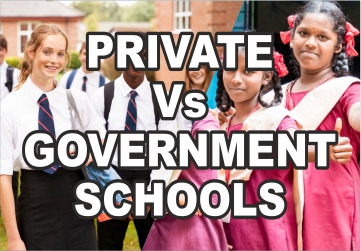
India’s school education system is undergoing a significant shift, with government data revealing that 18,727 government schools have been closed over the past five years even as private unaided schools are on the rise. The trend — disclosed in the Rajya Sabha — points to evolving parental preferences, demographic shifts, and structural changes in how schooling is delivered nationwide.
Decline in Government Schools: The Numbers
According to official figures presented in Parliament:
- The number of government schools dropped from 10,32,049 in 2020-21 to 10,13,322 in 2024-25.
- This equates to a net loss of 18,727 government schools across India over five academic years.
While reasons cited include rationalisation policies, mergers of low-enrolment schools, and demographic trends, the scale of closures is notable and has triggered debate on education equity and accessibility.
Private Schools Expand Rapidly
In contrast to the contraction of the public school network:
- Private unaided schools increased from 3,31,108 in 2023-24 to 3,39,583 in 2024-25 — an addition of 8,475 new private schools in just one year.
This surge reflects a growing demand for private education, often driven by perceptions of better quality, English-medium instruction, and modern facilities — especially in urban and peri-urban areas.
State-Wise Variations
The national data mask significant regional differences in school closures and private school growth:
- Uttar Pradesh recorded the highest overall number of private schools, indicating strong demand and investment.
- Bihar, Himachal Pradesh, Karnataka, Maharashtra, Assam and Arunachal Pradesh also saw notable reductions in government school numbers.
State education policies, demographic shifts, and migration patterns influence these trends, leading to diverse education landscapes across regions.
Why This Shift Matters
1. Impact on Access and Equity
Government schools have historically been the primary providers of affordable education, particularly in remote, rural, and economically disadvantaged areas. School closures can:
- Reduce access for students in areas with limited alternatives,
- Increase travel distances,
- Heighten costs for families forced into private options.
Students from marginalised sections — who depend on public schools for free or subsidised education and support services — may face barriers in continuing their schooling when local institutions close.
2. Quality vs. Accessibility Debate
While private schools are often perceived as higher quality, they may also be less affordable for low-income families, raising questions about education equity and the right to accessible education for all.
At the same time, rising private sector presence can stimulate competition, potentially pushing all schools to improve standards — but only if public school quality keeps pace.
Underlying Trends Driving Change
Demographic and Enrolment Shifts
Declines in school-aged populations due to falling birth rates in many regions may influence school viability, leading authorities to consolidate schools with low enrolment.
Rationalisation and Policy Reforms
Some closures result from rationalisation policies aimed at merging under-enrolled schools to make resource use more efficient — although this strategy has also drawn criticism for reducing local access.
Enrollment Realities on the Ground
Government data and education research point to a broader complexity: in addition to closures, many existing schools have very low or zero student enrolment — a situation referred to as “ghost schools.”
Looking Forward: Challenges and Considerations
The contraction of government schools raises several strategic challenges for India’s education policymakers:
🔹 Ensuring equitable access: Keeping quality schools within reach of rural and economically disadvantaged students.
🔹 Balancing growth and quality: Aligning private sector expansion with strong public standards and regulations.
🔹 Addressing infrastructure gaps: Strengthening remaining public schools and reversing perceptions of low quality.
🔹 Monitoring enrolment trends: Using data to inform rationalisation without harming community access.
The debate now centres on how India can retain broad access to education while adapting to changing patterns of demand and maintaining inclusivity for all children.