Date: October 19, 2026
Place: New Delhi
Education News: NCERT, Teacher Training and Multilingual Education
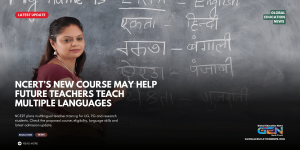
New Delhi, Education news: The National Council of Educational Research and Training (NCERT) is developing a new multilingual teacher-training model that could prepare future educators to teach more than one language in schools. The proposed initiative is aimed at undergraduate, postgraduate and research students within the NCERT university system and seeks to expand language-learning opportunities for schoolchildren.
The proposed programmes will combine language proficiency with teaching methods and classroom skills. The aim is to help schools offer a wider choice of Indian languages, even when relatively few students choose a particular language and appointing a separate teacher for every subject becomes difficult.
The initiative aligns with the broader multilingual education approach of the National Education Policy (NEP) 2020. However, the programme is still under development, and important details such as eligibility requirements, admission procedures, course duration and the launch date have not yet been finalised in the available reports.
What Is the New NCERT Multilingual Teacher Training Programme?
The proposed NCERT initiative is designed to prepare teachers who can teach multiple languages rather than focus exclusively on one language.
The training model is expected to cover two important areas: knowledge of the languages being taught and the pedagogical skills needed to teach them effectively in a classroom.
Knowing how to speak a language does not automatically mean someone is prepared to teach it. Teachers also need to understand language-learning methods, explain concepts clearly, assess student progress and respond to different learning needs.
The proposed model aims to combine these capabilities so that multilingual teachers can support a broader range of language options in schools.
Who Can Benefit From the Proposed NCERT Course?
According to the available reports, the planned programmes are intended for undergraduate, postgraduate and research students within the NCERT university system.
| Key detail | Latest available information |
|---|---|
| Institution | National Council of Educational Research and Training |
| Proposed initiative | Multilingual teacher-training programmes |
| Intended participants | Undergraduate, postgraduate and research students within the NCERT university system |
| Main objective | Prepare educators to teach more than one language |
| Training focus | Language proficiency and teaching pedagogy |
| Policy context | National Education Policy 2020 |
| Admission process | Not yet confirmed |
| Course duration | Not yet confirmed |
| Number of languages | Details still being worked out |
| Launch date | Not yet announced in the available reports |
Students should not treat this proposal as an open admission announcement. They should wait for an official notification specifying the programme structure, eligibility and application process.
Why Is NCERT Planning Multilingual Teacher Training?
One challenge facing schools is the difficulty of offering several language choices when student demand for individual languages is limited.
For example, a school might have students interested in learning different Indian languages, but too few students opting for each language to justify appointing a separate teacher for every subject.
A teacher trained to teach multiple languages could help schools expand their language offerings while making better use of available teaching resources.
The proposal is therefore intended to address both educational access and practical staffing challenges. Its success will depend on the quality of training, teachers’ actual proficiency and the needs of individual schools.
How Does the Initiative Relate to NEP 2020?
The National Education Policy 2020 places importance on multilingualism and the use of students’ home languages or mother tongues in education, particularly during the early years of schooling.
The proposed NCERT model supports the wider objective of strengthening language education by preparing teachers with both subject knowledge and classroom teaching skills.
A multilingual approach can help students engage with different languages and cultures. However, the exact languages that will be covered under the proposed training model have not yet been confirmed.
The programme’s final structure will be important in determining how it supports schools and students across India’s diverse linguistic regions.
What Skills Could Future Multilingual Teachers Need?
Although the final curriculum has not been announced, the proposed model highlights the importance of combining language knowledge with teaching ability.
Future multilingual teachers may need to develop skills in areas such as:
- Language proficiency: Strong command of the languages they are qualified to teach.
- Teaching methods: Techniques for explaining grammar, vocabulary, reading, writing and speaking.
- Classroom communication: Helping students with different language backgrounds participate in lessons.
- Assessment: Evaluating students’ progress in language learning.
- Cultural understanding: Recognising the cultural contexts and diversity associated with different languages.
These are relevant skills for multilingual education, but the final NCERT curriculum and assessment requirements remain to be announced.
Will Students Be Able to Apply for the NCERT Course Now?
The proposed programme should not yet be treated as an open course with confirmed admissions. The available reports do not establish an application deadline, fee structure, course duration or final eligibility criteria.
Interested students should monitor official NCERT announcements for details about the programme and any formal application process.
Students should also distinguish this proposed multilingual teacher-training model from other existing NCERT courses. A separate course announcement does not automatically mean that applications for the multilingual programme have opened.
Official website: NCERT
How Could the Programme Benefit Schools and Students?
If implemented effectively, multilingual teacher training could help schools offer more language options and respond to the needs of students from different linguistic backgrounds.
Potential benefits include:
- More language choices: Schools may find it easier to offer languages that attract smaller groups of students.
- Better use of teaching resources: Qualified teachers may be able to support more than one language subject.
- Improved language-learning support: Students could receive instruction from teachers trained in both language proficiency and teaching methods.
- Greater linguistic awareness: Learning multiple languages can expose students to different cultures and forms of communication.
- New professional development opportunities: Eligible students may have another pathway to explore language teaching, depending on the final programme requirements.
These are potential benefits rather than guaranteed outcomes. The impact will depend on implementation, teacher preparation and the availability of qualified educators.
NCERT Multilingual Teacher Training: Frequently Asked Questions
1. What is the new NCERT multilingual teacher-training course?
It is a proposed training model intended to prepare educators to teach more than one language in schools by combining language proficiency with teaching skills.
2. Who may be eligible for the programme?
The proposal is intended for undergraduate, postgraduate and research students within the NCERT university system. Final eligibility criteria have not yet been announced.
3. Which languages will be included in the course?
The final list of languages has not been confirmed. Details about the number of languages a teacher may be trained to teach are still being worked out.
4. Has NCERT announced the course launch date?
No confirmed launch date has been announced in the available reports as of October 19, 2026.
5. Can students apply for admission now?
The proposal should not be treated as an open admission process. Students should wait for an official notification containing application details, eligibility conditions and deadlines.
6. Why is NCERT planning to train teachers in multiple languages?
The initiative aims to help schools expand language choices, particularly where only a small number of students choose a particular language and appointing a separate teacher may be difficult.
7. How is the programme connected to NEP 2020?
The proposed model aligns with the policy’s broader emphasis on multilingualism and strengthening language education. The final programme details will determine how this approach is implemented in teacher preparation.
What Students Should Watch for Next
NCERT’s proposed multilingual teacher-training model could create new opportunities for language education and teacher preparation. For students interested in languages, teaching and research, the next important step is to watch for official details about eligibility, course structure, admissions and implementation.
Until those details are released, students should avoid relying on unverified application dates or fee information. Global Education News will continue to track the development and report confirmed updates that matter to students, future teachers and schools.