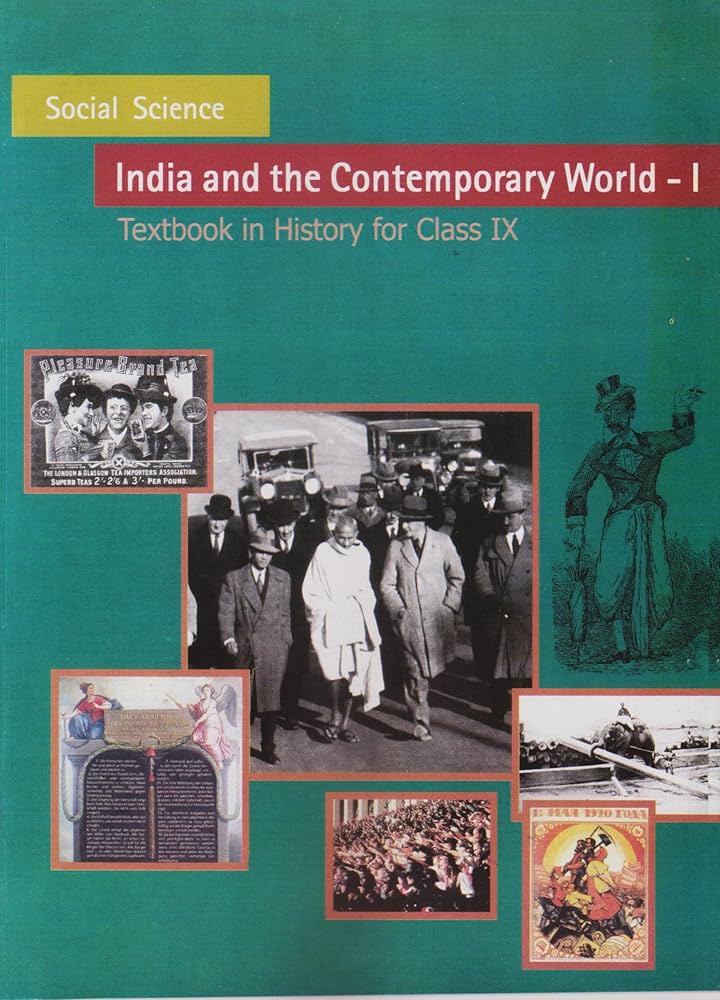
The National Council of Educational Research and Training (NCERT) has released its revised Class 9 Social Science textbook, Understanding Society: India and Beyond – Part 1, introducing significant updates that place greater emphasis on India’s democratic institutions, constitutional values, and electoral processes.
Among the most discussed additions are a detailed section on the 1975–77 Emergency and an explanation of the Special Intensive Revision (SIR) of electoral rolls, making the revised textbook one of the most contemporary versions of the Social Science curriculum in recent years.
The changes reflect NCERT’s ongoing curriculum reforms under the National Curriculum Framework, which seeks to connect classroom learning with real-world governance, citizenship, and constitutional responsibilities.
What’s New in the Revised Class 9 Social Science Textbook?
The newly introduced textbook expands discussions on how democratic institutions function during both routine governance and periods of constitutional challenge.
Major additions include:
- A dedicated discussion on the 1975–77 Emergency
- An explanation of the Special Intensive Revision (SIR) of electoral rolls
- Greater emphasis on constitutional safeguards
- Enhanced focus on democratic participation
- Updated civic concepts linked to contemporary governance
Rather than presenting democracy only as a political system, the textbook encourages students to understand how institutions, elections, citizens and constitutional mechanisms interact to sustain democratic governance.
Emergency Added as an Important Chapter in India’s Democratic Journey
For the first time in the revised secondary-level curriculum, the textbook includes a detailed discussion on the National Emergency imposed between 1975 and 1977.
The chapter describes the Emergency as one of the major challenges faced by Indian democracy, explaining that the period witnessed:
- Suspension of several Fundamental Rights
- Press censorship
- Arrest of political leaders and activists
- Increased pressure on democratic institutions
The textbook also outlines the political and economic conditions that preceded the Emergency, including rising inflation, unemployment and public dissatisfaction.
Importantly, the narrative concludes by highlighting the 1977 General Election, noting that the peaceful transfer of power demonstrated the resilience of India’s democratic framework and reinforced the importance of constitutional safeguards and citizen participation.
Special Intensive Revision (SIR): Introducing Students to Electoral Roll Verification
Another contemporary addition is the explanation of the Special Intensive Revision (SIR) conducted by the Election Commission.
The textbook explains that the objective of SIR is to ensure that:
- Every eligible citizen is included in the electoral roll.
- Ineligible entries are removed.
- Electoral rolls remain accurate and up to date.
By incorporating this topic, NCERT introduces students to practical aspects of election management, helping them understand the significance of free and fair elections in a democracy.
Why These Changes Matter
The revised textbook represents a broader shift from memorising historical facts to understanding democratic processes and constitutional values.
Students are encouraged to analyse:
Democratic Accountability
The role of institutions in protecting citizens’ rights.
Constitutional Governance
How constitutional provisions operate during extraordinary circumstances.
Electoral Integrity
Why maintaining accurate voter lists is essential for credible elections.
Active Citizenship
The importance of informed participation in democratic systems.
This approach aligns with competency-based education by encouraging critical thinking instead of rote learning.
How the Changes Reflect NEP 2020
The updated Social Science textbook mirrors several objectives of the National Education Policy (NEP) 2020, including:
- Experiential learning
- Inquiry-based education
- Constitutional literacy
- Civic awareness
- Critical thinking
- Contemporary relevance in classroom teaching
Rather than treating civics as a theoretical subject, the revised curriculum encourages students to connect textbook concepts with current democratic institutions and governance.
Academic Perspective: Understanding Democracy Beyond Textbook Definitions
Education experts have long argued that students should learn not only about historical events but also about the functioning of democratic institutions.
The inclusion of discussions on electoral roll revision and constitutional crises provides students with opportunities to understand:
- How elections are conducted.
- Why democratic institutions matter.
- How constitutional checks and balances function.
- The relationship between citizens and governance.
Such topics help develop informed citizens capable of understanding both historical developments and contemporary public institutions.
Public and Political Debate
As with many curriculum revisions involving historical and political topics, the latest additions have generated public discussion.
Supporters view the expanded content as an opportunity to strengthen constitutional literacy and civic understanding among students.
Critics have questioned aspects of the presentation and interpretation of historical events, arguing that politically sensitive topics require balanced classroom engagement.
The discussion reflects the broader reality that school curricula often evolve alongside changing educational priorities and public debates.
Key Takeaways from the Revised Textbook
New Textbook
Understanding Society: India and Beyond – Part 1
Major New Topics
- Special Intensive Revision (SIR)
- Expanded discussion on the 1975–77 Emergency
- Democratic institutions
- Electoral processes
- Constitutional safeguards
Educational Focus
- Civic awareness
- Constitutional values
- Democratic participation
- Critical thinking
- Contemporary governance
What This Means for Students
The revised curriculum encourages students to move beyond examination-oriented learning.
Instead of simply remembering historical events, learners are expected to understand:
- Why democratic institutions evolve.
- How constitutional mechanisms protect citizens.
- The importance of elections.
- The responsibilities of informed citizens in a democracy.
Such knowledge becomes increasingly relevant as students prepare to become future voters and active participants in public life.