Published on October 31 , 2025
Contents
Delhi, India
Announcement Overview
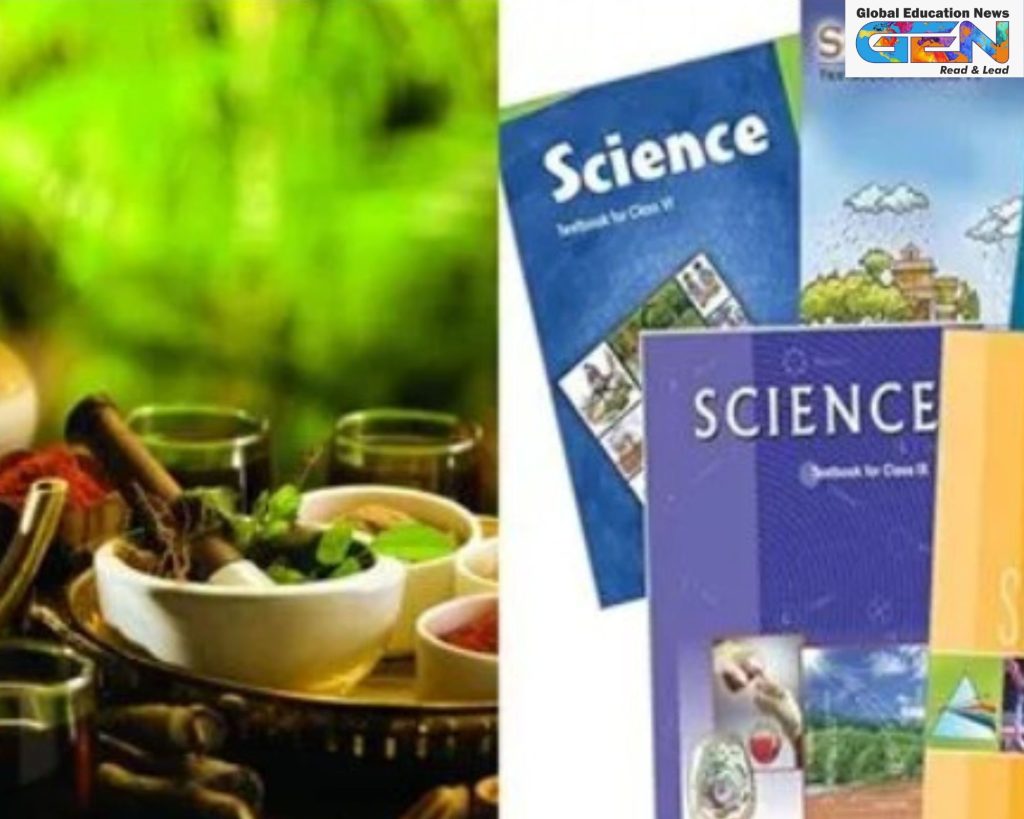
- Key Initiative: The National Council of Educational Research and Training (NCERT) has integrated Ayurveda-related chapters into the science curriculum for classes 6 and 8, aiming to blend traditional Indian knowledge with modern scientific principles.
- Objective Focus: The inclusion seeks to equip students with an understanding of health, nutrition, and environmental harmony from an indigenous perspective, promoting physical, mental, and overall well-being.
- Alignment with Policy: This step aligns with the National Education Policy (NEP) 2020, which emphasizes integrating Indian knowledge systems into mainstream education to cultivate responsible and health-conscious citizens.
- Implementation Timeline: The revised textbooks are set for the upcoming academic year, ensuring seamless rollout in CBSE-affiliated schools nationwide.
Specific Curriculum Changes for Classes 6 and 8
- Class 6 Enhancements: Introduction to Ayurveda’s foundational principles, including the 20 opposing qualities (gunas) such as hot-cold, light-heavy, and oily-dry, to help students classify substances and grasp basics of holistic health.
- Class 8 Additions: A dedicated chapter titled ‘Ayurveda: Balance of Body, Mind, and Environment,’ covering dinacharya (daily routines), ritucharya (seasonal regimens), and strategies for a balanced lifestyle to harmonize body, mind, and surroundings.
- Pedagogical Approach: These topics are woven into existing science modules, using interactive elements like diagrams and activities to make ancient concepts accessible and engaging for young learners.
- Content Scope: Emphasis on practical applications, such as dietary choices based on gunas and seasonal adaptations, to encourage real-life health practices from an early age.
Rationale Behind the Inclusion
- Cultural and Educational Integration: To instill respect for India’s ancient scientific heritage while complementing contemporary science, fostering a well-rounded worldview among students.
- Health Awareness Drive: Addresses rising concerns over lifestyle diseases by teaching preventive wellness, nutrition, and environmental sustainability through Ayurvedic lenses.
- Global and National Relevance: Supports the government’s push for AYUSH (Ayurveda, Yoga, Unani, Siddha, Homeopathy) promotion, aiming to position Ayurveda as a globally recognized health system.
- Student-Centric Benefits: Empowers children to make informed decisions on personal health, reducing dependency on modern medicine alone and promoting self-reliant, eco-conscious habits.
Expert and Official Reactions
- NCERT Director’s Perspective: Dinesh Prasad Saklani stated, “The aim is to familiarize students with principles of physical and mental health along with scientific knowledge,” highlighting the curriculum’s dual focus on tradition and innovation.
- AYUSH Minister’s Endorsement: Prataprao Jadhav emphasized complementarity, saying, “Allopathy and AYUSH systems are complementary. The aim is to develop an integrated health service model,” and noted its role in connecting students with traditional knowledge for global Ayurveda advocacy.
- Educator Consensus: Academic leaders praise the move for its inclusivity, viewing it as a progressive step that enriches science education without diluting core subjects.
- Stakeholder Support: Parents and wellness advocates welcome the change, seeing it as timely amid growing interest in holistic alternatives post-pandemic.
Broader Implications for Education and Ayurveda
- School-Level Impact: Encourages a shift towards experiential learning, potentially inspiring school wellness programs, yoga integrations, and nutrition clubs rooted in Ayurvedic principles.
- Higher Education Expansion: UGC and Ministry of AYUSH are developing modules to embed Ayurveda in college-level medical curricula, paving the way for interdisciplinary courses in universities.
- Societal and Health Outcomes: Could lead to a healthier youth demographic, reduced healthcare burdens, and stronger cultural identity, while boosting research in evidence-based Ayurveda.
- Challenges and Opportunities: Ensures scientific validation of concepts to maintain credibility; opens doors for teacher training and resource development to support effective implementation.