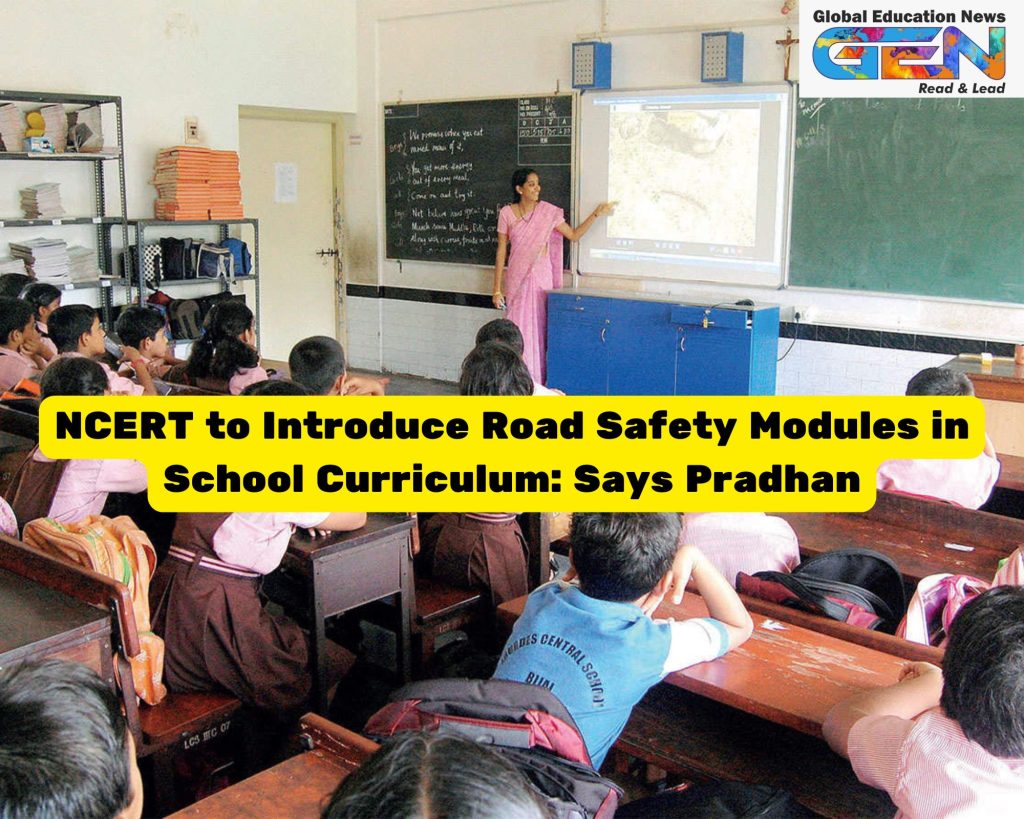
In a transformative step to combat the alarming rate of road accidents in India, Union Education Minister Dharmendra Pradhan has instructed the National Council of Educational Research and Training (NCERT) to integrate road safety modules into the school curriculum for students from Class 1 to Class 12. Announced on April 22, 2025, this initiative, developed in partnership with the Ministry of Road Transport and Highways, aims to instill road safety awareness and responsible behavior among young learners. Set to be implemented in the 2025-26 academic session, these road safety education modules will leverage engaging content to create a generation of safety-conscious citizens. This article delves into the initiative’s details, significance, and potential to reshape India’s road safety landscape.
The Directive: A Collaborative Vision for Safety
The decision emerged from a strategic meeting co-chaired by Dharmendra Pradhan and Nitin Gadkari, Union Minister for Road Transport and Highways, in New Delhi. Recognizing the critical need to address road accidents, the ministers outlined a plan to embed road safety education within the NCERT curriculum, aligning with the Sadak Suraksha Abhiyaan (Road Safety Campaign).
Key Points:
- Collaboration between the Ministry of Education and Ministry of Road Transport and Highways.
- Focus on age-appropriate modules for students from Class 1 to 12.
- Implementation targeted for the 2025-26 academic session.
- Part of the broader Sadak Suraksha Abhiyaan to promote road safety nationwide.
Why Road Safety Education is Crucial
India records over 1.5 lakh road fatalities annually, many attributed to reckless driving, ignorance of traffic rules, and inadequate safety awareness. Introducing road safety modules in schools aims to address these issues by fostering a culture of responsibility from an early age, aligning with the National Education Policy (NEP) 2020’s emphasis on life skills.
Key Points:
- Reduces road accidents by educating future drivers and pedestrians.
- Promotes awareness of traffic rules, pedestrian safety, and safe driving practices.
- Encourages students to advocate for road safety in their communities.
- Complements technological and legal efforts to enhance road safety.
Structure of the Road Safety Modules
The NCERT is tasked with designing class-specific and age-appropriate content to ensure the modules are effective and engaging. These will include audio-visual tools and an elective subject option for deeper exploration of road safety topics.
Key Points:
- Primary Level: Basic concepts like recognizing traffic signals and safe crossing practices.
- Secondary Level: Advanced topics such as road engineering, distracted driving risks, and legal consequences.
- Audio-Visual Content: Interactive videos, animations, and simulations for engaging learning.
- Elective Subject: Optional course for students to study road safety in-depth.
Implementation Strategy and Timeline
To ensure seamless integration, the NCERT will collaborate with traffic experts, educators, and technology providers. The modules will be rolled out in the 2025-26 academic year, with a focus on scalability and accessibility across urban and rural schools.
Key Points:
- Fast-tracked development of curriculum content by NCERT.
- Teacher training programs to equip educators with necessary skills.
- Use of digital platforms to deliver audio-visual content effectively.
- Nationwide rollout planned for the 2025-26 academic session.
Alignment with National and Global Goals
This initiative supports India’s commitment to reducing road accidents and aligns with the Sustainable Development Goals (SDGs), particularly those related to health, safety, and sustainable cities. It complements the Ministry of Road Transport and Highways’ efforts to deploy AI-based traffic solutions and improve road infrastructure.
Key Points:
- Supports SDG targets for safer roads and sustainable urban development.
- Enhances Nitin Gadkari’s vision for technology-driven road safety.
- Promotes behavioral change alongside infrastructure improvements.
- Positions India as a leader in proactive road safety education.
Challenges to Overcome
While the initiative holds immense potential, its success hinges on addressing key challenges to ensure effective implementation across diverse educational settings.
Key Points:
- Teacher Training: Need for specialized training to deliver road safety content.
- Resource Gaps: Ensuring rural schools have access to audio-visual tools.
- Student Engagement: Designing content that resonates with different age groups.
- Monitoring and Evaluation: Establishing metrics to assess the program’s impact.
Opportunities for Impact
The introduction of road safety modules presents a unique opportunity to create a ripple effect, influencing not just students but entire communities.
Key Points:
- Scalable Reach: Impacts millions of students through the NCERT curriculum.
- Community Advocacy: Students can promote road safety awareness locally.
- Long-Term Benefits: Early education reduces future accident rates.
- Public-Private Partnerships: Collaboration with tech providers for innovative content delivery.
How Students and Parents Can Engage
As the road safety curriculum takes shape, students and parents can play an active role in supporting and amplifying its impact.
Key Points:
- Stay updated via ncert.nic.in for curriculum announcements.
- Practice road safety habits like wearing helmets and using pedestrian crossings.
- Participate in school-led road safety workshops and campaigns.
- Explore online resources for interactive traffic rule learning.
Toward a Safer Future
The integration of road safety modules into the NCERT curriculum marks a pivotal moment in India’s fight against road accidents. By equipping students with the knowledge and mindset to navigate roads responsibly, this initiative paves the way for a safer, more conscious society. As the 2025-26 academic session approaches, stakeholders are urged to rally behind this vision, ensuring that every classroom becomes a stepping stone to safer roads.
For updates on the NCERT road safety modules, visit ncert.nic.in and follow announcements from the Ministry of Education. Let’s drive toward a future where safety rules the road.