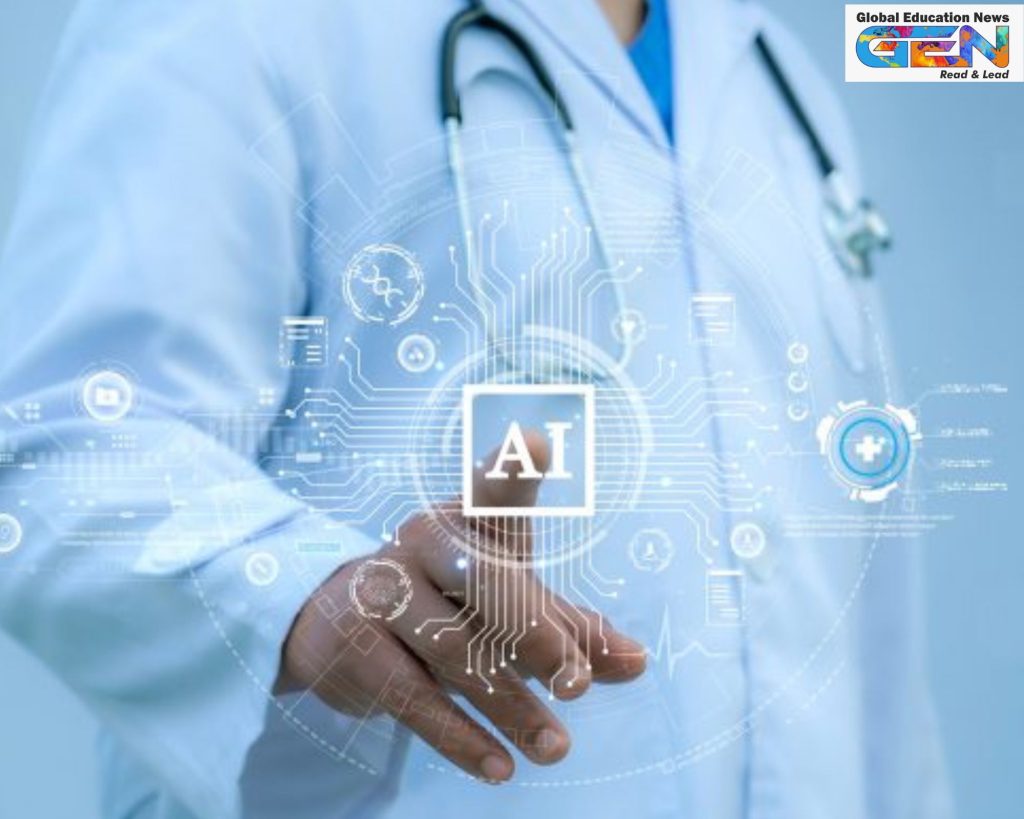
In an era where AI tools are revolutionizing diagnostics and treatment plans—from predicting disease outbreaks to personalizing patient care—Indian doctors stand at the cusp of a transformative leap, yet many grapple with the tech’s ethical minefield. Enter the National Board of Examinations in Medical Sciences (NBEMS): On January 2, 2026, the board unveiled a groundbreaking free online program, “Artificial Intelligence in Medical Education,” designed exclusively for postgraduate doctors and faculty. This six-month, no-coding-required initiative—kicking off in January 2026—demystifies AI’s role in clinical practice, emphasizing safe, responsible integration amid India’s booming digital health ecosystem. With 20 live modules led by global luminaries from Mayo Clinic to IISc Bengaluru, it equips medics to evaluate AI biases, safeguard patient privacy, and harness tools for better outcomes, all without a single line of code. As AI adoption in Indian hospitals surges 40% yearly (per 2025 NITI Aayog data), this course isn’t just education—it’s empowerment, bridging the 70% knowledge gap among non-tech-savvy clinicians. This analysis unpacks the program’s blueprint, from eligibility to impact, highlighting why it’s a must-enroll for the 50,000+ NBEMS trainees and alumni poised to lead AI-driven healthcare.
The Launch: NBEMS’s Bold Bet on AI-Literate Medics
NBEMS, the apex body for postgraduate medical exams, timed this launch amid a national push for AI in health—echoing the Ayushman Bharat Digital Mission’s 2025 goals for interoperable records. The program, hosted entirely online via live sessions, targets the ethical quagmire: AI’s promise (e.g., 30% faster diagnoses) versus pitfalls like algorithmic bias (affecting 20% of AI health tools, per WHO). No fees, no prerequisites beyond medical credentials—it’s a democratizing force for India’s 10 lakh+ specialists.
- Start Date: January 2026; six months duration.
- Format: 20 interactive modules; certification upon completion.
- Faculty Lineup: A global dream team—Mayo Clinic’s AI ethicists, Harvard’s data scientists, Oxford’s privacy experts, alongside IISc Bengaluru’s quantum pioneers and IIM Lucknow’s policy gurus.
- NBEMS’s Rationale: “Designed for doctors with no technical or programming background… to critically assess AI tools, use them responsibly, and integrate them safely into clinical care and education.”
This initiative fills a void: Only 15% of Indian doctors report AI confidence (2025 FICCI survey), making it a timely tonic for a sector projected to hit $372 billion by 2030.
Course Curriculum: From AI Basics to Ethical Bedside Brilliance
The program’s 20 modules are a masterclass in practical wisdom, eschewing algorithms for actionable insights—tailored to India’s diverse healthcare tapestry, from rural PHCs to urban ICUs.
| Module Category | Key Topics | Learning Outcomes |
|---|---|---|
| Core AI Concepts | AI fundamentals in diagnostics, predictive analytics, treatment planning. | Grasp AI’s role without jargon; evaluate tools for clinical validity and bias. |
| Ethical & Safety Pillars | Patient privacy (DPDP Act), cybersecurity risks, accountability in AI decisions. | Identify legal/ethical pitfalls; ensure HIPAA-like safeguards in Indian contexts. |
| Integration Strategies | AI in research, education, multidisciplinary teams; patient-centered reasoning. | Seamlessly blend AI outputs with human judgment; collaborate across specialties. |
| Advanced Applications | AI in medical research, ethical AI in Indian health systems. | Innovate responsibly; uphold professionalism amid AI-assisted workflows. |
- Delivery Style: Live online sessions; interactive Q&A; case studies from Indian scenarios (e.g., AI for TB detection in Bihar).
- Assessment: Module quizzes, capstone project (e.g., AI ethics audit of a hospital tool); certification for 80%+ completion.
- Duration Breakdown: 2-3 hours/week; flexible pacing for busy clinicians.
This curriculum isn’t theoretical—it’s transformative, empowering doctors to wield AI as an ally, not an enigma.
Eligibility and Registration: Open Doors for Medics Nationwide
Accessibility is the program’s ethos: No gatekeeping, just a commitment to growth.
- Who Qualifies:
- NBEMS ongoing trainees and alumni (qualified 2020 onwards).
- Faculty from NBEMS-accredited departments.
- Other registered medical professionals passionate about AI in healthcare.
- Earlier alumni considered in subsequent rounds.
- No Barriers: Zero fees; no coding/tech background needed; open to all Indian medics.
- How to Join: Applications via natboard.edu.in; class schedules, eligibility, and certification details online. Queries to 011-45593000 or cme@natboard.edu.in.
- Seats: Unlimited (online capacity); first-come, first-served with priority for NBEMS affiliates.
Registration opens immediately—spots fill fast for this free frontier.
Objectives and Benefits: AI as a Scalpel, Not a Sledgehammer
NBEMS envisions the course as a “judgment forge,” equipping doctors to navigate AI’s dual edges: Efficiency gains (e.g., 25% faster imaging analysis) versus risks like data leaks (affecting 15% of Indian health apps, per 2025 CERT-In).
- Core Objectives:
- Demystify AI for non-tech medics.
- Instill ethical discernment: When to trust, when to question.
- Foster safe integration in India’s under-resourced systems.
- Tangible Benefits:
- Clinical Edge: Spot biases in AI diagnostics; enhance decision-making with patient-centered AI.
- Professional Polish: Certification boosts resumes for AI-health roles (salaries up 20% for AI-savvy docs).
- Systemic Shift: 5,000+ completers could ripple to 1 lakh patients via better AI oversight.
- Teamwork Triumph: Skills for multidisciplinary squads, vital in India’s collaborative care models.
Quote: “The programme objective is to equip postgraduate doctors and faculty with the knowledge and judgment needed to: Critically assess AI tools, use them responsibly, integrate them safely.”
Challenges and the Road Ahead: From Enrollment to Ecosystem Impact
While free and flexible, hurdles like session scheduling for shift workers and rural internet gaps (affecting 30% medics) loom. NBEMS mitigates with recordings and vernacular subtitles.
- Scalability: Pilot 1,000 enrollees; scale to 10,000 by mid-2026.
- Long-Term Vision: Feed into NBEMS’s AI-health research hub; partnerships with AIIMS for field trials.
- Broader Echo: Complements Ayushman Bharat’s digital push, potentially halving misdiagnosis rates by 2030.
As India eyes 1 billion health records digitized by 2027, this course could be the ethical engine.