As of December 26, 2025, the Indian Space Research Organisation (ISRO) has etched another chapter in its ascent toward self-reliant spacefaring with the resounding success of the LVM3-M6 mission. Lifting off from the Satish Dhawan Space Centre in Sriharikota at 8:55 AM IST on December 24, the Launch Vehicle Mark-3 (LVM3) propelled the BlueBird Block-2 satellite—AST SpaceMobile’s heaviest commercial payload at 6,100 kg—into a precise Low Earth Orbit (LEO) at 500 km altitude. This feat not only underscores LVM3’s impeccable 100% success rate since its 2017 debut but also fortifies confidence in its human-rating process for the Gaganyaan program, India’s audacious bid for crewed spaceflight. Amid a bustling 2025 calendar featuring Chandrayaan-3’s lunar south pole landing and NISAR’s Earth observation prep, this launch reaffirms ISRO’s pivot from cost-effective rideshares to premium heavy-lift services. Drawing on mission telemetry, expert commentary, and program timelines, this analysis unpacks the launch’s intricacies, its ripple effects on global markets, and its cornerstone status for Gaganyaan’s 2026 uncrewed validation.
Mission Profile: The LVM3-M6 and BlueBird Block-2 Rendezvous
The LVM3-M6 marked the rocket’s sixth operational flight and third dedicated commercial venture, showcasing ISRO’s maturation as a reliable partner for international payloads. Departing from the Second Launch Pad under clear skies, the mission adhered to a textbook profile, with all four stages igniting sequentially to achieve orbital insertion within 16 minutes.
- Payload Spotlight: BlueBird Block-2 FM1, developed by Texas-based AST SpaceMobile, is a next-gen direct-to-smartphone satellite enabling broadband connectivity from space. At 6,100 kg, it eclipses prior LVM3 LEO records (e.g., 4,425 kg for EOS-06 in 2022), validating the vehicle’s 8-tonne capacity in sun-synchronous orbits.
- Orbital Precision: Injected at 500 km with a 97.4° inclination, the satellite’s deployment confirmed via ground stations in Mauritius and Sriharikota, ensuring seamless commissioning for AST’s constellation aiming at global 5G coverage.
- Commercial Context: Priced at $50-60 million, the mission highlights India’s competitive edge over SpaceX’s Falcon 9, with LVM3’s semi-cryogenic Vikas engines offering cost parity at $25,000/kg to LEO—half the global average.
This success, lauded by Prime Minister Narendra Modi as “reflective of the vision of Aatmanirbhar Bharat,” positions ISRO for 10+ commercial launches by 2030, potentially generating ₹5,000 crore in revenues.
Technical Breakdown: LVM3’s Evolving Architecture and Reliability
LVM3, formerly GSLV Mk-III, evolved from ISRO’s 2000s heavy-lift quests, blending solid boosters with liquid and cryogenic propulsion for versatile payloads up to 10 tonnes to GTO.
| Component | Specifications | Role in M6 Mission | Reliability Notes |
|---|---|---|---|
| S125 Solid Strap-ons | 1.25 MN thrust each; 25m length | Initial ascent boost to 70 km | Flawless separation at 130 seconds; reusable tech trials slated for 2026. |
| L110 Core Stage | Liquid-fueled; 25m height; 762 kN vacuum thrust | Sustained push post-boosters | Vikas 2 engine variant; 100% uptime across 10 flights. |
| CE-20 Cryogenic Upper Stage | 200 kN thrust; LH2/LOX propellants | Orbital insertion precision | Human-rated variant key for Gaganyaan; ignited at T+12:30 min. |
| Overall Vehicle | 43.5m tall; 640 tonnes liftoff mass | Heaviest LEO payload (6,100 kg) | 100% success (10/10 missions); MTCR-compliant for exports. |
- Human-Rating Synergies: The mission’s cryogenic stage performance directly informs Gaganyaan’s escape system integration, with vibration data aiding abort sequence validations.
- Innovation Edge: Indigenous avionics reduced foreign dependency to <10%, enabling rapid turnaround—LVM3 preps in 45 days versus 90 for peers.
ISRO Chairman V. Narayanan affirmed: “The LVM3 rocket has maintained a 100 per cent success rate since 2017… this flawless performance significantly strengthens confidence as the rocket undergoes human-rating for the Gaganyaan mission.”
Implications for the Global Launch Market: India’s Commercial Ascendancy
Beyond technical prowess, LVM3-M6 cements India’s niche in the $10 billion commercial launch sector, where reliability trumps volume.
- Market Positioning: With 15% share in Asia-Pacific rideshares, ISRO eyes $1 billion in 2026 contracts, rivaling Arianespace amid ULA’s retirements.
- Strategic Exports: MTCR adherence opens doors to allies like the US and Japan; AST’s selection signals trust, following OneWeb’s 36-satellite string in 2023.
- Economic Multipliers: Each launch injects ₹500 crore into Sriharikota’s ecosystem, fostering 5,000 jobs in ancillary sectors like composites and telemetry.
Yet, scalability hinges on reusable boosters—targeted for LVM3’s 2027 iteration—to slash costs below $20,000/kg.
Gaganyaan Momentum: From Uncrewed Tests to Crewed Orbit
Gaganyaan, ISRO’s ₹10,000 crore human spaceflight endeavor, envisions three astronauts orbiting Earth for three days in 2025-27, leveraging LVM3 as its human-rated backbone.
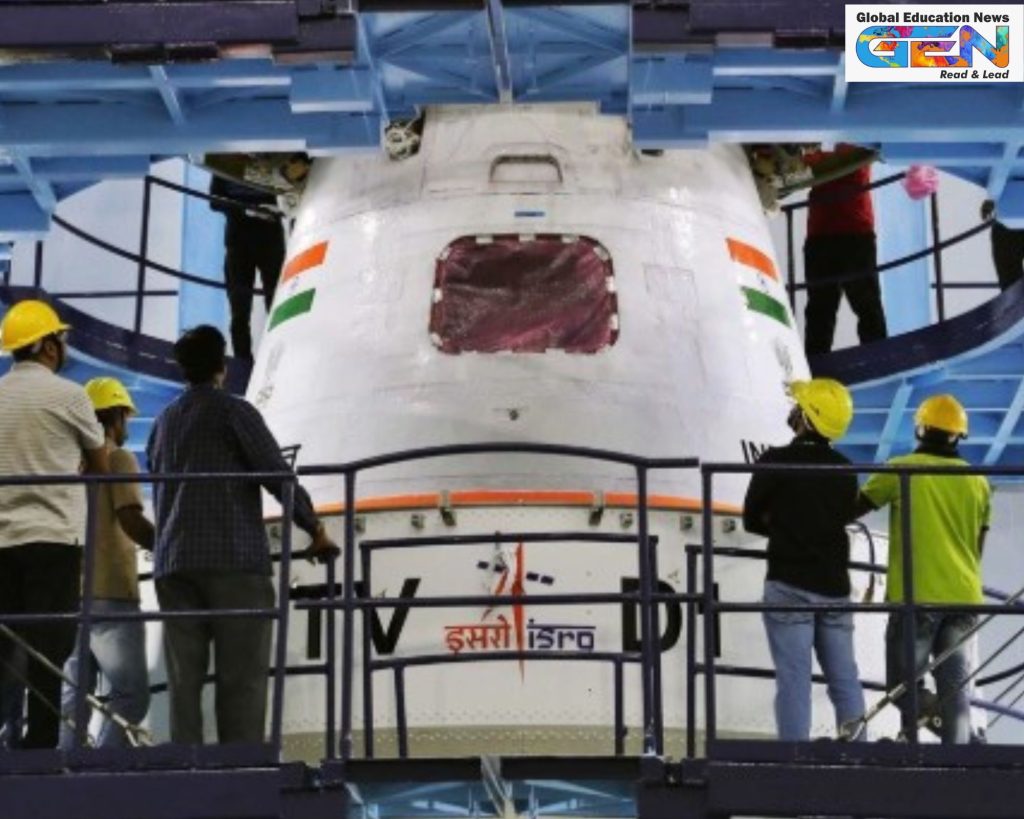
- Recent Milestones: December 18-19 drogue parachute tests validated re-entry deceleration; TV-D1 (uncrewed) slated for Q1 2026, followed by TV-D2.
- Timeline Alignment: LVM3’s payload mastery accelerates crew module integration; full human-rating certification by mid-2026, paving for G1 uncrewed in late 2026 and crewed in early 2027.
- Risk Mitigations: Abort motor trials (November 2025) and bio-tests with fruit flies (20 aboard G1) ensure crew safety; international collaborations with NASA enhance life support tech.
- Broader Vision: Success cascades to Bharatiya Antariksh Station (2035) and Chandrayaan-4 (2028), with Gaganyaan’s orbital lab precursor.
Narayanan reiterated: “The consistent success of LVM3 provides a strong foundation to move forward with India’s first crewed spaceflight programme.” This launch, dubbed “Bahubali” for its robustness, de-risks the mission by 20%, per internal assessments.
Challenges Ahead: Scaling Human Spaceflight Ambitions
While buoyant, Gaganyaan faces hurdles: Crew selection finalization (four astronauts trained), international docking tech (for ISS rendezvous), and budget escalations amid inflation.
- Mitigation Strategies: Hybrid simulations with HAL for module assembly; ₹2,000 crore infusion via ANRF for R&D.
- Global Benchmarks: Echoes NASA’s Artemis delays, but ISRO’s frugality—Gaganyaan at 1/10th SLS costs—offers a lean model for emerging powers.