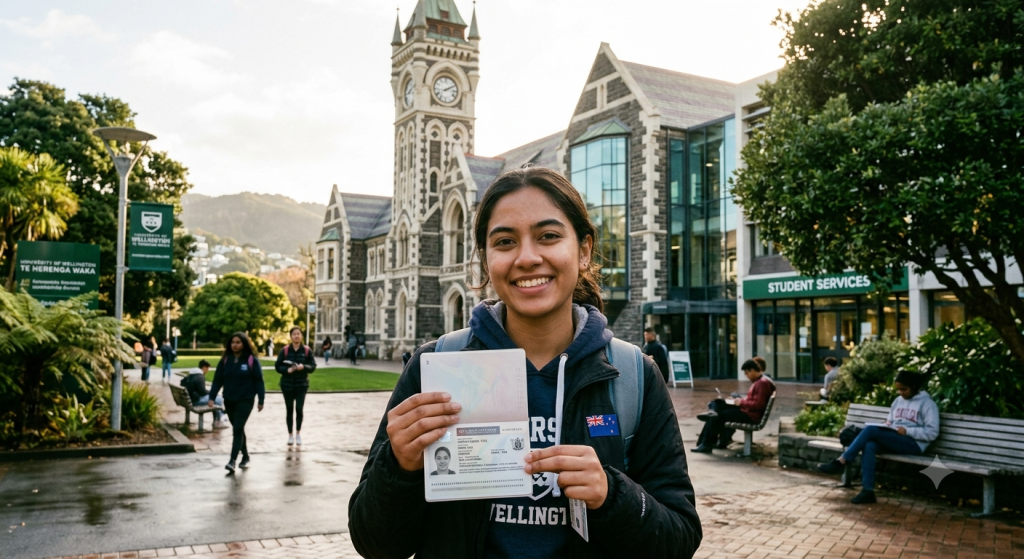
WELLINGTON, NEW ZEALAND — New Zealand is opening a new post-study work route for international students, giving eligible graduates up to six months of open work rights from November 16, 2026. The new New Zealand work visa 2026 is designed for graduates who complete qualifying Level 5 to 7 programmes but do not qualify for the country’s existing Post-Study Work Visa.
The change is significant for international students weighing New Zealand as a study destination. Instead of leaving the country immediately after completing a qualification that falls outside the existing post-study route, eligible graduates will have a limited period to find employment and potentially move into a longer-term work pathway.
At the same time, New Zealand is widening eligibility for its existing Post-Study Work Visa, creating a two-track system based more closely on a graduate’s qualification and academic background.
New Zealand Work Visa 2026: Who Can Get the New Six-Month Route?
The Short-Term Graduate Work Visa will open for applications on November 16, 2026.
It is aimed at international graduates who have completed an eligible NZQCF Level 5, 6 or 7 qualification, studied full-time in New Zealand for at least 24 weeks, but do not qualify for the Post-Study Work Visa.
The qualification must not be an English-language, foundation or bridging programme. Micro-credentials and qualifications that already make a student eligible for the Post-Study Work Visa are also excluded.
The visa provides six months of open work rights, meaning graduates can work for an employer in New Zealand while searching for a suitable job and exploring longer-term options. Immigration New Zealand says the route can, where appropriate, provide a bridge towards an Accredited Employer Work Visa.
Key eligibility conditions
Applicants will need to meet several requirements:
- Complete an eligible NZQCF Level 5 to 7 qualification.
- Study full-time in New Zealand for at least 24 weeks.
- Have held a New Zealand student visa within the three months before applying.
- Have at least NZD 5,000 available to support themselves.
- Meet health and character requirements.
- Not have previously held a Short-Term Graduate Work Visa or Post-Study Work Visa.
- Apply within three months of the expiry of the relevant student visa.
The visa is deliberately short-term. A person can receive only one Short-Term Graduate Work Visa, and it cannot be extended or renewed.
New Zealand Post-Study Work Visa Rules Also Expanded
The six-month graduate visa is only half of the policy change.
From November 16, New Zealand will also expand its Post-Study Work Visa to include graduates who complete a Level 7 Graduate Diploma in New Zealand and already hold a bachelor’s degree. The bachelor’s degree can have been completed in New Zealand or overseas, with no limit on when it was awarded.
However, the Graduate Diploma itself must be studied full-time in New Zealand for its full duration. Cross-crediting or recognition of prior learning cannot be used to meet this requirement.
This distinction matters for students planning their education pathway. A qualification that leads to the Post-Study Work Visa can provide a substantially longer work period than the new six-month graduate route.
How long can graduates stay?
Under the existing Post-Study Work Visa framework, eligible graduates can remain and work in New Zealand for up to three years, depending on their qualification and study.
For the newly expanded Graduate Diploma route, the visa can be issued for the length of the New Zealand study period, up to a maximum of one year.
Eligible Level 8 postgraduate diploma graduates may qualify for a one-year Post-Study Work Visa, while eligible Master’s graduates can qualify for up to three years, subject to the applicable study requirements.
Why New Zealand Is Changing Its Graduate Visa Rules
The policy is part of a broader attempt to align New Zealand’s international education system with the country’s workforce needs.
Immigration New Zealand says the changes are intended to support international education growth while ensuring graduates are better positioned to move into work that matches New Zealand’s skills requirements. The government has also framed the changes as a way to attract and retain international graduates with valuable skills.
That makes the new visa more than a simple extension of post-study rights. It creates a clearer hierarchy: graduates whose qualifications meet existing post-study criteria can access the longer route, while others who meet specified academic requirements receive a shorter window to enter the labour market.
What International Students Should Watch Before Choosing a Course
For prospective students, the biggest lesson from the new New Zealand student visa 2026 rules is that the qualification itself matters.
Two students may both graduate from New Zealand universities or institutions but face different immigration outcomes depending on the qualification level, duration of study and whether their programme makes them eligible for the Post-Study Work Visa.
A student considering a Level 5, 6 or 7 programme should therefore check the post-study work implications before enrolling. A course that appears attractive academically may offer a very different immigration pathway from a qualification that falls under the longer Post-Study Work Visa system.
Students should also pay close attention to study duration. For the new Short-Term Graduate Work Visa, the qualifying programme must have involved at least 24 weeks of full-time study in New Zealand.
Six Months Can Be a Launchpad — But Not a Guarantee
The new visa gives graduates time, not a guaranteed job.
Six months can be valuable for a recent graduate entering the New Zealand labour market, particularly if they use that period to secure relevant employment and explore an eligible longer-term visa. But the Short-Term Graduate Work Visa itself cannot be extended or repeated.
The policy therefore rewards careful planning before a student arrives in New Zealand rather than after graduation.
For students already studying there, the November 16 launch date will be particularly important. Applications for the new visa will be submitted online through Enhanced Immigration Online (ADEPT).
New Zealand Work Visa 2026: What Changes From November 16?
| Visa route | Key feature |
|---|---|
| Short-Term Graduate Work Visa | Up to 6 months of open work rights |
| Eligible qualification | NZQCF Level 5–7 |
| Minimum study | 24 weeks full-time in New Zealand |
| Funds required | At least NZD 5,000 |
| Application window | Within 3 months of relevant student visa expiry |
| Post-Study Work Visa | Eligibility expanded for certain Level 7 Graduate Diploma holders |
| Master’s graduates | Eligible programmes can lead to up to 3 years of post-study work rights |
| Application system | Enhanced Immigration Online (ADEPT) from November 16, 2026 |
The larger message for international students
New Zealand’s latest immigration changes send a fairly clear signal: the country wants international graduates, but it is becoming more selective about how study translates into work rights.
For students considering New Zealand in 2026, the decision is no longer simply about tuition fees, rankings or the attractiveness of studying abroad. The qualification, study duration and post-study visa pathway can shape what happens after graduation.
And from November 16, 2026, that calculation will include a new option: six months to find a foothold in the New Zealand job market.