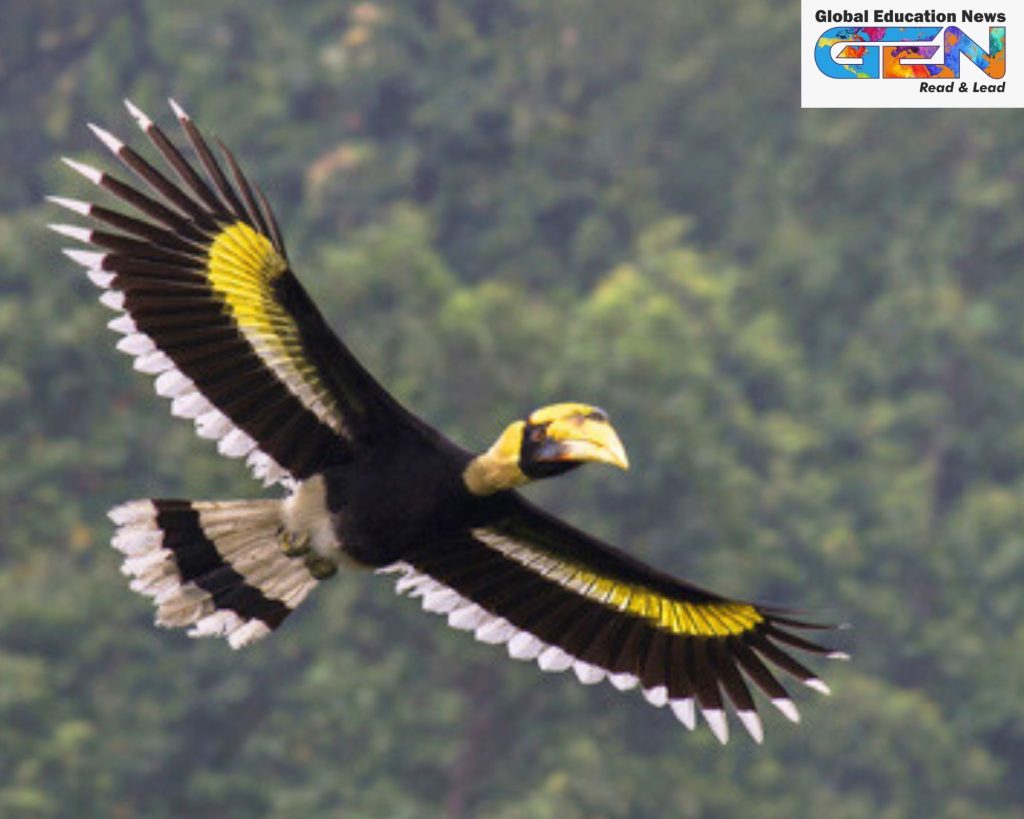
In a groundbreaking move, the Tamil Nadu government has launched India’s first Centre of Excellence for Hornbill Conservation at the Anamalai Tiger Reserve (ATR) in Coimbatore district. Announced on July 22, 2025, this pioneering initiative, funded with ₹1 crore from the Endangered Species Conservation Corpus Fund, aims to safeguard four hornbill species critical to the Western Ghats’ ecosystems. Known as the “farmers of the forest,” hornbills are vital seed dispersers, and their survival is key to forest health. Ready to explore how this centre is set to transform conservation? Let’s soar into the details!
- Why It’s a Big Deal: India’s first dedicated hornbill conservation hub.
- Mission: Protect hornbills, restore habitats, and engage communities.
- Where: Anamalai Tiger Reserve, a biodiversity hotspot in Coimbatore.
Hornbills: The Unsung Heroes of Forest Ecosystems
Hornbills are nature’s gardeners, dispersing seeds of native trees like figs and canarium, which sustain forest biodiversity. Their vibrant beaks and unique nesting habits make them iconic, but their ecological role is even more vital. A decline in hornbill populations can disrupt entire ecosystems, affecting other wildlife dependent on forest habitats.
- Seed Dispersers: Spread seeds across vast areas, ensuring forest regeneration.
- Biodiversity Boosters: Support growth of diverse tree species critical for wildlife.
- Ecosystem Impact: Their absence threatens forest health and species survival.
Fun Fact: A single Great Hornbill can disperse up to 20,000 seeds annually, making it a cornerstone of tropical forest ecosystems!
The Threat to Hornbills: Why They Need Protection
Hornbills in the Western Ghats face mounting challenges that threaten their survival. The Centre aims to tackle these head-on:
- Habitat Loss: Deforestation and fragmentation reduce nesting sites and food sources.
- Climate Change: Altered flowering and fruiting cycles disrupt feeding and breeding.
- Population Isolation: Fragmented forests limit mating opportunities, increasing extinction risks.
Social Buzz: X posts highlight local pride in Tamil Nadu’s initiative, with users like @TNBiodiversity praising the focus on hornbill conservation amid climate concerns.
Spotlight on Anamalai Tiger Reserve: The Perfect Home
The Anamalai Tiger Reserve, nestled in the Western Ghats, is a biodiversity haven, making it the ideal location for this Centre. Already a stronghold for tigers, elephants, and lion-tailed macaques, ATR’s robust infrastructure and conservation expertise provide a solid foundation for hornbill protection.
- Biodiversity Hub: Home to diverse flora and fauna, perfect for ecological research.
- Conservation Legacy: Proven success in protecting endangered species.
- Research Ready: Equipped for habitat mapping, nest monitoring, and scientific studies.
Did You Know? ATR spans 958 sq km and supports over 2,000 plant species, creating a rich habitat for hornbills.
Meet the Stars: Four Hornbill Species Under Protection
The Centre focuses on four hornbill species native to the Western Ghats, each with unique roles and conservation needs:
- Great Hornbill (Buceros bicornis): The largest, known for its massive casque and long-distance seed dispersal.
- Malabar Grey Hornbill (Ocyceros griseus): Endemic to the Western Ghats, reliant on dense forests.
- Malabar Pied Hornbill (Anthracoceros coronatus): Vibrant and social, critical for fruit tree regeneration.
- Indian Grey Hornbill (Ocyceros birostris): Found in open woodlands, adaptable but vulnerable to habitat loss.
- Why They Matter: Each species supports distinct ecological niches, ensuring forest diversity.
- Tailored Strategies: The Centre will develop species-specific conservation plans.
What the Centre Will Do: A Roadmap for Hornbill Survival
With ₹1 crore in funding, the Centre of Excellence is set to launch a multi-pronged approach to save hornbills:
- Habitat Mapping: Identify and protect key nesting and feeding areas.
- Nest Monitoring: Track breeding success and nesting site availability.
- Forest Restoration: Plant native trees like figs to boost food availability.
- Climate Impact Studies: Assess how climate shifts affect hornbill behavior and survival.
- Community Engagement: Involve local tribes and communities in conservation efforts.
Pro Tip: The Centre’s data-driven approach will use real-time monitoring to adapt strategies, ensuring long-term success.
Why This Matters: A Ripple Effect for Biodiversity
Hornbill conservation isn’t just about saving birds—it’s about preserving entire ecosystems. By protecting these seed dispersers, the Centre will:
- Boost Forest Health: More trees mean better carbon sequestration and wildlife habitats.
- Support Other Species: Healthy forests benefit tigers, elephants, and smaller fauna.
- Empower Communities: Local involvement creates sustainable livelihoods and awareness.
By the Numbers: The Western Ghats host 23% of India’s tree species, many reliant on hornbills for seed dispersal.
Challenges and Opportunities
While the initiative is groundbreaking, challenges remain:
- Funding Needs: ₹1 crore is a start, but long-term conservation requires sustained investment.
- Community Buy-In: Engaging local tribes without disrupting their livelihoods is key.
- Climate Threats: Rapid climate shifts demand adaptive, flexible strategies.
Opportunities:
- Research Leadership: ATR could become a global hub for hornbill studies.
- Eco-Tourism: Conservation efforts can boost sustainable tourism in Coimbatore.
How You Can Support Hornbill Conservation
Want to join the mission? Here’s how:
- Spread Awareness: Share updates about the Centre on social media using hashtags like #HornbillConservation.
- Visit ATR: Explore Anamalai Tiger Reserve and support eco-tourism.
- Stay Informed: Check tn.gov.in for updates on the Centre’s progress and volunteer opportunities.
Soaring Toward a Greener Future!
Tamil Nadu’s Centre of Excellence for Hornbill Conservation at Anamalai Tiger Reserve is a bold step to protect the “farmers of the forest.” By safeguarding the Great Hornbill, Malabar Grey Hornbill, Malabar Pied Hornbill, and Indian Grey Hornbill, this ₹1 crore initiative will restore habitats, combat climate change, and preserve the Western Ghats’ biodiversity. Join the movement, visit tn.gov.in for more details, and help Tamil Nadu lead India’s conservation charge!