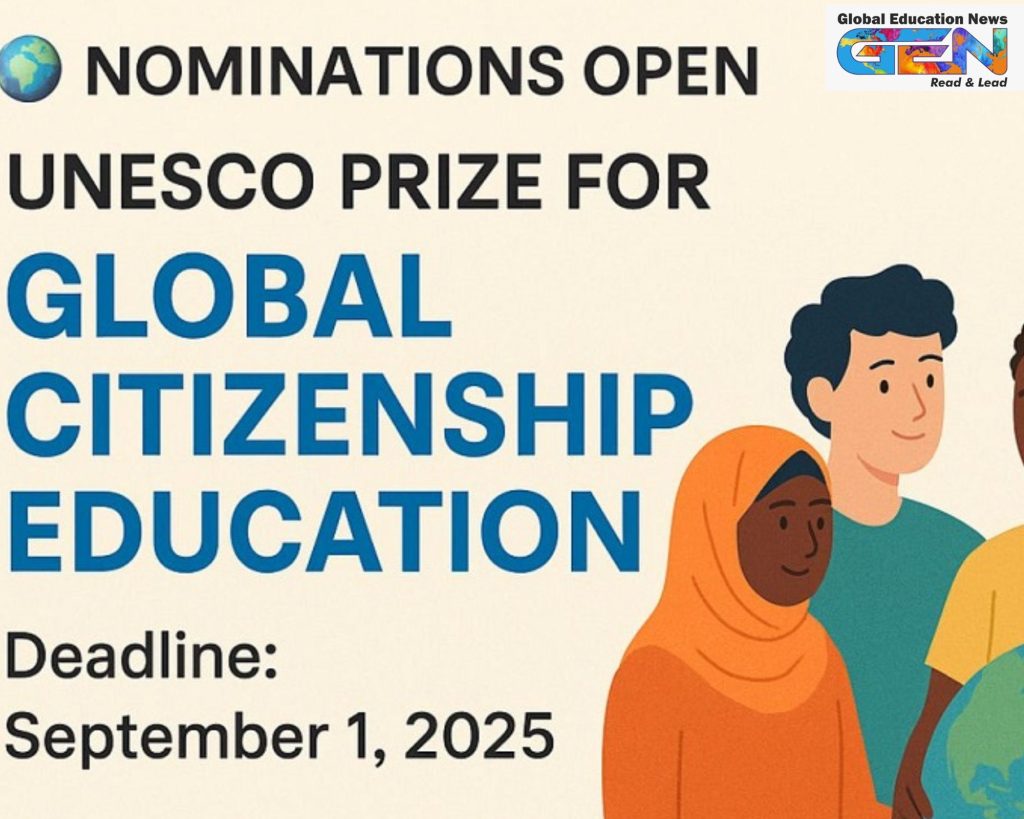
The UNESCO Prize for Global Citizenship Education (GCED) 2025, launched in 2024 with support from the Republic of Korea, is calling for nominations to honor transformative education projects. Offering two $50,000 awards (approximately ₹42.69 lakh each), this biennial prize celebrates initiatives that foster peace, human rights, and sustainable development. The Indian National Commission for Cooperation with UNESCO (INCCU) is inviting nominations by August 18, 2025, for submission to UNESCO by September 1, 2025. Ready to showcase India’s impact? Here’s your guide to seizing this opportunity!
Key Points:
- Prize Value: Two awards of $50,000 each for youth-led and other entities.
- Nomination Deadline: August 18, 2025 (INCCU), September 1, 2025 (UNESCO).
- Categories: Youth-led organizations (18–30 years) and individuals/institutions/NGOs.
- Focus: Projects promoting intercultural understanding, civic participation, and digital citizenship.
Why the UNESCO GCED Prize Matters
The Global Citizenship Education (GCED) Prize is more than just an award—it’s a global platform to amplify initiatives that empower learners to tackle challenges like inequality, climate change, and conflict. Aligned with Sustainable Development Goal 4.7, it promotes education for human rights, diversity, and global responsibility. For India, this is a chance to highlight projects that inspire empathy, critical thinking, and inclusive societies, gaining international recognition and networking opportunities within UNESCO’s community.
Key Points:
- Global Impact: Recognizes projects fostering peace, equity, and sustainability.
- Visibility: Winners gain global exposure and collaboration opportunities.
- Funding: $50,000 to scale impactful initiatives.
- Alignment: Supports UNESCO’s 2022–2029 goal of inclusive, peaceful societies.
Who Can Be Nominated?
The prize welcomes a wide range of candidates, from youth-driven groups to established organizations, as long as their initiatives align with GCED principles. Here’s who qualifies:
Key Points:
- Youth-Led Organizations: Led by individuals aged 18–30, operational for at least one year.
- Other Entities: Individuals, NGOs, or institutions with proven GCED impact.
- Eligibility Criteria: Projects must show concrete results, be unaffiliated with UNESCO, and focus on human rights, inclusion, or sustainability.
- Nomination Process: Must be endorsed by INCCU or a UNESCO-partnered NGO.
How to Nominate: Step-by-Step Guide
Nominating for the UNESCO GCED Prize 2025 is a straightforward process, but it requires early action. Follow these steps to ensure your initiative stands out:
Key Points:
- Identify a Nominating Body: Contact the INCCU (via the Ministry of Education) or a UNESCO-partnered NGO by August 18, 2025.
- Prepare Your Proposal: Highlight your project’s impact, innovation, and alignment with GCED principles (e.g., peace education, human rights, diversity).
- Request an Account: Use UNESCO’s online form to create an application account, specifying your nominating entity.
- Complete the Application: Submit in English or French on UNESCO’s platform, including supporting materials (e.g., videos, publications).
- Follow Up: Ensure your nominator submits the application to UNESCO by September 1, 2025 (11:59 PM, Paris time).
- Contact for Support: Reach out to GCEDPrize@unesco.org for technical assistance.
Pro Tip: Craft a compelling narrative with clear evidence of impact (data, testimonials, or media) to make your application shine!
What Makes a Winning Initiative?
The UNESCO jury, comprising five independent GCED experts, evaluates nominations based on three core criteria:
Key Points:
- Impact: Demonstrated results in promoting peace, equity, or sustainability.
- Innovation: Creative or adaptable approaches to GCED challenges.
- Sustainability: Potential for scaling or influencing policy, with community engagement.
Examples of winning projects might include youth-led workshops on digital citizenship, school programs fostering intercultural dialogue, or NGOs promoting human rights education in marginalized communities.
Tips for a Standout Nomination
Want your initiative to catch the jury’s eye? Here’s how to boost your chances:
Key Points:
- Start Early: Contact INCCU or an NGO well before the August 18 deadline.
- Align with GCED: Emphasize how your project promotes human rights, peace, or diversity.
- Show Impact: Use data, stories, or visuals to prove your initiative’s success.
- Be Clear and Concise: Stick to word limits and avoid jargon in your application.
- Leverage Networks: Engage community stakeholders to strengthen your proposal.
India’s Moment to Lead in Global Education
The UNESCO Global Citizenship Education Prize 2025 is a chance for India to showcase its leadership in building inclusive, peaceful societies through education. With $50,000, a medal, and global recognition at stake, this is the moment for youth leaders, educators, and NGOs to step up. Don’t miss the deadline—contact the INCCU or a UNESCO-partnered NGO by August 18, 2025, and submit your application by September 1, 2025, via unesco.org.