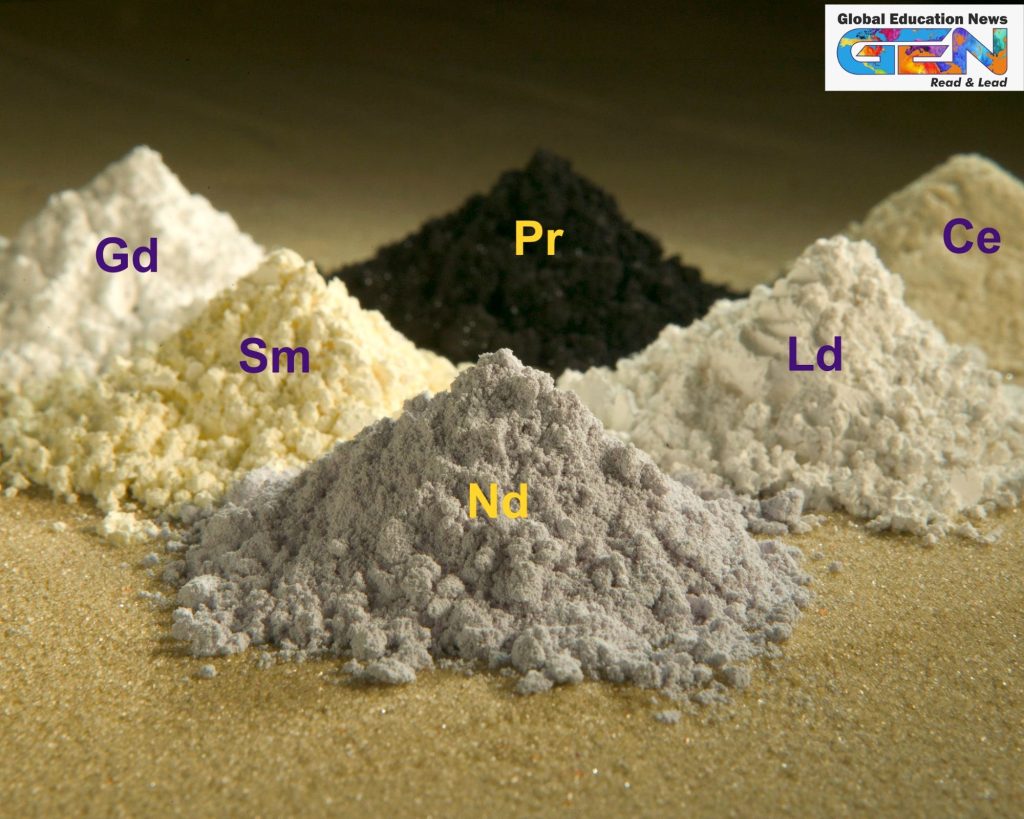
India has decided to halt rare earth exports to Japan, prioritizing domestic needs and challenging China’s grip on global supply chains. Announced on June 13, 2025, the decision involves IREL (India) Limited, a state-run miner, suspending a 13-year-old agreement with Japan to focus on building India’s own processing and magnet production capabilities. With 6.9 million metric tons of rare earth reserves—fifth largest globally—India is gearing up to transform its auto, defence, and tech industries under Atmanirbhar Bharat. Ready to explore this game-changing strategy? Let’s dive in!
Key Points:
- India halts rare earth exports to Japan, announced June 13, 2025.
- Aims to reduce reliance on China, which dominates 90% of global rare earth refining.
- IREL plans to produce 450 metric tons of neodymium by March 2026, doubling by 2030.
Why Now? China’s Curbs Spark a Global Crisis
China’s export restrictions on rare earths since April 2025 have sent shockwaves through global industries, hitting automakers like Japan’s Suzuki, which paused Swift production due to magnet shortages. India, importing 53,748 metric tons of rare earth magnets in FY25, mostly from China, faces supply chain risks. Commerce Minister Piyush Goyal directed IREL to stop exports, particularly of neodymium, a critical component for electric vehicle (EV) motors, to secure domestic supplies and counter China’s dominance.
Key Points:
- China’s April 2025 export curbs disrupted global EV and tech sectors.
- India imported 53,748 metric tons of rare earth magnets in FY25, mainly from China.
- Neodymium, vital for EV motors, is a key focus of India’s conservation strategy.
IREL’s Role: Building India’s Rare Earth Future
IREL (India) Limited, under the Department of Atomic Energy, is India’s sole rare earth miner, operating extraction plants in Odisha and refining units in Kerala. With no domestic magnet production, IREL exported over 1,000 metric tons to Japan’s Toyota Tsusho in 2024, a third of its 2,900-ton output. Now, IREL is pivoting to expand domestic mining at four new sites (awaiting clearances) and aims to produce 450 metric tons of neodymium by March 2026, doubling to 900 by 2030.
Key Points:
- IREL operates extraction in Odisha and refining in Kerala, founded in 1950.
- Plans 450 metric tons of neodymium by 2026, doubling by 2030.
- Seeks corporate partners for rare earth magnet production for autos and pharma.
The Japan Dilemma: A Diplomatic Balancing Act
Suspending exports to Japan, a friendly nation, isn’t straightforward due to a 2012 bilateral agreement. IREL seeks an “amicable negotiation” to pause the deal, respecting diplomatic ties. Japan, reliant on China for most of its rare earths, imported 1,000+ metric tons from India in 2024. While India’s move strengthens its domestic goals, it may strain trade relations, requiring careful diplomacy.
Key Points:
- 2012 India-Japan agreement complicates immediate export halt.
- IREL aims for diplomatic negotiations to preserve ties with Japan.
- Japan’s Toyota Tsusho imported 1,000+ metric tons from IREL in 2024.
Atmanirbhar Bharat: A Push for Self-Reliance
India’s decision aligns with Atmanirbhar Bharat, aiming to reduce reliance on China, which controls 70% of global rare earth mining and 90% of refining. The government is rolling out incentives to attract companies for local processing and magnet manufacturing, with the Ministry of Heavy Industries proposing subsidies to bridge the cost gap with Chinese imports. The National Critical Mineral Mission, launched in April 2025, further boosts exploration and self-reliance.
Key Points:
- India holds 6.9 million metric tons of rare earth reserves, fifth globally.
- National Critical Mineral Mission promotes domestic mining and processing.
- Incentives proposed to make local magnets competitive with Chinese imports.
Challenges Ahead: Building a Domestic Supply Chain
Despite its vast reserves, India lacks the infrastructure for large-scale rare earth processing, with analysts noting a commercially viable supply chain is years away. IREL’s limited capacity and regulatory hurdles at four new mines pose challenges. The auto industry, warned by SIAM, faces potential production halts if Chinese supplies don’t ease, prompting short-term plans to seek faster export clearances from China.
Key Points:
- India lacks wide-scale rare earth processing infrastructure.
- SIAM warns of auto production halts without Chinese supply relief.
- IREL awaits clearances for four new mining sites to boost capacity.
Global Context: A Rare Earth Race
China’s export curbs echo its 2010 ban on Japan, which spurred India’s 2012 deal with Tokyo. Now, with global supply chains rattled, countries like the US ($39M for domestic supply chains) and Australia (Lynas Corp.) are racing to reduce China’s dominance. India’s move positions it as a potential alternative supplier, though scaling up will take time.
Key Points:
- China’s 2010 export ban on Japan led to India’s 2012 supply deal.
- US invests $39M to build domestic rare earth supply chains.
- India’s 6.9 million metric tons could make it a global player in time.
Tips for Stakeholders and Aspirants
Interested in India’s rare earth revolution? Here’s how to engage with this strategic shift:
Key Points:
- Track Policy Updates: Follow pib.gov.in or X for news on incentives and mining.
- Explore Careers: Study metallurgy or materials science at IITs for rare earth roles.
- Industry Players: Partner with IREL for magnet production opportunities.
- Stay Informed: Monitor global trade talks, like US-China, for supply chain impacts.
Why India’s Rare Earth Halt Matters
India’s decision to halt rare earth exports to Japan on June 13, 2025, is a strategic masterstroke to secure its 6.9 million metric tons of reserves for domestic growth. By prioritizing neodymium for EVs, defence, and tech, and investing in processing under Atmanirbhar Bharat, India is challenging China’s monopoly while navigating diplomatic ties with Japan. Though infrastructure gaps remain, this move signals India’s ambition to become a global rare earth powerhouse. Follow pib.gov.in or X for updates and join the journey toward self-reliance!
Key Points:
- Halts exports to Japan to prioritize domestic EV and tech industries.
- Aligns with Atmanirbhar Bharat to counter China’s 90% refining dominance.
- IREL’s 450-ton neodymium goal by 2026 is a step toward self-reliance.