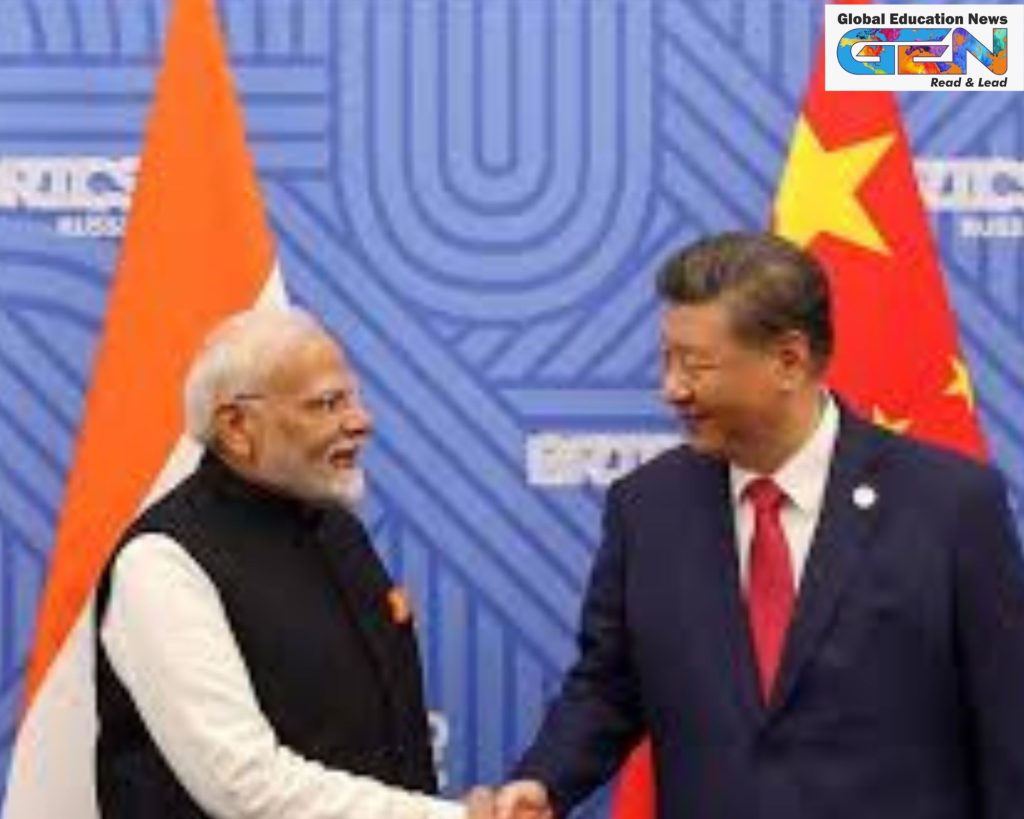
On August 31, 2025, Indian Prime Minister Narendra Modi and Chinese President Xi Jinping met in Tianjin, China, on the sidelines of the Shanghai Cooperation Organisation (SCO) Summit, marking their first face-to-face interaction in ten months and Modi’s first visit to China in seven years. This high-stakes meeting, set against a backdrop of global economic uncertainty and U.S.-imposed tariffs, signals a significant thaw in India-China relations following the 2020 Galwan Valley clashes. With commitments to resume direct flights, reopen border trade, and foster tourism, the dialogue reflects a pragmatic shift toward cooperation, economic synergy, and strategic autonomy. Here’s an in-depth analysis of the summit’s outcomes, their implications, and the broader context of this diplomatic reset.
A New Chapter Post-Galwan
The Galwan Valley clashes of June 2020, which resulted in 20 Indian and four Chinese soldier deaths, marked a low point in India-China relations, freezing direct flights, halting pilgrimages, and escalating trade restrictions. However, recent diplomatic efforts, including the October 2024 BRICS Summit meeting in Kazan, Russia, have paved the way for reconciliation. The 2025 SCO Summit meeting builds on this momentum, with both leaders emphasizing that India and China are development partners, not rivals, and that differences should not escalate into disputes.
- Border Stability: Both sides celebrated the successful disengagement along the Line of Actual Control (LAC) in eastern Ladakh, completed in October 2024, which restored peace and tranquility. Modi stressed that maintaining border peace is an “insurance policy” for bilateral ties.
- Special Representatives’ Role: Agreements reached by National Security Advisor Ajit Doval and Chinese Foreign Minister Wang Yi in December 2024 were endorsed, with commitments to a “fair, reasonable, and mutually acceptable” resolution of the boundary question.
Key Bilateral Commitments
The Modi-Xi meeting produced concrete steps to rebuild trust and cooperation, addressing both symbolic and practical aspects of the relationship.
- Resumption of Direct Flights: Suspended since the COVID-19 pandemic and further delayed post-Galwan, direct flights between India and China will soon resume, though no specific timeline was provided. This move is expected to boost tourism and business travel.
- Kailash Mansarovar Yatra and Tourism: The sacred pilgrimage to Mount Kailash and Lake Mansarovar in Tibet, halted since 2020, has resumed, with China reopening two pilgrimage sites to Indian travelers. Both nations also reinstated tourist visas, signaling a return to people-to-people exchanges.
- Border Trade Revival: Following foreign minister-level talks in July 2025, both sides agreed to reopen border trade, disrupted since 2020, to diversify trade amid global tariff uncertainties.
- Counter-Terrorism and Fair Trade: Modi raised concerns about cross-border terrorism, referencing the recent Pahalgam attack, and both leaders committed to cooperate on terrorism and fair trade through multilateral platforms like the SCO and BRICS.
Economic Implications: A Win-Win Opportunity
The warming of ties comes at a critical juncture, with U.S. President Donald Trump’s 50% tariffs on Indian goods and 25% on Chinese imports pushing both nations to seek economic stability. With a $99.2 billion trade deficit in China’s favor (as of March 2025), India aims to address market access issues while leveraging Chinese expertise.
- Indian EV Sector: Enhanced cooperation could allow Chinese companies to invest in India’s growing electric vehicle market, sharing technology and reducing costs.
- Chinese Market Access: China’s vast consumer base offers opportunities for Indian exports, potentially reducing India’s reliance on U.S. markets hit by tariffs.
- Rare Earth Minerals and Supply Chains: China assured support for India’s needs in rare earth minerals, fertilizers, and tunnel boring machines, strengthening industrial supply chains.
- Trade Expansion: Both leaders agreed to expand bilateral trade and investment to reduce India’s trade deficit, with a focus on strategic economic partnerships.
Global South and Strategic Autonomy
Xi emphasized the shared role of India and China as leaders of the Global South, representing 2.8 billion people and advocating for a multipolar world. Modi underscored strategic autonomy, stating that India-China relations should not be viewed through a “third country’s lens” (an apparent reference to the U.S.). This stance reflects India’s delicate balancing act between its deepening Quad ties (with the U.S., Japan, and Australia) and its engagement with China and Russia via the SCO and BRICS.
- Global Economic Stability: Modi highlighted the responsibility of India and China, as major economies, to stabilize the global economic order amid Trump’s tariff disruptions.
- Multilateral Cooperation: Both leaders committed to upholding multilateralism and addressing global challenges like terrorism and climate change, with Modi inviting Xi to the 2026 BRICS Summit in India, an invitation Xi accepted.
Diplomatic Shift Amid U.S. Tensions
The Modi-Xi meeting occurs against the backdrop of strained U.S.-India relations, driven by Trump’s tariffs and criticism of India’s purchase of Russian oil during the Ukraine conflict. The SCO Summit, attended by leaders like Russia’s Vladimir Putin, serves as a platform for Global South solidarity, challenging U.S.-led economic policies.
- U.S. Concerns: Analysts suggest that India’s rapprochement with China could complicate U.S. efforts to position India as a counterweight to China in the Indo-Pacific.
- China’s Strategy: Beijing sees an opportunity to leverage U.S.-India tensions, positioning itself as a reliable partner in a multipolar world.
Challenges and Domestic Reactions
Despite the positive optics, deep-seated mistrust persists due to historical border disputes and China’s close ties with Pakistan, which supplied 81% of Pakistan’s arms imports from 2020 to 2024. In India, the Congress party criticized the government, questioning whether reconciliation with China legitimizes its past aggression, particularly referencing the Galwan clashes and China’s support for Pakistan during Operation Sindoor.
- Border Management Risks: While disengagement has restored peace, 50,000–60,000 troops remain deployed on each side along the LAC, with de-escalation talks ongoing.
- Domestic Skepticism: Indian public opinion remains wary, with concerns about compromising sovereignty, necessitating careful messaging from the government.
Why This Matters
The Modi-Xi meeting at the SCO Summit is a pivotal moment for India-China relations, offering a chance to move beyond the Galwan shadow and prioritize economic and regional stability. The resumption of direct flights, border trade, and the Kailash Mansarovar Yatra symbolizes a commitment to people-to-people ties, while economic cooperation could mitigate the impact of U.S. tariffs. However, sustaining this thaw requires consistent military and diplomatic exchanges, addressing India’s trade deficit, and navigating China’s ties with Pakistan.
A Step Toward a Multipolar Future
The 2025 SCO Summit meeting between Modi and Xi marks a turning point in India-China relations, with both leaders embracing the “elephant and dragon” narrative to foster cooperation. As Modi stated, “The interests of 2.8 billion people are linked to our cooperation, paving the way for the welfare of humanity.” With global trade tensions and regional challenges in focus, this thaw could redefine Asia’s geopolitical landscape, positioning India and China as partners in a multipolar world. Stay tuned for updates on this evolving relationship and its global implications.