India’s Union Budget 2026-27 has made a landmark policy pivot by formally acknowledging the “Orange Economy” — which comprises creative, cultural, and digital content sectors — and embedding its skill development deep into the education ecosystem. Through large-scale AVGC content creator labs in schools and colleges, the government aims to nurture future-ready talent, bridge skill gaps in the creative industries, and open new career pathways for millions of young Indians.
What Is the Orange Economy? A Creative Growth Engine
The Orange Economy refers to the segment of the economy driven by creativity, culture, ideas and intellectual property rather than physical goods. It includes sectors like:
- Animation
- Visual Effects (VFX)
- Gaming
- Comics
- Digital storytelling & multimedia production
Unlike traditional industries, the Orange Economy creates value through innovation, cultural content, and digital engagement, making it a powerful driver of employment, exports, and new creative careers.
Key Budget Announcements: Formalising AVGC Training at Scale
1. AVGC Content Creator Labs in Schools & Colleges
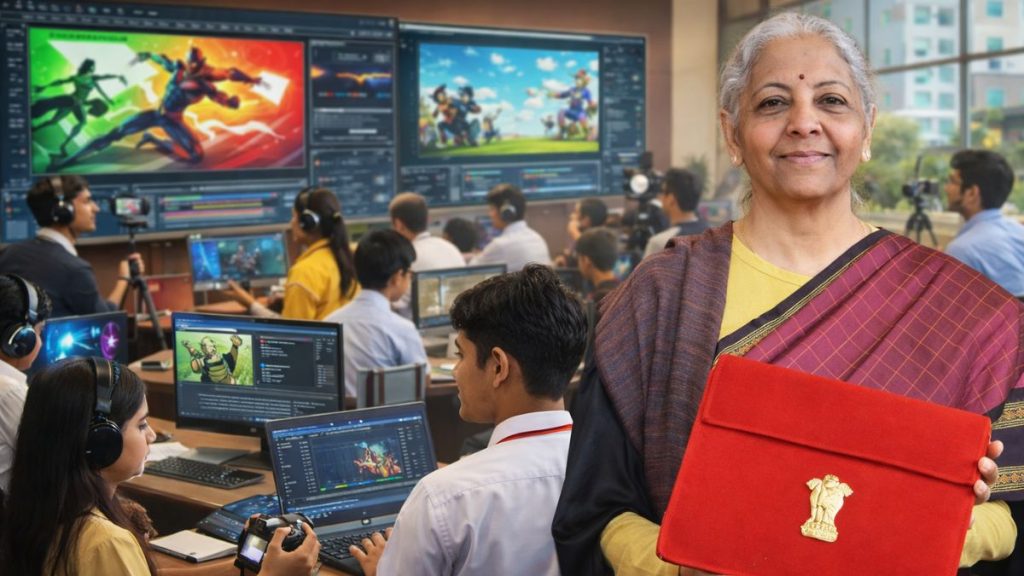
The finance minister announced support for the Indian Institute of Creative Technologies (IICT), Mumbai, to set up Animation, Visual Effects, Gaming and Comics (AVGC) content creator labs in:
- 📍 15,000 secondary schools
- 📍 500 colleges nationwide
These labs will offer hands-on exposure to creative technologies, helping students gain structured training in digital content creation long before they enter the workforce.
2. Funding & Institutional Support
- A ₹250 crore allocation is earmarked for talent development in the AVGC sector.
- The labs will operate under IICT’s guidance to ensure industry-aligned curriculum and standards.
3. Focus on Early Skill Development
By embedding creative tech skills at the school and college levels — from animation pipelines to game design fundamentals — the initiative strengthens India’s talent pipeline and introduces practical, future-oriented learning into formal education.
Why This Matters: Economic & Education Impact
Expanding Job Opportunities
India’s AVGC sector is projected to require nearly 2 million skilled professionals by 2030, driven by growth in digital entertainment, online platforms, gaming communities, and global media exports.
Bridging the Skills Gap
Until now, many creative fields lacked formal training pathways. This initiative helps students acquire practical competencies — not just theory — that align with industry workflows and tools.
Democratizing Access to Creative Tech
For students outside urban centers, access to quality AVGC training has been limited. With labs in thousands of schools and colleges, opportunities to learn creative tech tools and storytelling techniques become more inclusive.
Boosting Entrepreneurship & Cultural Exports
Training in animation, gaming and digital media doesn’t just prepare students for jobs — it encourages entrepreneurial ventures, original IP creation, and creative content exports that can compete globally.
Industry Reactions & Future Outlook
The creative industry has responded positively. Experts view this push as a strategic investment in India’s talent pipeline, not merely a hobbyist effort. By formalising training and aligning education with industry needs, India enhances its position as a global player in animation, gaming and digital storytelling.
Challenges & Next Steps Ahead
While the vision is ambitious, implementation will require:
- Qualified instructors and industry partnerships
- Updated curricula that reflect real-world technologies
- Continuous monitoring to ensure labs translate into job outcomes
Addressing these will be crucial for truly transforming India’s creative education ecosystem.