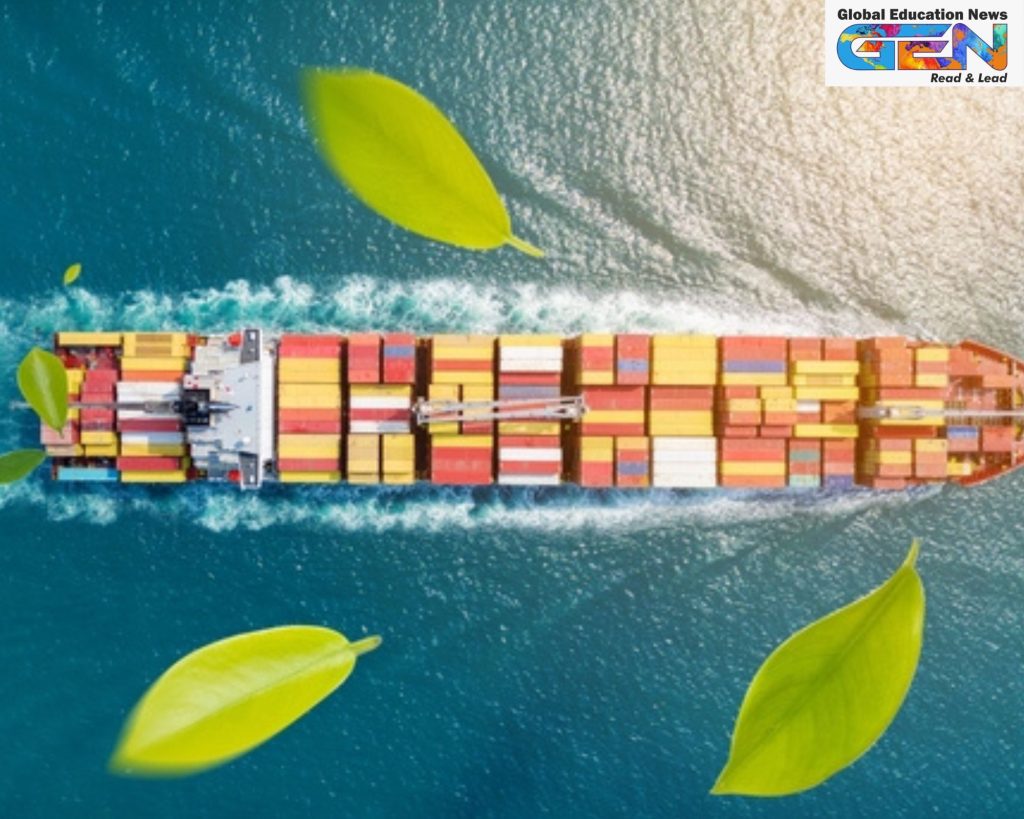
In April 2025, the International Maritime Organization’s Marine Environment Protection Committee (MEPC-83) voted 63-16 to approve Singapore’s hybrid model as the IMO Net-Zero Framework, marking a historic first: a mandatory global emissions levy for international shipping. This decision, blending a GHG Fuel Standard with a tiered pricing mechanism, aims to slash shipping’s 2.8% of global greenhouse gas emissions while balancing economic fairness. Yet, with India’s 5.4 million climate-driven displacements in 2024 and NOAA’s 25% budget cut threatening weather forecasts, the stakes for climate action are sky-high. This article dives into MEPC-83’s outcomes, India’s dual role in green shipping and climate resilience, and the innovative AI-powered weather balloons addressing forecasting gaps. Packed with SEO keywords and gripping insights, it’s crafted to captivate and drive clicks.
MEPC-83’s Historic Vote: Singapore’s Hybrid Model Wins
At MEPC-83 (April 7-11, 2025, London), the IMO tackled shipping’s climate impact with five proposals. Singapore’s hybrid model, enhancing India’s bridging mechanism, won with 63 votes for, 16 against. It combines a goal-based GHG Fuel Standard (reducing fuel GHG intensity over time) and a tiered pricing mechanism, penalizing high emitters and rewarding zero/near-zero fuel users. The levy, projected to raise $10 billion/year, funds green tech but falls short of small island nations’ hopes, per posts on X.
- Key Points:
- Vote: 63-16 for Singapore’s model; 16 negative votes from oil exporters.
- Framework: GHG Fuel Standard + pricing via Remedial/Surplus Units.
- Next: MARPOL Annex VI amendments need two-thirds majority by October 2025.
India’s 2024 Displacement Crisis: Climate Urgency
India’s 5.4 million displacements in 2024—driven by Assam’s 2.5M flood victims, Cyclone Dana’s 1M+ evacuations, and Tripura’s 315,000 landslide displacements—highlight the climate crisis. Climate change, deforestation, and poor infrastructure fueled 314 extreme weather days, killing 3,000 and ruining 2M hectares of crops. Accurate forecasting, reliant on global data, is critical, but NOAA’s budget cuts threaten this, making IMO’s levy vital for climate action.
- Key Points:
- Assam floods: Worst in a decade, 2.5M displaced.
- Cyclone Dana: 1M+ evacuations in Odisha, West Bengal.
- 80% of India in disaster-prone zones.
Competing Proposals: A Clash of Visions
MEPC-83 saw fierce debates over five Market-Based Measures (MBMs):
- ICS: Fixed levy per tonne of CO₂, supported by shipping giants.
- China: Market-driven compliance unit trading, flexible but complex.
- EU: Fixed GHG levy with IMO fund, backed by green advocates.
- India: Bridging mechanism targeting under-compliant ships, rewarding clean fuels.
- Singapore: Hybrid model, blending India’s idea with tiered pricing.
Singapore’s model prevailed, but opposition from UAE and USA against a flat levy and small island nations’ push for higher levies revealed deep divides.
- Key Points:
- Singapore’s model balances fuel standards and economic incentives.
- Oil exporters resisted; island nations wanted $150/tonne levy.
- India’s proposal shaped the winning framework.
Geopolitical Tensions: Equity vs. Economics
MEPC-83 exposed a clash of national interests. Oil exporters (e.g., UAE) resisted green fuel transitions to protect revenues. Small island nations (e.g., Pacific states) demanded high levies to fund climate adaptation, citing survival threats. Large shipping nations (e.g., China, USA) favored low levies to preserve competitiveness. The common but differentiated responsibilities principle sparked debate, with developing nations like India wary of wealthier countries shifting burdens.
- Key Points:
- Oil states prioritize economic stability over emissions cuts.
- Island nations: High levies for survival funding.
- India balances cost concerns with green fuel ambitions.
NOAA’s Budget Cuts: A Forecasting Threat
The Trump administration’s 25% NOAA budget cut ($1.6B from $6B) has slashed weather balloon launches, reducing U.S. data by 10% since March 2025. This weakens global models like GFS, critical for India’s cyclone and monsoon predictions. Russia’s 2015 radiosonde cuts showed forecast accuracy drops, a warning for India’s 5.4M displacement crisis. WindBorne’s AI-powered balloons, staying aloft for weeks, offer a cost-effective fix, aligning with IMO’s tech-driven climate goals.
- Key Points:
- NOAA cuts hit 10% of U.S. balloon data.
- India’s IMD relies on global data for disaster prep.
- AI balloons could restore forecasting accuracy.
Green Shipping’s Critical Role
Shipping’s 2.8% of global GHG emissions (1.1B tonnes CO₂e annually) could rise 50% by 2050 without action. IMO’s 2023 GHG Strategy targets 40% carbon intensity reduction by 2030 and net-zero by 2050, building on 2011’s EEDI and SEEMP mandates. MEPC-83’s levy, effective 2027 for ships over 5,000GT (85% of emissions), enforces GHG Fuel Intensity (GFI) standards and rewards clean fuels via Surplus Units.
- Key Points:
- Shipping emissions: 2.8% of global total.
- IMO goals: 40% intensity cut by 2030, net-zero by 2050.
- Levy targets large ships, funds green tech.
India’s Position: Challenges and Opportunities
India faces short-term logistics cost hikes from the IMO levy, estimated at 1-2% of shipping costs, but its green hydrogen investments (e.g., NTPC’s $2B projects) position it as a future clean fuel hub. The levy’s reward thresholds incentivize India’s shift to ammonia and hydrogen, aligning with Vision 2047 for energy exports. India’s IMD must also bolster its 50+ radiosonde stations to counter NOAA’s data gaps, ensuring cyclone predictions amid climate crises.
- Key Points:
- Short-term: Levy raises India’s shipping costs slightly.
- Long-term: Green hydrogen makes India a clean fuel leader.
- IMD needs funding to offset NOAA cuts.
Equity Concerns: Who Pays for Climate?
The levy’s $10B/year revenue falls short of the $50B small island and African nations sought for a just transition. Critics, like Transport & Environment, argue the framework’s 10% emissions cut by 2030 misses IMO’s 40% target, burdening developing nations. Wealthier nations’ historical emissions (e.g., EU’s 25% of global total) fuel calls for differentiated responsibilities, a tension India navigates as a growing economy.
- Key Points:
- Levy revenue: $10B vs. $50B needed for equity.
- EU, USA emissions dwarf developing nations’ share.
- India advocates balanced climate responsibility.
Solutions: Charting a Net-Zero Future
To align with IMO’s 2050 goals and support India’s climate resilience, key actions are needed:
- Adopt MARPOL Amendments: Secure two-thirds majority by October 2025 for levy enforcement.
- Scale AI Balloons: India and IMO fund WindBorne to restore forecasting data.
- Boost Green Fuels: India expands ammonia, hydrogen production for IMO rewards.
- Fund IMD: Increase India’s radiosonde launches to predict disasters.
- Equity Framework: IMO creates fund for small island nations’ climate adaptation.
- Key Points:
- MARPOL vote critical for 2027 levy start.
- AI balloons aid India’s forecasting needs.
- Green fuels position India as export hub.
Why This Matters Now
The IMO’s emissions levy is a game-changer, making shipping the first industry with a global carbon price, set for 2027. India’s 5.4M displacements and NOAA’s forecasting cuts amplify the urgency, as cyclones and floods threaten millions. Geopolitical tensions risk derailing the levy, but India’s green hydrogen edge and AI balloon potential offer hope. This is a pivotal moment for climate action and equity.
- Key Points:
- First global industry with mandatory carbon levy.
- India’s climate crisis demands robust forecasting.
- Green tech and equity shape global future.