The Indian Institutes of Information Technology (IIITs) represent a bold innovation in higher education, designed as neither fully public nor private entities but as self-reliant powerhouses focused on information technology and interdisciplinary applications. Established to bridge the gap between academia and industry, this model prioritizes financial independence while serving public interests, offering a potential template for sustainable growth in India’s burgeoning tech sector. With over 25 institutions now operational, IIITs have evolved from modest beginnings to hubs of research and entrepreneurship, generating revenues through diverse streams amid minimal government support—enrolling thousands of students annually and leading in fields like AI, robotics, and computational sciences that are critical to India’s $3 trillion economy goal by 2035. As public funding strains under rising demands, the IIIT approach highlights a viable alternative, with recent expansions signaling scalability despite economic headwinds, fostering agility to enable quick pivots to emerging tech like generative AI, where traditional universities often lag due to bureaucratic delays. Institutions like leading IIITs report median graduate salaries 20-30% above national averages, underscoring the ROI of self-funded excellence and embodying a “fend-for-yourself” ethos that could inspire reforms across engineering education.
Key Points:
- Innovative Design: IIITs operate as hybrid entities, blending public oversight with private funding for tech-focused education.
- Scale and Impact: Over 25 campuses serve thousands, driving AI and robotics advancements toward India’s 2035 economic targets.
- Financial Resilience: Minimal government aid forces diversification, yielding 20-30% higher graduate salaries than national norms.
- Reform Potential: Serves as a model for agile, self-reliant engineering education amid funding shortages.
The Hybrid Nature: Neither Public Burden Nor Private Profit Machine
IIITs operate in a unique gray zone, leveraging public land and oversight for accountability while securing operational freedom through private-like funding, where governance councils include government representatives but exert nominal influence, emphasizing merit over mandates to shield against political meddling while aligning with national priorities like Digital India. This structure mandates a public good focus, such as open-source projects in language tech for India’s 22 official tongues, and delivers autonomy benefits like rapid hiring of global faculty and curriculum updates, contrasting sharply with the slower pace of public peers. By avoiding the “tyranny of private fees” and the “bureaucracy of public grants,” this hybrid creates resilient institutions, as recent policy echoes—including calls for tech self-reliance—validate its role in national innovation ecosystems, proving that a blend of independence and accountability can rejuvenate engineering education.
Key Points:
- Governance Balance: Councils mix public reps with internal decisions, prioritizing merit and Digital India alignment.
- Public Good Emphasis: Funds open-source initiatives like multilingual AI for India’s diverse languages.
- Autonomy Advantages: Enables fast faculty hires and curriculum tweaks, outpacing traditional universities.
- Resilience Factor: Sidesteps fee hikes and grant delays, fostering innovation ecosystems.
Evolution of Funding: From Seed Grants to Full Self-Reliance
Launched with state-provided land but scant ongoing aid, IIITs transitioned to self-sufficiency over two decades, adapting to fiscal realities through diversified revenues as enrollments grew and alumni networks matured, with early models relying on modest tuition that evolved into multifaceted streams. Government schemes now emphasize financial viability in new IIIT approvals, mandating self-sustainability plans that mirror global trends where tech institutes like those in Silicon Valley thrive on venture-like funding without equity dilution.
Timeline of Key Milestones:
| Era | Developments | Impact |
|---|---|---|
| 1990s–2000s | Initial setups with land grants; focus on core IT programs | Built foundational autonomy; first revenues from small cohorts. |
| 2010s | Expansion to 25+ IIITs; introduction of research grants and startups | Revenue diversification; PhD stipends doubled in select campuses to attract talent. |
| 2020s | Post-pandemic surge in executive education; alumni pledges for infrastructure | Targeted ₹300 crore expansions; 60-80% EMI coverage via donations. |
This progression reflects how IT’s low-equipment needs—favoring software over labs—enable quicker breakeven points, with successes including doubled PhD funding in competitive campuses that draw top researchers despite national shortages.
Key Points:
- Early Foundations: Started with land grants, shifting from tuition basics to diverse streams.
- Expansion Phase: Grew to 25+ institutes, doubling PhD stipends for talent influx.
- Modern Adaptations: Post-2020, alumni donations cover 60-80% of expansions like ₹300 crore projects.
- Global Parallels: Mirrors Silicon Valley’s venture funding, leveraging IT’s low-cost scalability.
Revenue Streams: Diversifying Beyond Tuition for Sustainable Growth
IIITs’ financial engine runs on a balanced portfolio, with tuition as the base and innovation as the accelerator, covering 80-90% of costs from labs to scholarships in a mix that sustains operations without capital-intensive pitfalls.
Primary Revenue Sources Table:
| Source | Description | Contribution Estimate | Examples |
|---|---|---|---|
| Tuition Fees | Annual charges for UG/PG programs (~₹3-4 lakh/year) | 50-60% of operations | Covers faculty salaries; premium for integrated programs yielding high placements. |
| Research & Projects | National grants, industry contracts in AI/deep tech | 20-25% | Startups like 360-degree imaging tools and flexible drones; generative AI labs. |
| Alumni & Donations | Pledges for expansions; annual funds | 10-15% | ₹15+ crore/year expected; supports 1,200+ hostel beds in growth plans. |
| Executive Education | Short courses for professionals | 5-10% | Attracts corporate tie-ups; boosts interdisciplinary offerings like computational humanities. |
Unlike capital-intensive fields, this diversification in IT enables swift scalability, as evidenced by doubled PhD funding that enhances talent retention amid global competition.
Key Points:
- Tuition Backbone: Funds 50-60% of ops, supporting high-placement programs.
- Research Boost: 20-25% from AI/drone projects, fueling innovation.
- Alumni Cycle: 10-15% donations enable expansions like 1,200 hostel beds.
- Professional Upskilling: 5-10% from courses, enhancing interdisciplinary ties.
Success Stories: Real-World Wins from the IIIT Model
Leading IIITs exemplify the model’s potency, churning out innovators who fuel India’s startup ecosystem and amplify societal value through accessible tech solutions, with outputs like language-inclusive AI models addressing India’s diversity challenges and alumni networks repaying through donations in a virtuous cycle that boosts employability by 25% over peers.
Spotlight on Flagships:
- Hyderabad Campus: 25-year journey from 1997 founding to 2,000 students; interdisciplinary hubs birthed ventures in robotics and AI, with expansion eyeing 4,000 enrollments by 2033.
- Bengaluru Hub: Relies on business partnerships for 25 years; high research output in self-reliant tech, aligning with national calls for indigenous innovation.
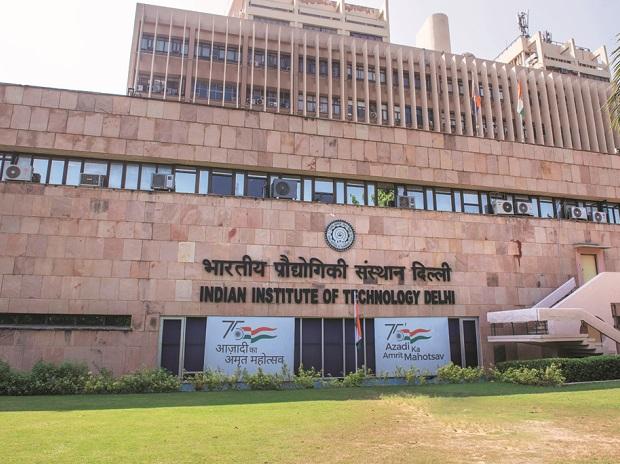
- Delhi Outpost: Recent stipend hikes for PhDs signal adaptive funding, enhancing retention amid global talent wars.
These campuses not only sustain themselves but position India as a self-reliant ed-tech leader, rivaling Asian peers through community investment.
Key Points:
- Hyderabad Growth: From 1997 startup to AI/robotics ventures, targeting 4,000 students by 2033.
- Bengaluru Partnerships: 25-year industry ties drive indigenous tech research.
- Delhi Adaptations: PhD stipend boosts improve global retention.
- Overall Edge: 25% employability uplift via alumni-driven cycles.
Challenges and Limitations: Hurdles in Scaling Excellence
Despite triumphs, the model grapples with scalability, especially beyond IT, where high expansion costs and field-specific demands test resilience—such as ₹300 crore for faculty/infrastructure in growth phases, and biosciences requiring pricey labs unlike lean IT setups—while smaller intakes limit broad impact and talent retention gaps persist nationally, though local boosts help counter the 10-15% graduate siphoning to abroad. Tuition models risk access for underprivileged groups, necessitating scholarships for 20-30% of seats, and prove harder in humanities or biotech where startup timelines lag, with books and studies on IIIT successes highlighting governance as the linchpin—enlightened boards mitigate risks, but policy tweaks for cross-disciplinary grants could broaden applicability and avoid widening urban-rural divides.
Key Points:
- Cost Pressures: ₹300 crore expansions strain resources, especially in lab-heavy fields like biosciences.
- Talent Drain: 10-15% graduates lost abroad, offset by local PhD funding.
- Equity Gaps: Tuition barriers require 20-30% scholarships for inclusivity.
- Field Limitations: Slower scalability in humanities/biotech; governance tweaks urged for broader reach.
Expert Insights: Voices Shaping the IIIT Narrative
Thought leaders praise the model’s ingenuity while urging refinements for inclusivity, noting that “smart councils focused solely on public good create junctions where tech meets real-world needs,” and emphasizing that “IT’s minimal startup costs enable success, but biosciences demand more—tailoring is key.” Echoing national leaders on self-reliance, they add, “Amid evolving challenges, prioritizing indigenous tech funding ignites broader economic fire,” underscoring a consensus that IIITs’ blend of independence and accountability could rejuvenate engineering education, provided expansions integrate social sciences.
Key Points:
- Governance Praise: “Smart councils” bridge tech and societal needs.
- Cost Tailoring: IT’s low barriers succeed; biosciences need adjustments.
- Self-Reliance Call: Indigenous funding sparks economic growth.
- Reform Consensus: Integrate social sciences for holistic engineering revival.
Future Prospects: Influencing India’s Higher Ed Landscape
As IIITs eye doubled intakes and AI-centric curricula, their model holds promise for hybrid reforms nationwide, with government nudges toward viability in new schemes potentially leading to 10-15 more self-sustaining tech institutes by 2030 and adding ₹50,000 crore to R&D ecosystems through growth levers like alumni-driven loans and PPPs for infrastructure. Aligning with NEP 2020 for interdisciplinary mandates, this trajectory promises a more innovative youth dividend, though success hinges on adaptation to prevent failures from exacerbating divides.
Key Points:
- Expansion Vision: Double intakes, 10-15 new institutes by 2030.
- Economic Boost: ₹50,000 crore R&D infusion via alumni/PPPs.
- Policy Alignment: NEP 2020 integration for interdisciplinary focus.
- Risk Balance: Adaptation key to avoiding urban-rural gaps.