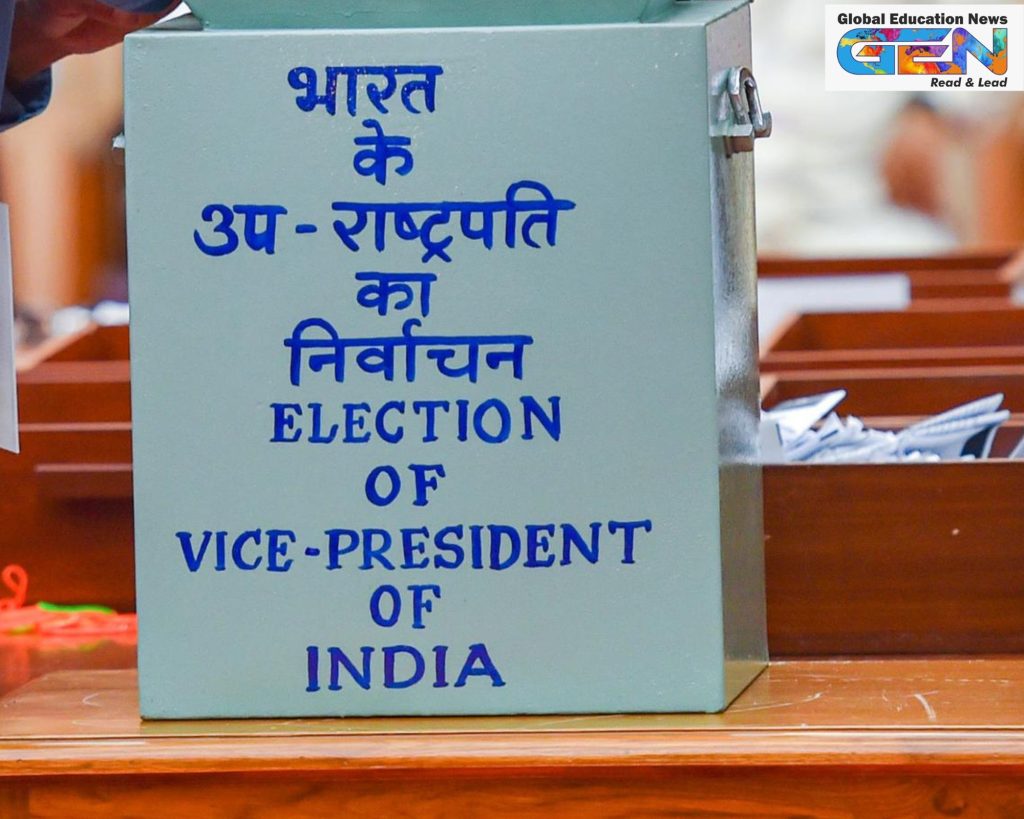
The Vice President of India, the nation’s second-highest constitutional office, plays a pivotal role in governance, stepping in as Acting President when needed. Established under Article 63 of the Indian Constitution, the Vice President’s election process is a fascinating blend of democratic principles and procedural rigor. Unlike the U.S., where the Vice President completes the President’s term if vacant, India’s Vice President serves only temporarily until a new President is elected. With the next election cycle approaching, this guide breaks down the election process, qualifications, roles, and more, making it a must-read for UPSC aspirants, competitive exam candidates, and anyone curious about India’s constitutional framework.
Who Elects the Vice President?
Unlike direct public elections, the Vice President is chosen through an indirect election as per Article 66(1) of the Constitution. The electoral college comprises members of both houses of Parliament, ensuring a broad representation of India’s legislative body.
Key Points:
- Electoral College: Includes all elected and nominated members of the Lok Sabha (House of the People) and Rajya Sabha (Council of States).
- No Public Voting: The process excludes state legislative members and citizens, focusing solely on Parliament.
- Total Voters: Approximately 788 members (543 Lok Sabha + 245 Rajya Sabha, subject to vacancies) participate.
How the Election Process Works
The election follows a proportional representation system using the single transferable vote (STV) method, ensuring fairness and representation. Voting is conducted via a secret ballot, safeguarding voter privacy and preventing external influence.
Key Points:
- Proportional Representation: Voters rank candidates, and votes are transferred based on preferences until a candidate secures a majority.
- Secret Ballot: Ensures confidentiality, with no disclosure of individual votes.
- Conducted by Election Commission: The process is overseen by the Election Commission of India for transparency and integrity.
Qualifications to Become Vice President
To be eligible, candidates must meet strict criteria outlined in Article 66(3), ensuring only qualified individuals hold this prestigious office.
Key Points:
- Citizenship: Must be a citizen of India.
- Age Requirement: At least 35 years old at the time of election.
- Rajya Sabha Eligibility: Must qualify to be a Rajya Sabha member (e.g., not disqualified under any law).
- No Office of Profit: Cannot hold any salaried position under the Government of India, state governments, or local authorities.
- Resignation from Other Posts: Sitting MPs or state legislators must resign their seats upon election.
Term and Removal Process
The Vice President’s term is governed by Article 67, with provisions for resignation, removal, and continuity to ensure smooth governance.
Key Points:
- Five-Year Term: Begins from the day of taking office, typically lasting five years.
- Resignation: Can resign by submitting a letter to the President of India.
- Removal: Requires a Rajya Sabha resolution with a majority vote, approved by the Lok Sabha, with a 14-day notice period.
- Continuity: The Vice President remains in office until a successor takes charge.
Handling Vacancies
Under Article 68, any vacancy in the Vice President’s office triggers a swift election to maintain constitutional continuity.
Key Points:
- Prompt Election: An election must be held “as soon as possible” if the office is vacated due to death, resignation, or removal.
- Full Term for New VP: The newly elected Vice President serves a full five-year term, not the remainder of the previous term.
- Acting Role: If the President’s office is vacant, the Vice President acts as President until a new President is elected.
Oath of Office: A Solemn Commitment
Before assuming duties, the Vice President takes an oath of office administered by the President of India or a designated appointee, pledging loyalty to the Constitution and diligent performance of duties.
Key Points:
- Oath Content: Promises to uphold the Constitution of India and perform duties faithfully.
- Administered by: The President or a person appointed by them, typically in a formal ceremony.
- Significance: Marks the official start of the Vice President’s term and responsibilities.
Role During President’s Absence
The Vice President’s most critical function is stepping in as Acting President when the President is unavailable due to illness, absence, or vacancy, as outlined in Article 65.
Key Points:
- Temporary Role: Acts as President only until a new President is elected or the incumbent resumes duties.
- Distinct from U.S. Model: Unlike the U.S., the Vice President does not complete the President’s term.
- Key Duties: Includes chairing Rajya Sabha sessions and performing presidential functions when required.
Tips for UPSC and Competitive Exam Aspirants
For students preparing for UPSC, SSC, or other competitive exams, understanding the Vice President’s election process is crucial for questions on Indian polity and governance.
Key Points:
- Memorize Articles: Focus on Articles 63, 66, 67, and 68 for constitutional provisions.
- Understand Electoral College: Note the inclusion of both elected and nominated MPs from Lok Sabha and Rajya Sabha.
- Practice Questions: Review past papers on the Vice President’s role and election process.
- Key Differences: Highlight distinctions between India’s and U.S. Vice Presidential roles for comparative questions.