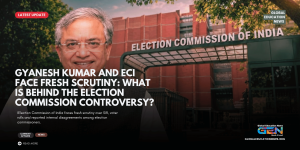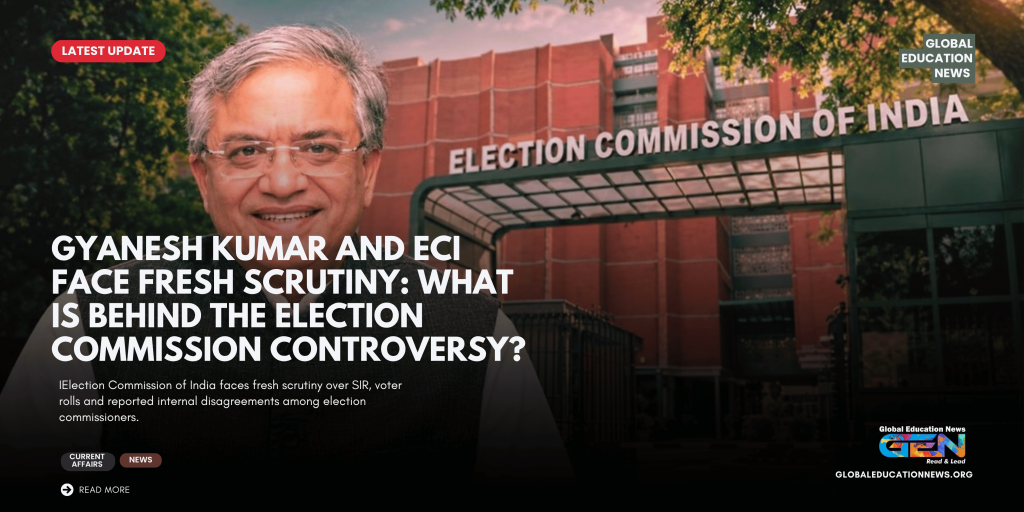
New Delhi — India’s Election Commission of India (ECI) is facing another major controversy, this time over reported disagreements inside the three-member poll panel about voter registration, electoral-roll changes and the handling of election data.
The controversy intensified after The Indian Express reported that Election Commissioners Sukhbir Singh Sandhu and Vivek Joshi had raised objections on multiple occasions to decisions associated with Chief Election Commissioner Gyanesh Kumar. The newspaper reported 14 instances over the past 10 months in which the two commissioners recorded objections or were allegedly kept out of discussions.
The report has triggered sharp political reactions, with opposition parties demanding greater transparency and calling for Kumar’s resignation. The Election Commission, however, has defended its decision-making process, saying differences of view are a normal part of institutional deliberation and that major decisions taken over the past year have been unanimous.
At the centre of the wider dispute is the Special Intensive Revision (SIR) of electoral rolls, an exercise that has already generated political and legal controversy across several states.
Why Is the Election Commission Facing Criticism Again?
The latest controversy is not about a single election-day incident.
It concerns the way the ECI is handling electoral rolls and voter registration at a time when the poll panel is undertaking a nationwide revision exercise.
According to The Indian Express, the two Election Commissioners raised concerns about issues including the integrity and security of voter databases, the addition of new voters and changes to procedures for voter registration.
The report also described objections concerning decisions that the commissioners considered unauthorised or illegal.
These are reported allegations and objections, rather than findings by a court that the ECI acted unlawfully.
The Election Commission has offered a different interpretation, arguing that internal observations should be understood as part of the normal process through which the three-member body debates and reaches decisions.
What Is the SIR of Electoral Rolls?
The Special Intensive Revision (SIR) is an exercise aimed at revising electoral rolls.
The Election Commission says the purpose is to identify and remove ineligible entries while ensuring that eligible citizens remain on the electoral rolls. The process is intended to account for circumstances such as deaths, migration and duplicate registrations.
But the exercise has become politically contentious because of the scale of the revisions and the documentation requirements involved.
The Indian Express reported that more than 13 crore names had been struck off draft electoral rolls across 30 states and Union Territories during the broader SIR exercise.
The figure refers to draft-roll deletions and should not automatically be interpreted as 13 crore permanently disenfranchised voters. Electoral-roll revision involves processes through which eligible people can raise claims and objections.
That distinction is crucial.
What Are Opposition Parties Alleging?
Opposition parties have repeatedly alleged that the electoral-roll revision could disproportionately affect their supporters and have questioned whether the process is sufficiently transparent.
Congress leader Rahul Gandhi has accused the Election Commission of facilitating what he calls “vote theft” and has demanded accountability from the poll panel. Other opposition leaders have also called for Kumar’s resignation.
These are political allegations, not established judicial findings.
The BJP and the Election Commission have rejected the accusations. BJP leaders have described the opposition’s criticism as an attempt to undermine the credibility of electoral institutions, while the ECI has defended the SIR as an electoral-roll reform exercise.
What Did the Two Election Commissioners Object To?
The reported disagreements cover several aspects of the Commission’s work.
According to The Indian Express, Election Commissioners Sandhu and Joshi recorded objections concerning:
- Changes involving voter registration procedures
- Additions and deletions from electoral rolls
- The handling and security of voter data
- Decisions allegedly taken without their prior knowledge
- Procedures connected with the ongoing SIR exercise
The report says the commissioners recorded their concerns internally rather than making them public at the time.
The revelation has attracted particular attention because the ECI is a collegial constitutional institution in which the Chief Election Commissioner and Election Commissioners collectively participate in decision-making.
Form 6 Changes Add Another Layer to the Dispute
Another issue concerns Form 6, the application used for inclusion of a person’s name in the electoral roll.
Reports say changes to the digital voter-registration process through ECINet triggered objections from the two Election Commissioners.
The controversy matters because voter registration is not a peripheral administrative function.
It determines who appears on the electoral roll and therefore who can participate in elections, subject to the applicable electoral law.
Questions about documentation, verification and data handling consequently carry significance for both election administrators and voters.
Why the Internal Rift Matters
The latest controversy is receiving unusual attention because the reported objections did not originate solely from political parties or outside critics.
They reportedly came from within the Election Commission itself.
That does not establish that the Commission’s decisions were unlawful or improper. But it does raise questions about how disagreements are recorded, resolved and communicated inside a constitutional institution responsible for conducting elections.
The ECI has stressed that internal differences are part of normal deliberation.
Its statement said that all three commissioners and officers of the Commission are authorised to offer suggestions, and that focusing on selected internal notes without considering the larger body of decisions provides an incomplete picture.
Supreme Court Has Also Scrutinised the SIR Process
The controversy comes as the Supreme Court continues to examine aspects of the electoral-roll revision process.
In proceedings concerning the Delhi SIR, the Court recently questioned the manner in which notices were being issued to voters and raised concerns about notices that appeared to have been generated mechanically. It also suggested allowing voters to respond through digital channels such as WhatsApp and email.
That judicial scrutiny is separate from the reported internal disagreements among the Election Commissioners.
Taken together, however, the developments have placed the administration of electoral rolls under unusually intense public and legal attention.
What Has the Election Commission Said?
The ECI has rejected the suggestion that internal disagreements demonstrate a breakdown in its functioning.
Its response stressed that differences of opinion are a normal feature of institutional decision-making and said that major electoral reforms introduced during the past year were decisions of the full Commission.
The Commission also pointed to a broader programme of electoral reforms and initiatives, arguing that concentrating on selected internal observations risks presenting only part of the institutional record.
The ECI’s position is therefore that the reported objections should be viewed within the larger decision-making process rather than treated as evidence by themselves of institutional failure.
Why This Controversy Is Bigger Than One Election
The debate touches a basic feature of India’s electoral system: the integrity of the voter list.
An electoral roll has two competing requirements.
It must prevent ineligible or duplicate entries from remaining on the list. At the same time, eligible citizens must not be wrongly excluded because of documentation problems, migration, administrative errors or difficulties in completing verification.
The challenge for election administrators is to achieve both objectives.
That is why the SIR process has generated such intense attention. The disagreement is not merely about paperwork. It concerns how a democracy verifies who is eligible to vote while maintaining public confidence in the process.
Election Commission Controversy: What Is Established and What Is Alleged?
| Issue | Current position |
|---|---|
| Reported internal objections | The Indian Express reported 14 instances involving objections by two Election Commissioners |
| Commissioners named | Sukhbir Singh Sandhu and Vivek Joshi |
| Chief Election Commissioner | Gyanesh Kumar |
| Main issues reported | Electoral rolls, voter registration, data security and SIR-related decisions |
| ECI’s response | Differences are part of normal deliberation |
| Opposition response | Demands for greater transparency and Kumar’s resignation |
| BJP response | Rejected allegations and defended the ECI |
| SIR | Nationwide electoral-roll revision exercise |
| Supreme Court scrutiny | Separate proceedings have examined aspects of SIR implementation |
| Finding that ECI acted unlawfully | No such final finding has been established by the developments described above |
What Happens Next?
The political confrontation is likely to continue, while the Election Commission’s electoral-roll revision proceeds.
For voters, the practical issue remains whether their names are correctly reflected on the electoral roll and whether the claims-and-objections mechanisms allow eligible citizens to correct errors.
For the Election Commission, the larger challenge is institutional: explaining its processes clearly enough that administrative reforms do not themselves become a source of uncertainty.
And for India’s democratic institutions, the latest controversy underlines why electoral-roll management is closely watched.
The allegations against the poll panel remain contested. The ECI has rejected the interpretation that its internal disagreements represent a breakdown of its functioning, while opposition parties have continued to demand greater accountability.
What happens next will depend on further disclosures, judicial scrutiny and the Commission’s own explanations.
For now, India’s election machinery is once again under the microscope — and the debate is increasingly focused not only on the voters’ list, but on how the institution responsible for maintaining it makes its decisions.