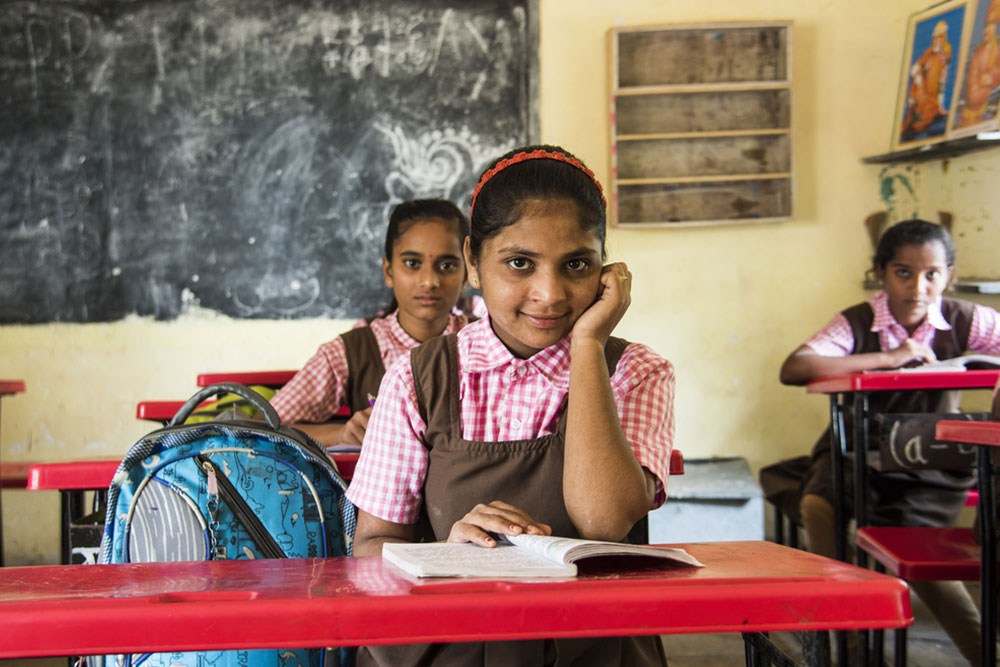
India’s education system has achieved a milestone that would have seemed unimaginable just two decades ago. For the first time, girls have surpassed boys in higher secondary educational attainment, marking a defining moment in the country’s journey toward gender equality in education.
The latest findings based on the National Family Health Survey (NFHS-6) and Unified District Information System for Education Plus (UDISE+) reveal that sustained investments in girls’ education, improved school access, scholarship schemes, better infrastructure, and changing societal attitudes are beginning to reshape India’s educational landscape.
While this achievement deserves celebration, experts caution that the story is more nuanced. Significant regional disparities, economic barriers, and post-school employment challenges continue to affect millions of young women across the country.
A Historic First in Indian Education
For decades, boys consistently recorded higher levels of educational attainment at the senior secondary stage. However, recent data indicates a remarkable reversal.
Girls are now not only enrolling in greater numbers but are also remaining in school longer, completing higher secondary education at rates that exceed those of boys.
The latest UDISE+ data also shows that the Gross Enrolment Ratio (GER) at the higher secondary level stands at around 64.8% for girls compared to 58.9% for boys, highlighting a widening advantage for female students.
This shift reflects years of focused policy interventions aimed at reducing gender disparities in education.
Key Highlights
Girls have overtaken boys in higher secondary attainment
The latest national datasets indicate that girls are completing Class 12 education at higher rates than boys.
Higher enrolment and better retention
Girls are now staying in school longer, with stronger transition rates from secondary to higher secondary education.
Gender gap continues to narrow
The long-standing educational gap between boys and girls has significantly reduced across most states.
Policy interventions are showing results
Government initiatives promoting girls’ education have contributed substantially to improved enrolment and completion rates.
What’s Driving This Transformation?
1. Expansion of Secondary Schools
The rapid increase in higher secondary schools across rural and semi-urban India has reduced travel distances, making education more accessible for girls.
Availability of nearby schools has historically been one of the strongest factors influencing female enrolment.
2. Financial Support for Girls
Scholarships, direct benefit transfers, free textbooks, bicycles, uniforms, hostel facilities, and other incentive schemes have encouraged families to keep daughters in school.
Many state governments have introduced girl-centric education programmes that reward continued schooling and delay early marriage.
3. Better School Infrastructure
Over the past decade, schools have witnessed significant improvements in:
- Separate girls’ toilets
- Safe drinking water
- Improved sanitation
- Digital classrooms
- Better transportation access
Such facilities have played a major role in reducing dropout rates among adolescent girls.
4. Changing Social Attitudes
Parents increasingly view education as an investment rather than an expense for daughters.
Higher education is now closely linked with:
- Better employment opportunities
- Financial independence
- Delayed marriage
- Improved family health outcomes
- Greater social mobility
This shift in mindset has accelerated female participation in education.
Government Initiatives Behind the Success
Several flagship programmes have collectively contributed to improving girls’ education:
- Beti Bachao Beti Padhao
- Samagra Shiksha
- Kasturba Gandhi Balika Vidyalayas (KGBVs)
- Scholarships for girls
- Residential schools for disadvantaged students
- Digital education initiatives
- Mid-Day Meal and nutrition support
- Menstrual hygiene awareness programmes
These interventions have significantly increased school participation among adolescent girls, particularly in rural India.
Boys Are Falling Behind—Why?
While girls’ progress is encouraging, education experts say the conversation must also focus on why many boys are leaving school earlier.
Several factors contribute to higher dropout rates among boys:
- Early entry into the workforce
- Family financial responsibilities
- Migration for employment
- Lower classroom engagement
- Preference for vocational work over academic education
Experts argue that improving boys’ retention should become an equally important policy priority without slowing the momentum achieved in girls’ education.
Regional Differences Continue
Despite impressive national gains, educational progress remains uneven.
States with stronger education systems continue to record higher female enrolment and completion rates, while economically weaker regions still struggle with:
- Poverty
- Child marriage
- Limited transport
- School infrastructure shortages
- Teacher shortages
- Social barriers
Bridging these regional disparities remains essential for achieving universal secondary education.
Beyond School: The Next Challenge
Completing higher secondary education is only the first step.
Many girls still encounter barriers while transitioning into:
- Colleges and universities
- Technical education
- Skill development programmes
- Formal employment
Labour force participation among educated women remains relatively low compared to educational attainment, highlighting the need to strengthen the education-to-employment pipeline.
Education Is Becoming India’s Strongest Gender Equaliser
The latest findings signal more than improved enrolment numbers—they reflect a broader social transformation.
Educated girls are more likely to:
- Delay marriage
- Participate in the workforce
- Make informed health decisions
- Support children’s education
- Contribute to household income
- Drive long-term economic growth
Research consistently shows that investments in girls’ education generate long-term benefits for families, communities, and national development.