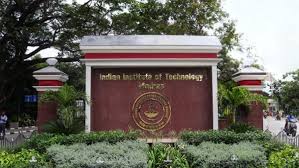
The Indian Institute of Technology (IIT) Madras, the organising institute for the Graduate Aptitude Test in Engineering (GATE) 2027, has unveiled the official examination schedule along with a series of major reforms aimed at aligning the examination with emerging technologies and evolving industry demands.
Among the most significant updates is the introduction of a dedicated Robotics and Automation (RA) paper, marking the first expansion of GATE’s subject portfolio in several years. The institute has also revised the examination syllabus after a gap of five years, reflecting rapid developments in engineering, technology, and interdisciplinary research.
Key Highlights
- GATE 2027 will be organised by IIT Madras.
- The examination will be held on February 6, 7, 13, 14, 20 and 21, 2027.
- A new Robotics and Automation (RA) paper has been introduced.
- The syllabus has been revised for the first time in five years.
- Textile Engineering and Fibre Science (TF) has been merged as a sectional paper under Engineering Sciences (XE).
- Online registration is scheduled to begin in mid-August 2026.
- The overall exam pattern and eligibility criteria remain unchanged.
GATE 2027 Exam Dates
According to IIT Madras, the computer-based examination will be conducted over six days in February 2027.
Examination Schedule
| Exam Dates | Mode |
|---|---|
| February 6, 7, 13, 14, 20 & 21, 2027 | Computer-Based Test (CBT) |
The examination will continue to be conducted in two sessions:
- Forenoon: 9:30 AM – 12:30 PM
- Afternoon: 2:30 PM – 5:30 PM
Robotics and Automation Added as a New Paper
One of the headline announcements for GATE 2027 is the launch of a dedicated Robotics and Automation (RA) paper.
The addition reflects the growing importance of:
- Artificial Intelligence
- Robotics
- Industrial automation
- Autonomous systems
- Smart manufacturing
- Mechatronics
With industries increasingly adopting automation technologies, the new paper is expected to create more opportunities for students seeking postgraduate education and careers in these rapidly expanding fields.
Syllabus Revised After Five Years
IIT Madras has undertaken a comprehensive revision of the GATE syllabus to ensure that the examination remains aligned with current academic standards and industry requirements.
The updated syllabus incorporates advancements across engineering disciplines while retaining the examination’s core objective of assessing conceptual understanding and analytical ability.
Experts believe the revision will better prepare students for emerging technologies, interdisciplinary research, and next-generation engineering careers.
Changes in Existing Papers
Another important modification involves the Textile Engineering and Fibre Science (TF) paper.
Instead of being offered as a standalone paper, it will now become a section within the Engineering Sciences (XE) paper.
This restructuring is intended to provide greater flexibility while streamlining related engineering disciplines under a broader examination framework.
Registration Timeline
The online application process for GATE 2027 is expected to begin in mid-August 2026, with the GOAPS (GATE Online Application Processing System) portal opening for registrations.
Candidates are advised to regularly check the official portal for:
- Registration dates
- Application deadlines
- Fee details
- Admit card release
- Examination schedule
- Paper-wise syllabus updates
Digital Verification Gets Stronger
To further improve examination security and streamline the application process, IIT Madras is introducing enhanced digital verification measures for GATE 2027.
Key technology-driven initiatives include:
- DigiLocker integration for document verification.
- Live facial authentication during registration.
- Improved online identity verification.
- Enhanced security to reduce fraudulent applications.
These measures are expected to make the registration process more secure and efficient for candidates.
Why the New Robotics Paper Matters
The inclusion of Robotics and Automation comes at a time when demand for professionals in automation, AI, manufacturing, healthcare robotics, and autonomous systems is increasing worldwide.
The paper is expected to benefit students aspiring for:
- M.Tech programmes
- MS and research degrees
- Robotics research
- AI and automation careers
- PSU recruitment (where applicable)
- Higher studies abroad
It also reflects the growing convergence of mechanical engineering, electronics, computer science, and artificial intelligence.
GATE: More Than Just an Entrance Examination
GATE continues to serve multiple purposes for engineering and science graduates.
A good GATE score can be used for:
- Admission to M.Tech, ME and PhD programmes at IITs, NITs, IIITs and other premier institutions.
- Recruitment by Public Sector Undertakings (PSUs).
- Research fellowships.
- Scholarships for postgraduate studies.
- Opportunities at several international universities that consider GATE scores.
Preparing for GATE 2027
With the revised syllabus now available, experts recommend that aspirants:
- Download the latest syllabus before beginning preparation.
- Focus on conceptual clarity rather than rote learning.
- Practise previous years’ question papers.
- Take regular mock tests.
- Allocate additional preparation time for newly revised topics.
- Robotics aspirants should strengthen fundamentals in control systems, electronics, programming, automation, and AI.
Early preparation will help candidates adapt to the updated examination structure more effectively.