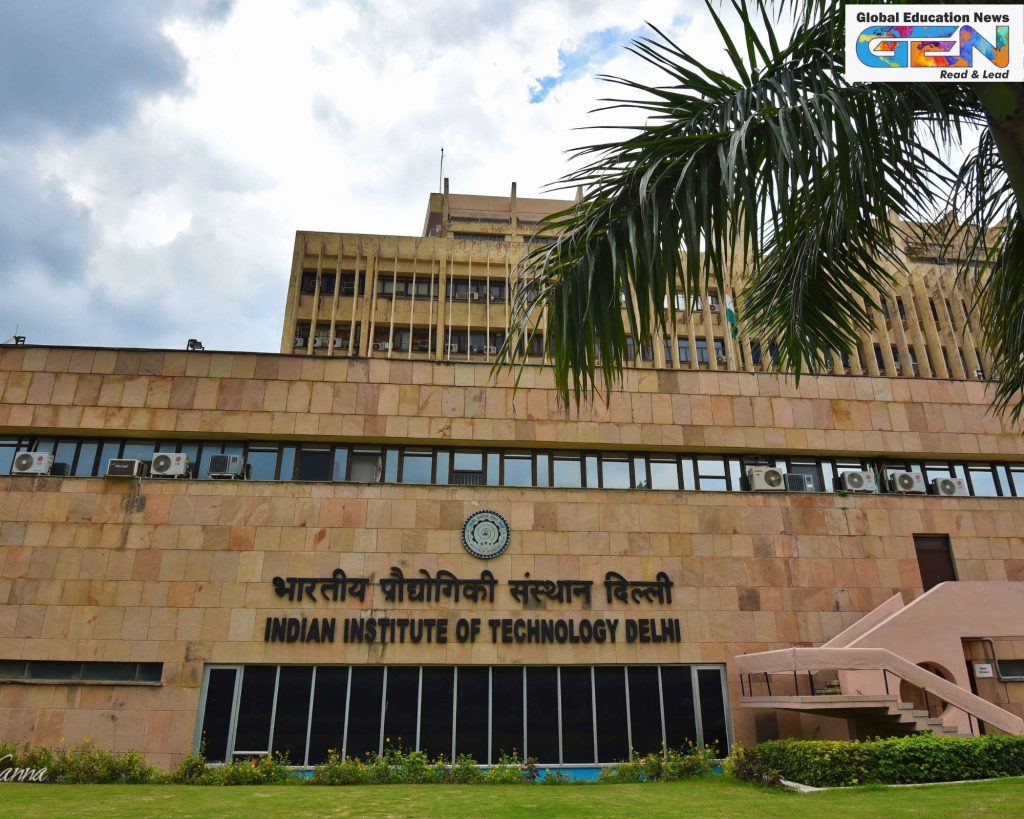
As India’s tech-savvy youth gear up for another year of breakthroughs, IIT Delhi has thrown open the gates to E-Raksha Hackathon 2026—a high-octane, 36-hour cybersecurity blitz designed to forge the next generation of digital defenders. Announced on January 2, 2026, in collaboration with the think tank CyberPeace and IIT Delhi’s Entrepreneurship Development Cell (EDC), this national-level extravaganza spotlights emerging threats like deepfakes and vulnerable IoT devices, inviting student innovators to craft deployable solutions. Slated for January 16-18 at the institute’s bustling campus, E-Raksha isn’t just a coding marathon—it’s a strategic sandbox for AI-driven security, blockchain fortresses, and threat-hunting tools, dovetailing into the larger BECon’26 entrepreneurship conclave and serving as a prelude to the India AI Impact Summit on February 10. In an era where cyber risks cost India ₹10 lakh crore annually (per 2025 NASSCOM estimates), this event underscores NEP 2020’s call for hands-on innovation, potentially unearthing gems for defence and enterprise alike. With ₹3 lakh in prizes and a spotlight at Bharat Mandapam, E-Raksha beckons: Will you hack the future, or let it hack you?
The Hackathon Unveiled: A 36-Hour Sprint Against Shadow Threats
E-Raksha 2026 bursts onto the scene as a crucible for creativity, blending IIT Delhi’s academic rigor with CyberPeace’s frontline insights into cyber warfare. Over three intense days, teams will tackle real-world problem statements, transforming abstract algorithms into actionable arsenals.
- Core Format: 36-hour endurance event; ideation to prototype, judged on innovation, feasibility, and impact.
- Eligibility: Open to student innovators nationwide—solo or teams (up to 4); no entry fee, but registration via iitd.ac.in/edc by January 10.
- Prizes and Perks: ₹3 lakh cash pool (₹1.5 lakh grand winner, ₹75,000 runners-up); top solutions showcased at India AI Impact Summit 2026, with mentorship from IAF and DRDO experts.
- Integration: Feeds into BECon’26’s startup showcase; winners gain accelerator access via IIT Delhi’s Incubation Cell.
Lakshmi Narayan Ramasubramanian, Head of EDC, IIT Delhi, enthused: “We are proud to team up with CyberPeace to develop practical, scalable solutions that address defence-related problems and enhance national security.” This fusion of academia and advocacy positions E-Raksha as a launchpad for Atmanirbhar cyber talent.
Focus Areas: From Deepfake Detectors to IoT Shields
The hackathon’s thematic thrust zeros in on pressing cyber chokepoints, urging participants to engineer defenses that scale from homes to horizons.
- AI and Machine Learning: Agentic AI for threat prediction; ethical models to unmask deepfakes—vital amid 2025’s 300% surge in AI-generated misinformation.
- Threat Detection: Blockchain for tamper-proof logs; ML algorithms to sniff out anomalies in networks.
- Secure Software Development: Zero-trust architectures for apps; quantum-resistant encryption for future-proofing.
- Problem Statements: Sample challenges include “AI Guardian for Home IoT” (securing smart devices from hacks) and “Deepfake Sentinel” (real-time video forensics).
Major Vineet Kumar, Founder of CyberPeace, elaborated: “The hackathon aims to promote responsible AI, digital trust, and cybersecurity through broad stakeholder engagement.” With inputs from industry titans like Palo Alto Networks, these arenas ensure solutions aren’t lab curiosities—they’re deployable dynamos.
| Focus Area | Key Challenge | Potential Impact |
|---|---|---|
| AI/ML | Deepfake detection | Curb 50% election meddling; enhance media trust. |
| Threat Detection | Network anomaly spotting | Slash enterprise breaches by 30%; save ₹5,000 crore annually. |
| Secure Dev | Zero-trust apps | Fortify 1 million+ SMEs; align with Data Protection Act. |
| Blockchain | Immutable audit trails | Revolutionize supply chains; boost defence transparency. |
This targeted toolkit equips hackers to hack back—safely.
Relation to JEE Main and Advanced 2026: A Gateway for Engineering Elites?
While E-Raksha stands as a standalone beacon for innovation, its timing and themes dovetail intriguingly with JEE Main and Advanced 2026, potentially serving as a prequel for IIT-bound brains.
- JEE Synergy: JEE Main kicks off January 22, 2026 (Session 1), with Advanced on May 17—E-Raksha’s January slot offers a low-stakes stress-buster for qualifiers, honing problem-solving sans syllabus shackles.
- Talent Pipeline: IIT Delhi, a JEE Advanced hub, uses E-Raksha to scout future enrollees; winners get recommendation letters, boosting profiles for BTech in CSE or AI streams.
- Thematic Tie-In: Cybersecurity aligns with JEE’s emerging electives (e.g., Data Science in IIT Roorkee’s 2026 intake), bridging entrance to enterprise.
Though not explicitly linked, E-Raksha could emerge as the “JEE extracurricular,” enriching resumes for the 2.5 lakh Main toppers eyeing IITs.
Implications: Igniting India’s Cyber Innovation Ecosystem
E-Raksha 2026 isn’t a flash in the firewall—it’s a flare for systemic shifts, potentially catalyzing a ₹50,000 crore cybersecurity sector by 2030.
- For Students: Hands-on cred beyond JEE scores; 70% participants report skill gains, per similar 2025 events.
- For India: Defence-ready prototypes; NEP’s innovation labs get a blueprint, with 20% female teams mandated for equity.
- Global Glance: Echoes DEF CON’s youth tracks; positions IIT Delhi as Asia’s cyber crucible.
Challenges: Rural access (only 20% participation from Tier-2 cities); mitigated by virtual qualifiers.