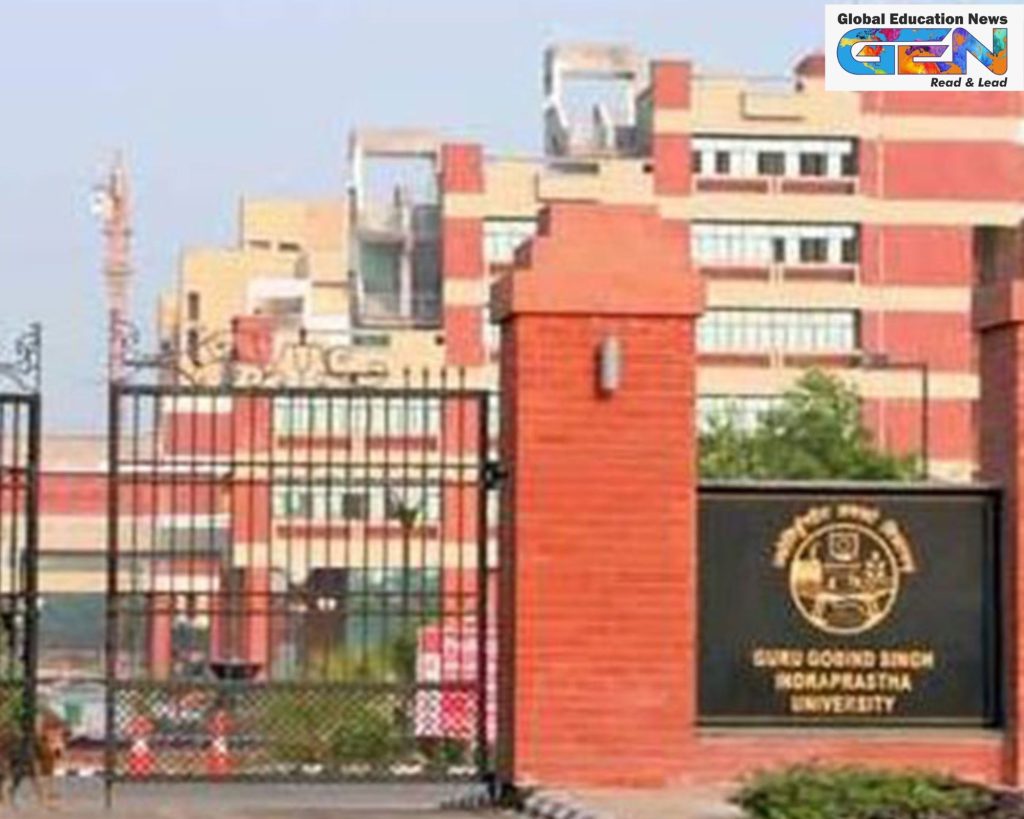
On September 3, 2025, the Delhi High Court issued a notice to Guru Gobind Singh Indraprastha University (GGSIPU), the Delhi government, and the University Grants Commission (UGC) in response to a Public Interest Litigation (PIL) filed under Article 226 of the Constitution. The PIL demands that GGSIPU cease all academic and affiliated activities beyond the National Capital Territory (NCT) of Delhi, citing violations of the Guru Gobind Singh Indraprastha University Act, 1998, and UGC regulations. The petition also raises concerns about the university’s 85% admission quota for Delhi students, which is allegedly disrupted by its operations in Haryana, Rajasthan, and Uttar Pradesh.
Key Points:
- The PIL seeks immediate closure of GGSIPU’s operations outside Delhi and a UGC inquiry into its extra-territorial activities.
- The court has directed GGSIPU, the Delhi government, and UGC to respond to the allegations.
- The petition argues that affiliations outside Delhi violate the university’s enabling legislation and UGC norms.
Allegations of Extra-Territorial Operations
The petitioner claims that GGSIPU, established under the Guru Gobind Singh Indraprastha University Act, 1998, by the Government of NCT of Delhi, is unlawfully operating beyond its territorial jurisdiction. The university, accredited with an A++ grade by NAAC and recognized by the UGC under Sections 2(f) and 12(b), is meant to function as a teaching and affiliating university within Delhi. However, it allegedly affiliates colleges and conducts academic activities in neighboring states, contravening:
- UGC Regulations: UGC prohibits universities from affiliating colleges outside their legal jurisdiction or operating through unapproved study centers, franchising arrangements, or off-campus programs.
- Constitutional Provisions: The petition argues that the 1998 Act violates Articles 239AA and 245 of the Constitution, as the Delhi Assembly lacks authority to legislate for territories outside the NCT.
- Territorial Nexus: The Act lacks justification for extra-territorial application, and the National Capital Region Planning Board Act, 1985, cannot override constitutional limits.
Key Points:
- GGSIPU’s operations in Haryana, Rajasthan, and Uttar Pradesh are deemed ultra vires (beyond legal authority).
- The university’s 107 affiliated institutes, including 79 self-financed and 28 government institutes, may include unauthorized centers outside Delhi.
- The PIL seeks a special arrangement to protect students already enrolled in these out-of-state colleges.
Impact on the 85% Delhi Quota
A significant concern raised in the PIL is the disruption of GGSIPU’s 85% admission quota reserved for students domiciled in Delhi. This policy ensures that Delhi residents have priority access to seats in programs like BTech, BBA, BCA, MBA, and BA LLB. However, affiliations with colleges outside Delhi create ambiguity in applying this quota, leading to:
- Discriminatory Admissions: Non-Delhi students may gain access to seats meant for Delhi residents, reducing opportunities for local candidates.
- Policy Confusion: Out-of-state colleges under GGSIPU’s framework dilute the quota’s implementation, potentially violating fairness principles.
Key Points:
- The 85% quota is a cornerstone of GGSIPU’s admission policy, supported by the Delhi government to prioritize local students.
- Extra-territorial operations risk denying eligible Delhi students their rightful opportunities.
- The PIL demands strict adherence to the university’s territorial limits to protect this quota.
Legal and Constitutional Challenges
The PIL challenges the Guru Gobind Singh Indraprastha University Act, 1998, on constitutional grounds:
- Article 239AA: Grants the Delhi Legislative Assembly limited law-making powers, confined to the NCT, except for matters reserved for Parliament (e.g., public order, police, land).
- Article 245: Limits state legislatures’ authority to their respective territories, prohibiting extra-territorial legislation without a clear nexus.
- The petition argues that the Delhi Assembly exceeded its authority by allowing GGSIPU to operate beyond the NCT, usurping the jurisdiction of other states and Parliament.
Additionally, UGC circulars explicitly bar universities from:
- Affiliating colleges outside their jurisdiction.
- Conducting examinations, admissions, or contact programs through unauthorized centers.
- Operating via franchising or unapproved off-campus arrangements.
Key Points:
- The 1998 Act’s extra-territorial application lacks a territorial nexus, making it constitutionally questionable.
- UGC’s regulatory framework reinforces that GGSIPU’s operations must be confined to Delhi.
- The court’s inquiry could set a precedent for other state universities operating beyond their jurisdictions.
GGSIPU’s Profile and Operations
Guru Gobind Singh Indraprastha University, established in 1998 and renamed in 2001 after Guru Gobind Singh, is a state university located in Dwarka, Delhi, with a new campus in Surajmal Vihar, East Delhi. It operates 14 university schools (12 in Dwarka, 2 in East Delhi) and affiliates 107 institutes, offering programs in engineering, technology, management, medicine, pharmacy, nursing, and law. GGSIPU is ranked 1001–1200 by QS World University Rankings 2025 and 80th by NIRF 2024 in the university category.
The university’s East Delhi Campus, housing the University School of Automation & Robotics (USAR) and University School of Design & Innovation (USDI), began operations in 2023–24, with the University School of Architecture and Planning (USAP) and University School of Mass Communication (USMC) also shifting there in 2024–25.
Key Points:
- GGSIPU’s primary campus is in Dwarka, with a new campus in East Delhi for advanced programs.
- Its affiliations include 79 self-financed and 28 government institutes, some allegedly outside Delhi.
- The university accepts IPU CET, CUET, JEE Main, NEET, CAT, and GATE for admissions.
Implications and Next Steps
The Delhi High Court’s notice could have far-reaching implications for GGSIPU and its students:
- Closure of Out-of-State Operations: If the court upholds the PIL, GGSIPU may need to terminate affiliations with colleges outside Delhi, affecting thousands of students.
- Protection for Enrolled Students: The PIL requests a special arrangement to ensure continuity for students already enrolled in out-of-state colleges.
- UGC Inquiry: A thorough investigation could lead to penal actions against GGSIPU and other state universities with similar practices.
- Strengthening the 85% Quota: The ruling could reinforce the Delhi student quota, ensuring fair access to education.
What Candidates Should Do:
- Monitor Updates: Check ipu.ac.in and ipu.admissions.nic.in for official statements on the court’s proceedings.
- Stay Informed: Follow news outlets like NDTV or The Hindu for developments on the PIL.
- Contact GGSIPU: Reach out to the university’s admission department for guidance if enrolled in affected programs.
Key Points:
- The court’s decision could redefine GGSIPU’s operational boundaries, impacting its 107 affiliated institutes.
- The PIL aligns with broader efforts to ensure compliance with UGC regulations and constitutional limits.
- Students in out-of-state colleges may face uncertainty, pending the court’s final ruling.
Broader Context and Educational Impact
The PIL reflects growing scrutiny of state universities’ compliance with territorial and regulatory frameworks, especially as India advances its National Education Policy (NEP) 2020 goals of equitable and quality education. GGSIPU’s A++ NAAC accreditation and strong rankings (80th in NIRF 2024, 1001–1200 in QS 2025) underscore its academic reputation, but the alleged extra-territorial operations raise questions about governance and fairness.
The case also highlights tensions in the National Capital Region (NCR), where institutions often serve students from neighboring states. The 85% Delhi quota, a key policy for local access, could be strengthened if the court restricts GGSIPU’s operations to the NCT. However, this may limit educational opportunities for non-Delhi students in affiliated institutes, requiring a balanced resolution.
Key Points:
- The PIL could set a precedent for other state universities operating beyond their jurisdictions.
- NEP 2020 emphasizes regulatory compliance, which the UGC inquiry may reinforce.
- The outcome will impact GGSIPU’s placement success (e.g., Rs 45 lakh highest package in 2022) and student opportunities.