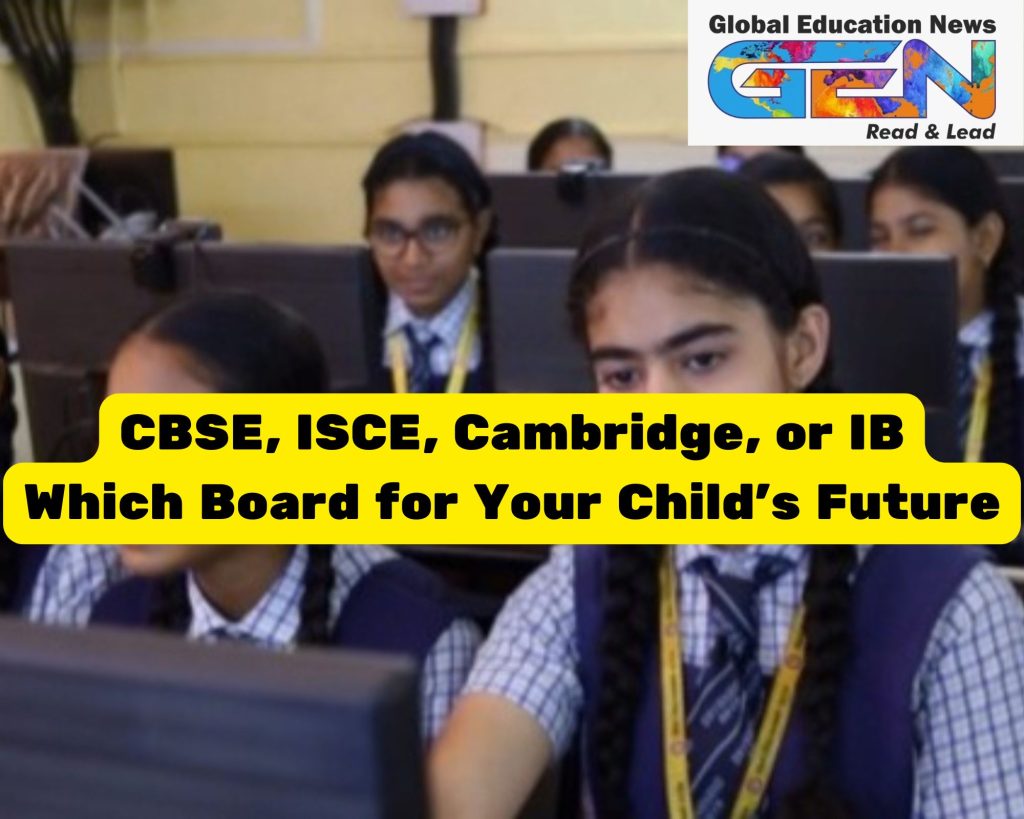
Choosing the right educational board for your child is a crucial decision that will impact their academic journey and potentially shape their career path. With so many boards to choose from in India, understanding their unique features and strengths is essential to making an informed choice.
The four most prominent boards in India — CBSE, CISCE, Cambridge, and IB — offer different teaching methodologies, curricula, and evaluation systems. In this article, we’ll explore the characteristics of each board to help students, particularly those in classes 9 and 11, determine which one aligns best with their academic aspirations and career goals.
Central Board of Secondary Education (CBSE)
The Central Board of Secondary Education (CBSE) is one of the most popular educational boards in India. It is widely recognized for its structured curriculum and uniformity in assessments across all affiliated schools. CBSE is particularly known for preparing students for competitive exams such as JEE (Joint Entrance Examination) for engineering and NEET (National Eligibility Entrance Test) for medical studies, making it the preferred choice for students pursuing careers in these fields.
Key Features of CBSE:
- Curriculum: CBSE focuses on subjects like Mathematics, Science, and Social Studies with a structured approach and clear guidelines for each grade.
- Examination System: The board conducts exams in a systematic manner, with clear grading and an emphasis on theoretical knowledge.
- Career Path: Ideal for students aiming for entrance exams like JEE, NEET, and other government exams. Its focus on STEM (Science, Technology, Engineering, Mathematics) subjects prepares students for competitive technical careers.
Best Suited For: Students planning to enter engineering, medical, or government professions, as well as those who prefer a structured, exam-based system of education.
Council for the Indian School Certificate Examinations (CISCE)
The Council for the Indian School Certificate Examinations (CISCE) is another well-respected board in India. Known for its comprehensive and detailed syllabus, CISCE offers both the ICSE (Indian Certificate of Secondary Education) and ISC (Indian School Certificate) exams. It is often considered more challenging than CBSE due to its in-depth approach to subjects and emphasis on analytical thinking.
Key Features of CISCE:
- Curriculum: The curriculum is broader, with subjects that require critical thinking and a deeper understanding of topics.
- Examination System: CISCE exams are known for their higher academic rigor, particularly in subjects like English, History, and Geography.
- Career Path: CISCE is beneficial for students aiming for careers that require deep analytical and creative thinking, such as law, architecture, journalism, and liberal arts.
Best Suited For: Students with a strong interest in humanities, law, and arts. It’s also suitable for those who prefer a more challenging, detailed-oriented approach to learning.
Cambridge Assessment of International Education (CAIE)
The Cambridge International Examinations (CIE), also known as Cambridge Assessment of International Education (CAIE), offers a globally recognized curriculum that provides an international perspective and prepares students for higher education worldwide. The Cambridge board is part of the larger University of Cambridge network and offers an international approach to education, making it an excellent option for students considering studying abroad.
Key Features of Cambridge (CAIE):
- Curriculum: The Cambridge curriculum focuses on global learning and encourages independent thinking, creativity, and practical application of knowledge.
- Examination System: Cambridge uses a mix of internal and external assessments, including projects and research-based learning, with an emphasis on skill development.
- Career Path: Cambridge is ideal for students considering international higher education or careers in global business, international relations, or academic research.
Best Suited For: Students who wish to pursue higher education abroad, particularly in the UK, USA, or other international universities. It’s also ideal for students seeking a broad, global perspective on their education.
International Baccalaureate (IB)
The International Baccalaureate (IB) is a globally recognized educational system that emphasizes the development of well-rounded, critical-thinking individuals. Known for its emphasis on research, creativity, and community involvement, the IB program prepares students for international colleges and universities and fosters holistic development.
Key Features of IB:
- Curriculum: The IB curriculum encourages interdisciplinary learning, where students explore subjects from various perspectives and engage in real-world challenges.
- Examination System: The IB system focuses on continuous assessment, projects, and assignments, alongside final exams. The Extended Essay and Theory of Knowledge (TOK) are key components that encourage deep research and inquiry-based learning.
- Career Path: IB students are well-prepared for higher education globally, especially in top universities worldwide. Its emphasis on holistic development makes it ideal for those pursuing careers in leadership, research, and global industries.
Best Suited For: Students who aspire to study abroad or pursue careers in research, global business, or international relations. IB is perfect for students who enjoy learning through exploration and critical thinking.
Which Board is Best for You?
When it comes to selecting the best board for your child, several factors come into play:
- Career Goals: If your child is focused on technical careers like engineering or medicine, CBSE might be the best option due to its strong focus on STEM subjects and preparation for competitive exams. For students interested in creative and analytical fields like law, arts, or humanities, CISCE might be more suitable.
- Global Opportunities: If your child is considering studying abroad, Cambridge and IB offer international perspectives that can open doors to global higher education opportunities.
- Learning Preferences: Consider the type of learning your child excels in — whether they prefer structured, exam-oriented education (CBSE) or more inquiry-based, interdisciplinary learning (IB or Cambridge).
Ultimately, the right educational board for your child depends on their strengths, interests, and future aspirations. Each board offers a unique approach to learning, so it’s important to consider which aligns best with your child’s career goals and preferred learning style.