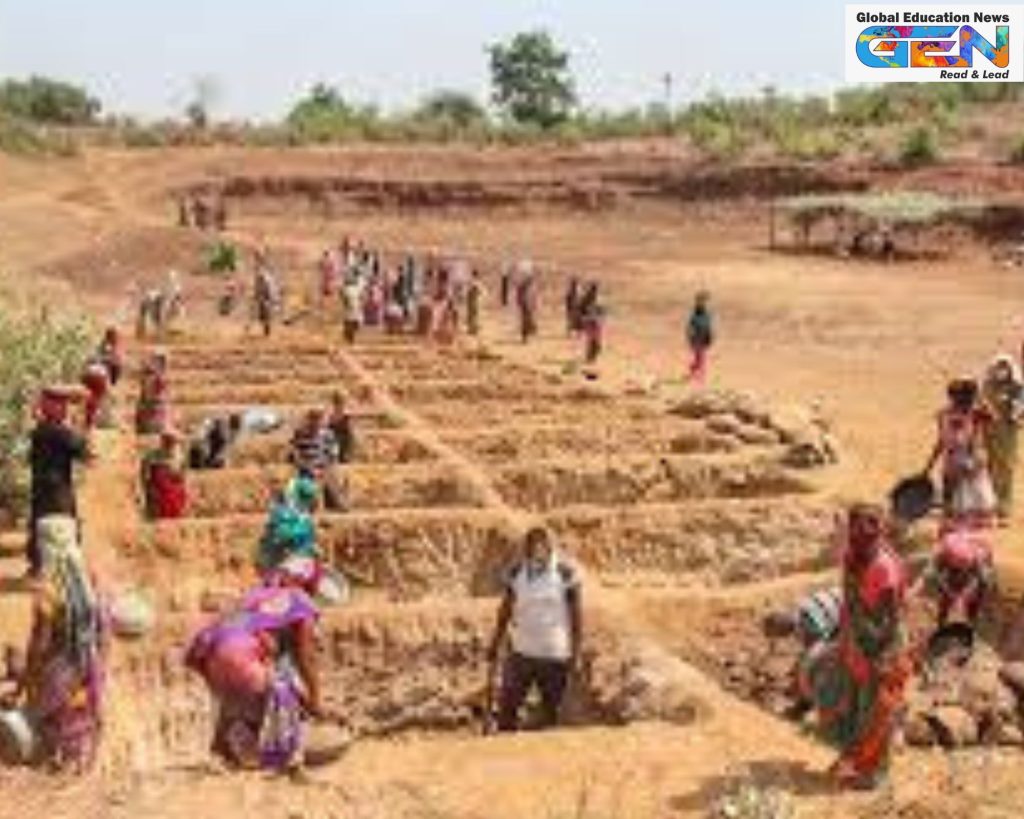
On December 15, 2025, the Union government announced plans to introduce the Viksit Bharat Guarantee for Rozgar and Ajeevika Mission (Gramin) Bill, 2025—also known as the VB–G Ram G Bill 2025—in Parliament. This landmark legislation aims to repeal the Mahatma Gandhi National Rural Employment Guarantee Act (MGNREGA), India’s flagship rural jobs program since 2005.
By expanding job entitlements and tying them to high-impact infrastructure, the bill aligns with the Viksit Bharat 2047 vision of a developed India. It promises not just more workdays but smarter, sustainable development—focusing on water security, connectivity, and climate resilience. As rural India grapples with unemployment, migration, and weather vulnerabilities, this reform could redefine livelihoods for millions. Let’s explore what it means.
The Bill at a Glance: Purpose and Scope
The VB–G Ram G Bill 2025 establishes a modern framework for rural wage employment, guaranteeing unskilled manual work while emphasizing durable assets that fuel long-term growth. It shifts from MGNREGA’s demand-driven approach to a structured, outcome-focused model under a centrally sponsored scheme.
Core Objectives:
- Guarantee 125 days of wage employment per financial year to every rural household with volunteering adult members—a 25% jump from MGNREGA’s 100 days.
- Link jobs to strategic infrastructure creation for rural resilience and economic uplift.
- Enhance governance through decentralized planning, digital payments, and national integration.
- Balance state-level execution with central oversight for equitable, efficient rollout.
This isn’t a mere tweak; it’s a strategic pivot to make rural jobs engines of development, covering all rural households nationwide.
Replacing MGNREGA: Why the Shift?
MGNREGA revolutionized rural employment by providing 100 days of work annually, lifting wages and reducing distress migration. Yet, critics pointed to scattered projects, funding delays, and limited asset durability. The new bill addresses these by repealing MGNREGA and introducing normative funding—predictable budgets based on standards, not fluctuating demands.
Key Differences:
- Work Entitlement: Up from 100 to 125 days, with a mandatory unemployment allowance if jobs aren’t provided within 15 days.
- Focus Shift: From ad-hoc works to four priority verticals for measurable impact.
- Funding Model: Normative allocation for stability, reducing delays while retaining legal guarantees.
- Accountability Boost: Digital wage payments and integrated monitoring to curb leakages.
This evolution honors MGNREGA’s legacy while adapting to modern needs like climate adaptation and digital governance.
Key Features: What the Bill Delivers
The bill’s provisions blend expanded opportunities with smart safeguards, ensuring work benefits both people and places.
Standout Provisions:
- Priority Works Vertical: All projects fall under four categories—water security (e.g., irrigation, conservation); core infrastructure (roads, bridges); livelihood support (storage, markets); and special climate-resilient works (flood barriers, drought mitigation).
- Decentralized Planning: Viksit Gram Panchayat Plans, crafted locally and synced with national tools like PM Gati-Shakti for seamless execution.
- Asset Consolidation: A Viksit Bharat National Rural Infrastructure Stack to track, maintain, and scale creations digitally.
- Farmer-Friendly Pauses: Up to 60 days of work halt during peak sowing/harvesting to avoid labor shortages and support agriculture.
- Inclusivity Measures: Targets rural households, with digital payments for transparency and quick access.
These features make the scheme more resilient, turning temporary jobs into lasting rural assets.
Implementation Roadmap: From Bill to Village
Rollout emphasizes collaboration: States handle on-ground work under central guidelines, with advance planning for steady employment. The bill’s passage in Parliament will trigger transitional rules, aiming for full operation by FY 2026-27.
Step-by-Step Execution:
- Local Level: Gram panchayats prepare annual plans, prioritizing verticals based on community needs.
- National Integration: Assets feed into a centralized stack for monitoring and funding ties.
- Safeguards: Unemployment allowances and digital tracking ensure compliance; states share costs for ownership.
- Timeline: Introduction in Winter Session 2025; repeal of MGNREGA upon enactment.
This structured approach promises fewer delays and more predictable livelihoods.
Rationale and Impacts: Building a Resilient Rural Backbone
The government sees this as essential for Viksit Bharat—linking employment to infrastructure that boosts productivity and withstands shocks. It tackles MGNREGA’s gaps, like underutilized funds (only 70-80% spent annually), by focusing on high-return projects.
Expected Outcomes:
- For Laborers: More workdays mean higher incomes; digital payments cut corruption, benefiting 5-6 crore households.
- For Farmers: Better irrigation and storage could lift crop yields by 20-30%, curbing rural distress.
- Economic Ripple: Enhanced connectivity and resilience may reduce migration, adding to GDP via rural multipliers.
- Challenges Ahead: Success hinges on state capacity and funding (projected at Rs 1-1.5 lakh crore annually).
By prioritizing outcomes, the bill could make rural India a growth engine, not just a safety net.