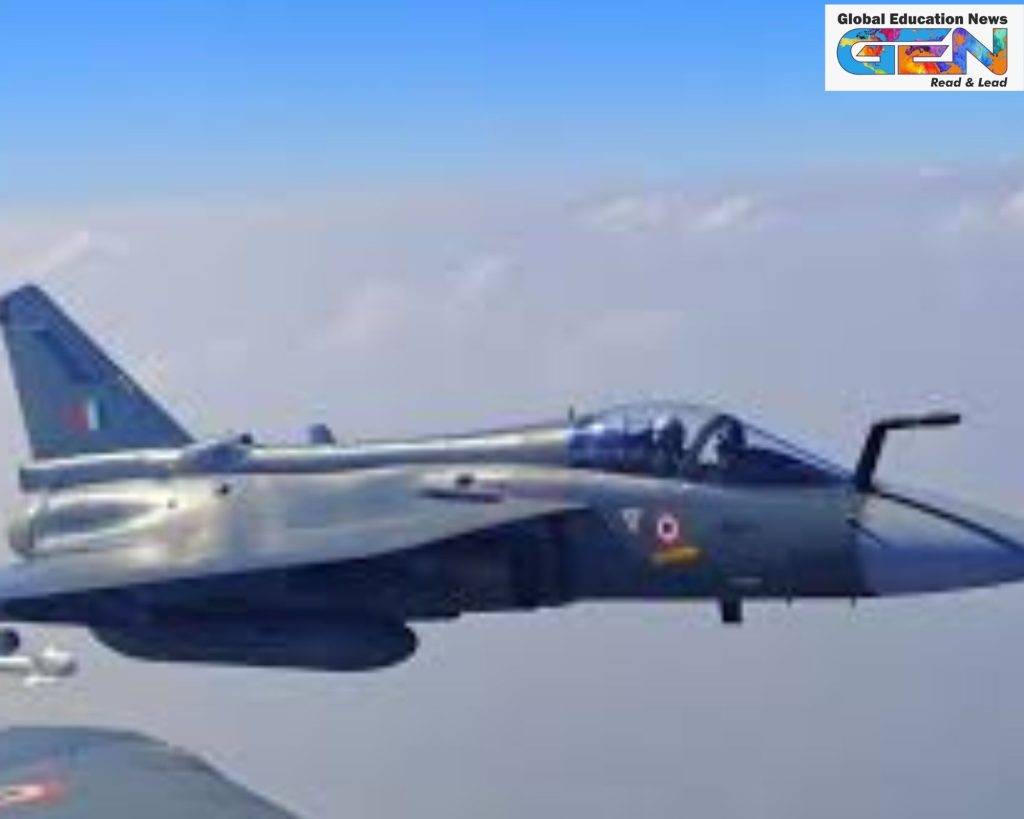
In a significant step toward bolstering India’s indigenous defense capabilities, Hindustan Aeronautics Limited (HAL) is poised to deliver two Tejas Mark-1A fighter jets to the Indian Air Force (IAF) by October 2025, as announced by Defence Secretary Rajesh Kumar Singh on August 30, 2025, at the NDTV Defence Summit. This milestone follows years of delays, primarily due to engine supply issues, and marks a critical advancement in the IAF’s modernization efforts. With a new contract for 97 additional jets on the horizon, the Tejas program is set to play a pivotal role in India’s Make in India initiative. Here’s an in-depth look at this development and its implications for India’s air defense strategy.
A Milestone Delivery for the Tejas Mark-1A
The delivery of the first two Tejas Mark-1A jets, expected by the end of October 2025, comes after significant hurdles in the Light Combat Aircraft (LCA) program. These jets, equipped with advanced weapons integration, will be deployed at the Nal Airbase in Bikaner, Rajasthan, replacing the aging MiG-21 fleet.
- Delivery Details: The two jets are part of a ₹48,000 crore contract signed in February 2021 for 83 Tejas Mark-1A jets, with HAL aiming to complete the order by 2028.
- Weapons Integration: The jets will feature advanced avionics, including the Elta EL/M-2032 radar, an indigenous electronic warfare suite, and a range of missiles, making them versatile for air defense, maritime reconnaissance, and strike roles.
- Squadron Deployment: The No. 3 and No. 23 Squadrons, currently operating MiG-21s at Nal, will transition to Tejas Mark-1A, strengthening India’s western front near Pakistan.
Overcoming Delays: A Journey of Resilience
The Tejas Mark-1A program has faced significant challenges, particularly due to delays in engine supplies from GE Aerospace. The IAF, grappling with a reduced squadron strength of 31 against a sanctioned 42, has repeatedly expressed concerns over these setbacks.
- Engine Supply Issues: Delays in the delivery of GE F404-IN20 engines pushed back the original March 2024 deadline for the first jet. The first engine was delivered in March 2025, enabling HAL to ramp up production.
- IAF’s Frustration: Air Chief Marshal Amar Preet Singh voiced disappointment at Aero India 2025, stating, “I am just not confident of HAL,” highlighting the urgency of timely deliveries.
- Corrective Measures: A Defence Empowerment Committee, led by Defence Secretary Rajesh Kumar Singh, was formed to address bottlenecks, recommending private sector involvement and parallel assembly lines to boost production to 16 jets annually.
The Tejas Mark-1A: India’s Indigenous Powerhouse
The Tejas Mark-1A, a 4.5-generation multirole fighter, is a cornerstone of India’s Atmanirbhar Bharat initiative, boasting over 65% indigenous content. Designed by the Aeronautical Development Agency (ADA) and manufactured by HAL, it is the smallest and lightest supersonic fighter in its class.
- Advanced Features: The jet includes a Digital Flight Control Computer (DFCC), indigenously developed servo-valve actuators, and an electronic warfare suite with radar warning receivers and jammers.
- Indigenous Milestones: The first batch of Leading Edge Slats and Airbrake Control Modules was delivered by ADA in April 2024, enhancing the jet’s maneuverability.
- Strategic Role: With a focus on replacing MiG-21s, the Tejas Mark-1A will strengthen IAF’s capabilities amid regional tensions, including recent India-Pakistan aerial clashes.
Future Plans: Expanding the Tejas Fleet
The government’s approval of a ₹67,000 crore deal for 97 additional Tejas Mark-1A jets on August 19, 2025, underscores the IAF’s commitment to a 180-strong fleet. This follows the initial order of 83 jets, bringing the total to 220 Tejas variants, including plans for the advanced Tejas Mark-2.
- New Contract: Defence Secretary Singh emphasized that the contract for 97 jets will be signed only after the delivery of the first two jets, ensuring HAL’s accountability.
- Production Scale-Up: HAL’s new production line in Nashik and partnerships with private firms, like Alpha Tocol Engineering Services for fuselages, aim to deliver 24 jets annually by 2028.
- Long-Term Vision: The IAF plans to operate 324 Tejas variants across 18 squadrons, including the Mark-2, to bridge the fighter gap and reduce reliance on foreign aircraft.
Challenges and Opportunities
Despite progress, challenges remain in scaling production and integrating advanced systems.
- Supply Chain Bottlenecks: Delays in GE F404 engines highlight India’s reliance on foreign suppliers, prompting exploration of alternatives like Safran’s 110 kN engine for the Tejas Mark-2.
- Squadron Shortfall: With only 31 squadrons, the IAF faces a critical gap, necessitating additional platforms like the Light Combat Helicopter and potential foreign procurements.
- Private Sector Role: The Defence Empowerment Committee recommends greater private sector involvement to enhance production efficiency and meet IAF’s urgent needs.