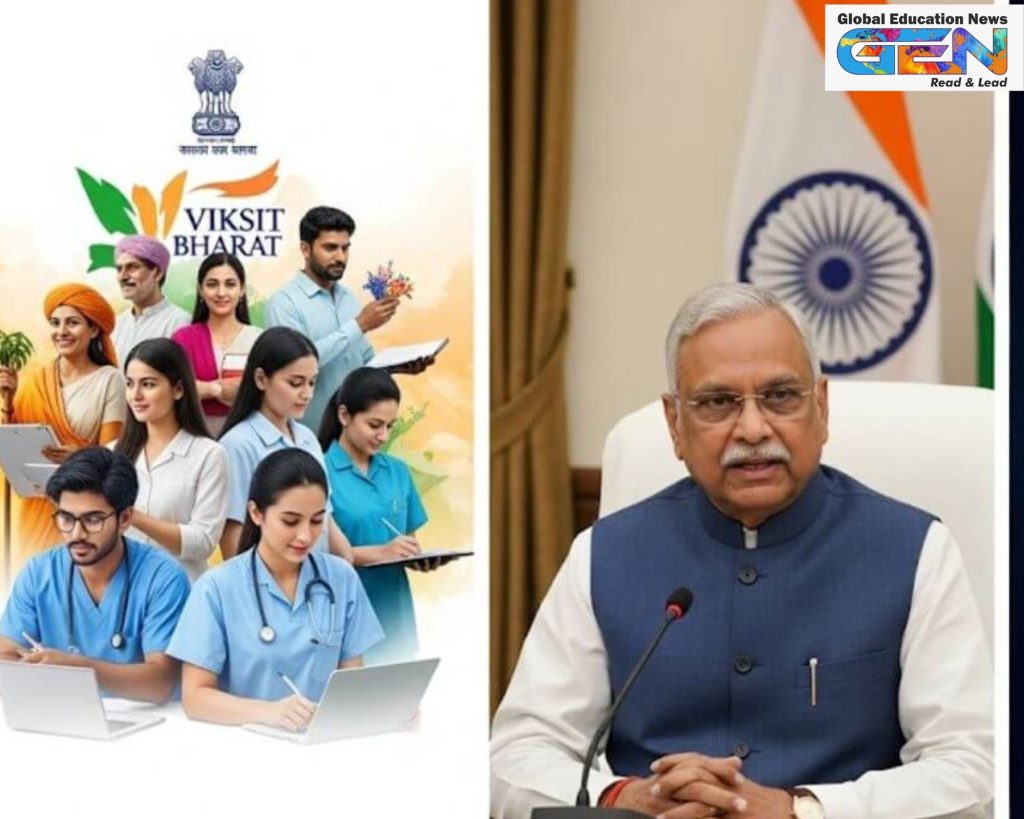
On August 21, 2025, the Indian government took a bold step toward realizing its Viksit Bharat 2047 vision by establishing two high-powered committees led by Rajiv Gauba, former Cabinet Secretary and current NITI Aayog member. These panels, focused on next-generation reforms and the ambitious goal of transforming India into a developed nation by 2047, signal a transformative push for economic growth, regulatory overhaul, and governance efficiency. Complementing these efforts, a separate state-level deregulation committee under Cabinet Secretary TVS Swaminathan aims to streamline federal policies. With coordination from ministerial groups led by Amit Shah and Rajnath Singh, these initiatives mark a pivotal moment in India’s journey to becoming a $30 trillion economy. Here’s a detailed look at the panels, their objectives, and their potential to reshape India’s future.
Structure and Objectives of the Gauba-Led Panels
The two committees, formed under the aegis of NITI Aayog, are designed to address distinct but complementary goals, aligning with Prime Minister Narendra Modi’s call for transformative reforms during his 79th Independence Day address on August 15, 2025.
1. Panel on Viksit Bharat Goals:
- Objective: Craft long-term strategies to transform India into a developed nation by 2047, targeting a $30 trillion economy, inclusive growth, and global competitiveness.
- Focus Areas: Economic prosperity, social equity, environmental sustainability, and effective governance, with emphasis on youth, the poor, women, and farmers (the four pillars of Viksit Bharat).
- Key Initiatives: Expanding digital infrastructure, boosting innovation, and fostering self-reliance through schemes like Make in India and Startup India.
2. Panel on Non-Financial Regulatory Reforms:
- Objective: Simplify and modernize regulatory frameworks in non-financial sectors to enhance ease of doing business and attract global investments.
- Focus Areas: Streamlining over 69,000 compliances under 1,500+ laws, implementing Regulatory Impact Assessments (RIA), and reducing bureaucratic red tape.
- Impact: Aims to cut compliance burdens by 30% by 2030, fostering a “Red Carpet” environment for businesses, as per the CIVIC framework (Cut Compliance, Boost Growth).
Key Points:
- First Meeting: Held on August 21, 2025, marking the launch of coordinated reform efforts.
- Coordination: Both panels work with ministerial groups chaired by Union Home Minister Amit Shah and Defence Minister Rajnath Singh for political backing and swift execution.
- State-Level Synergy: A separate committee under Cabinet Secretary TVS Swaminathan focuses on deregulation at the state level to address federal bottlenecks.
Composition: A Blend of Expertise
The Gauba-led panels are a unique mix of government and private-sector expertise, ensuring a holistic approach to reform. Their composition includes:
- Government Representation:
- Secretaries from key ministries: Department for Promotion of Industry and Internal Trade (DPIIT), Expenditure, MSME, and Power.
- Industry and Academic Experts:
- Pawan Goenka (former Mahindra & Mahindra MD), Manish Sabharwal (HR expert), and Janmejay Sinha (BCG India Chairperson).
- Director Generals from industry bodies like CII, FICCI, and Assocham.
- Significance: This diverse membership bridges administrative insight with market-driven perspectives, ensuring practical and impactful reforms.
Key Points:
- Rajiv Gauba’s Leadership: As a former Cabinet Secretary with a five-year tenure (2019–2024) and a gold medalist in physics, Gauba brings extensive experience from roles in Jharkhand’s governance reforms, Urban Development, and Smart Cities Mission.
- Industry Input: Experts like Goenka and Sinha ensure reforms align with global business trends, critical for India’s $5 trillion economy target by 2027.
Context: The Viksit Bharat 2047 Vision
The panels were formed in response to PM Modi’s call for a transformative agenda to make India a developed nation by its 100th year of independence in 2047. Outlined in the Union Budget 2025–26 and Modi’s Independence Day speech, Viksit Bharat emphasizes:
- Economic Growth: Achieving a $30 trillion economy by 2047, with GDP projected to surpass $7 trillion by 2030 (PHDCCI estimates).
- Social Empowerment: Focus on Yuva (youth), Garib (poor), Mahila (women), and Kisan (farmers) through schemes like PM Viksit Bharat Rozgar Yojana (₹1 lakh crore for 3 crore youth) and Jan Dhan Yojana.
- Sustainability: Targeting 500 GW of non-fossil capacity by 2030 and Net Zero by 2070, with events like Bharat Electricity 2025 driving clean energy innovation.
- Governance: Reducing compliance burdens, modernizing bureaucracy, and enhancing judicial efficiency to create a “Strong Institutions, Stronger India” framework.
Key Points:
- Youth Engagement: Platforms like Viksit Bharat Young Leaders Dialogue and Viksit Bharat Youth Parliament engage over 1 lakh youth in policy-making.
- Global Competitiveness: India’s rise from the 52nd to 39th rank in the Global Innovation Index (2019–2024) and plans for a $750 billion semiconductor industry by 2047 underscore its ambition.
Impact and Challenges
The Gauba-led panels are poised to drive significant change but face challenges in execution and coordination across India’s complex federal structure.
Potential Impact:
- Economic Boost: Regulatory reforms could attract $100 billion in FDI annually by 2030, supporting MSMEs and startups.
- Governance Efficiency: Cutting compliance burdens will save businesses ₹1.5 lakh crore annually, per NITI Aayog estimates.
- Youth Empowerment: Initiatives like the PM Viksit Bharat Rozgar Yojana will create jobs for 3 crore youth, leveraging India’s demographic dividend (median age 29).
- Global Leadership: Aligns with India’s goal to become the world’s 3rd largest economy by 2027, surpassing $5 trillion GDP.
Challenges:
- Federal Coordination: Aligning state and central policies, as seen in J&K’s school takeover controversy, requires robust mechanisms.
- Bureaucratic Resistance: Modernizing bureaucracy, as proposed in the CIVIC framework, may face pushback from entrenched systems.
- Implementation Scale: Executing reforms across diverse sectors like agriculture, education, and energy demands significant resources and timelines.