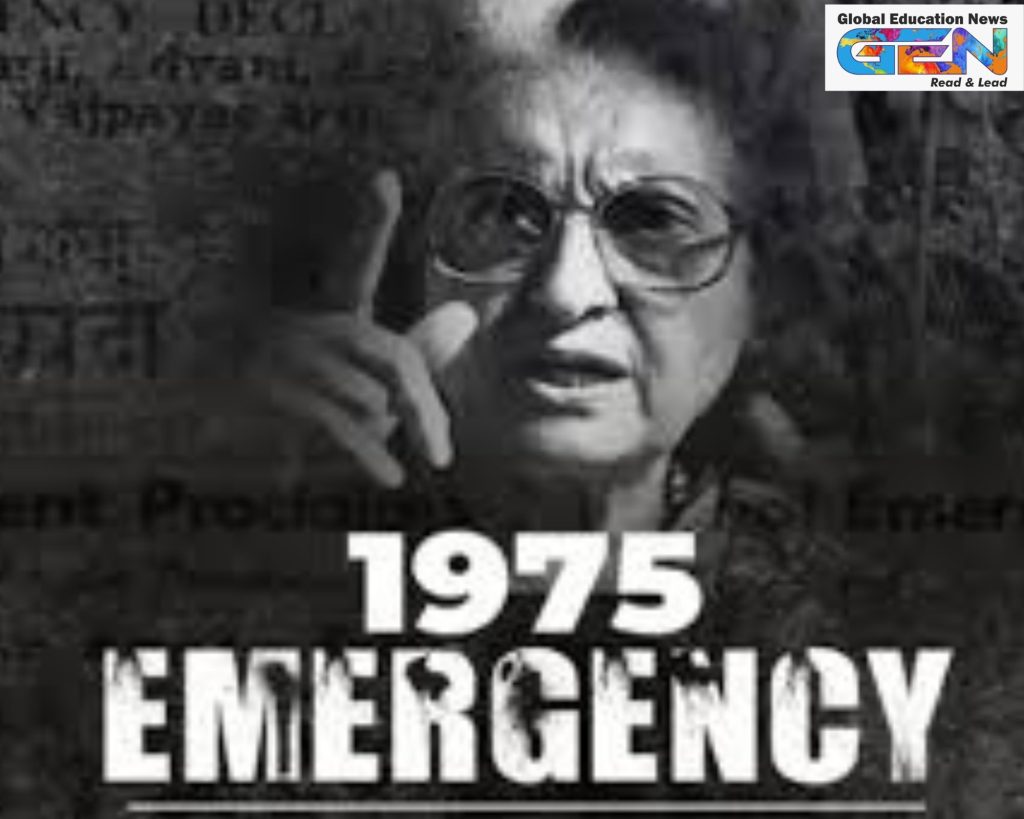
Fifty years ago, on June 25, 1975, India plunged into one of its most turbulent periods—the Emergency, declared by then-Prime Minister Indira Gandhi. Lasting 21 months until March 21, 1977, this era, often called the “darkest chapter” in India’s democratic history, saw civil liberties crushed, dissent silenced, and democracy tested. As we mark the 50th anniversary in 2025, dubbed Samvidhan Hatya Diwas (Constitution Murder Day) by the government, this guide dives into the causes, consequences, and enduring lessons of the Emergency, sparking reflection on the resilience of India’s democratic spirit.
The Emergency Unveiled: A Nation in Crisis
On June 25, 1975, President Fakhruddin Ali Ahmed invoked Article 352, declaring a state of Emergency citing “internal disturbance.” This drastic move, led by Indira Gandhi, gave her sweeping powers to rule by decree, reshaping India’s democratic landscape.
- Key Points:
- Trigger: Allahabad High Court’s June 12, 1975, ruling invalidating Indira Gandhi’s 1971 election for electoral malpractice.
- Duration: 21 months, from June 25, 1975, to March 21, 1977.
- Authority: Suspended elections, curbed fundamental rights, and allowed mass arrests under laws like MISA (Maintenance of Internal Security Act).
- Censorship: Media silenced; electricity to Delhi’s newspaper offices cut off overnight.
- Announcement: Indira Gandhi justified it as a response to a “deep and widespread conspiracy” against her progressive measures.
This period, as PM Narendra Modi noted on X in 2025, was a “blatant disregard for constitutional values,” with democracy itself “put behind bars.”
Why It Happened: The Roots of the Crisis
The Emergency didn’t emerge in a vacuum. The early 1970s were marked by political, economic, and social turmoil that set the stage for this drastic step.
- Key Points:
- Political Unrest: Student-led movements in Gujarat and Bihar, led by figures like Jayaprakash Narayan, challenged Indira Gandhi’s leadership.
- Economic Woes: High inflation, unemployment, and food shortages fueled public discontent.
- Legal Blow: The Allahabad High Court’s verdict threatened Gandhi’s political survival, prompting her to act.
- Opposition Surge: Socialist leaders and opposition groups rallied against her, amplifying calls for reform.
- Power Consolidation: Allegations suggest Gandhi used the Emergency to cling to power, with controversial Soviet ties noted in The Mitrokhin Archive II.
The Emergency was less about national security and more about political survival, as historian Gyan Prakash called it a “lawful suspension of law.”
Impact: A Nation Silenced
The Emergency’s 21 months left deep scars on India’s democratic fabric, with widespread abuses that still echo today.
- Key Points:
- Mass Arrests: Over 1 lakh political opponents, journalists, and activists, including Morarji Desai, were jailed.
- Press Censorship: Newspapers like The Hindustan Times faced suppression; special editions were confiscated.
- Forced Sterilization: Sanjay Gandhi’s mass vasectomy campaign sparked fear and resentment.
- 42nd Amendment: Dubbed the “Mini Constitution,” it altered the Constitution’s Preamble, adding “Socialist” and “Secular” but raising concerns about power centralization.
- Human Toll: Stories like actress Snehalatha Reddy’s death due to torture highlight the era’s brutality.
As PM Modi emphasized in 2025, the poor and marginalized suffered the most, with their “dignity attacked.”
Resistance: Heroes of Democracy
Despite the repression, countless Indians fought back, ensuring the Emergency didn’t extinguish democracy’s flame.
- Key Points:
- Jayaprakash Narayan: The socialist leader became a symbol of resistance, inspiring nationwide defiance from prison.
- Public Uprising: People from all walks of life—students, activists, and ordinary citizens—united to protect democracy.
- 1977 Elections: The public’s wrath ousted Congress, with Indira and Sanjay Gandhi losing their seats, marking a “bloodless revolution.”
- Media Defiance: Underground publications and brave journalists kept dissent alive despite censorship.
- Legacy: The resistance, as Union Minister Rajnath Singh noted, “kept democracy alive.”
This collective fight, celebrated on Samvidhan Hatya Diwas, underscores the power of a vigilant citizenry.
Lessons for Today: Safeguarding Democracy
The Emergency’s 50th anniversary, marked in 2025 with events like the Long Live Democracy Yatra in Delhi, is a call to reflect on democracy’s fragility.
- Key Points:
- Vigilance Needed: As PM Modi stated, “No Indian will ever forget” how the Constitution was crushed, urging protection of democratic values.
- Constitutional Safeguards: The 44th Amendment (1978) later curbed Emergency powers to prevent misuse.
- Public Awareness: Exhibitions, film screenings, and discussions in 2025 aim to educate youth about this “black chapter.”
- Critical Reflection: Scholars like Pratap Bhanu Mehta warn that democracy requires constant nurturing to avoid “undeclared emergencies.”
- Citizen Power: The 1977 election proved the electorate’s ability to hold power accountable.
The Wire’s 2025 analysis raises a poignant question: “Can a constitution survive when its spirit is hollowed out?”
Samvidhan Hatya Diwas: A Day of Remembrance
In 2024, the government designated June 25 as Samvidhan Hatya Diwas to honor those who resisted the Emergency and to remind future generations of its lessons.
- Key Points:
- Official Recognition: Announced by Home Minister Amit Shah to mark the “murder of democracy.”
- Events Planned: Nationwide programs, including Delhi’s Thyagaraj Stadium event, to spread awareness.
- Leaders’ Voices: From Lok Sabha Speaker Om Birla to President Droupadi Murmu, leaders condemned the Emergency’s assault on the Constitution.
- Public Sentiment: X posts reflect strong emotions, with users like @BJP4India calling it a “stain” on democracy.
- Educational Push: Schools and colleges encouraged to teach this history to instill democratic values.
This day serves as a powerful reminder to safeguard India’s hard-won freedoms.
Want to Dive Deeper?
Curious about the Emergency or want to join the conversation? Here’s how to engage:
- Key Points:
- Visit pib.gov.in or mha.gov.in for official statements and resources.
- Follow @narendramodi_in or @BJP4India on X for updates and reflections.
- Explore books like The Emergency: A Personal History by Coomi Kapoor for firsthand accounts.
- Attend Long Live Democracy Yatra events or local discussions in 2025.
- Share this guide to spark awareness about this critical chapter in India’s history.
A Call to Protect Democracy
As we commemorate 50 years since the Emergency on June 25, 2025, the story of 1975–77 remains a stark reminder of democracy’s fragility. From Indira Gandhi’s authoritarian rule to the heroic resistance of ordinary Indians, this “darkest chapter” shaped the nation’s resolve to protect its Constitution. With Samvidhan Hatya Diwas, India honors those who fought back and urges today’s youth to stay vigilant. Share this guide, reflect on the lessons, and let’s pledge to keep democracy alive for a stronger, freer Viksit Bharat