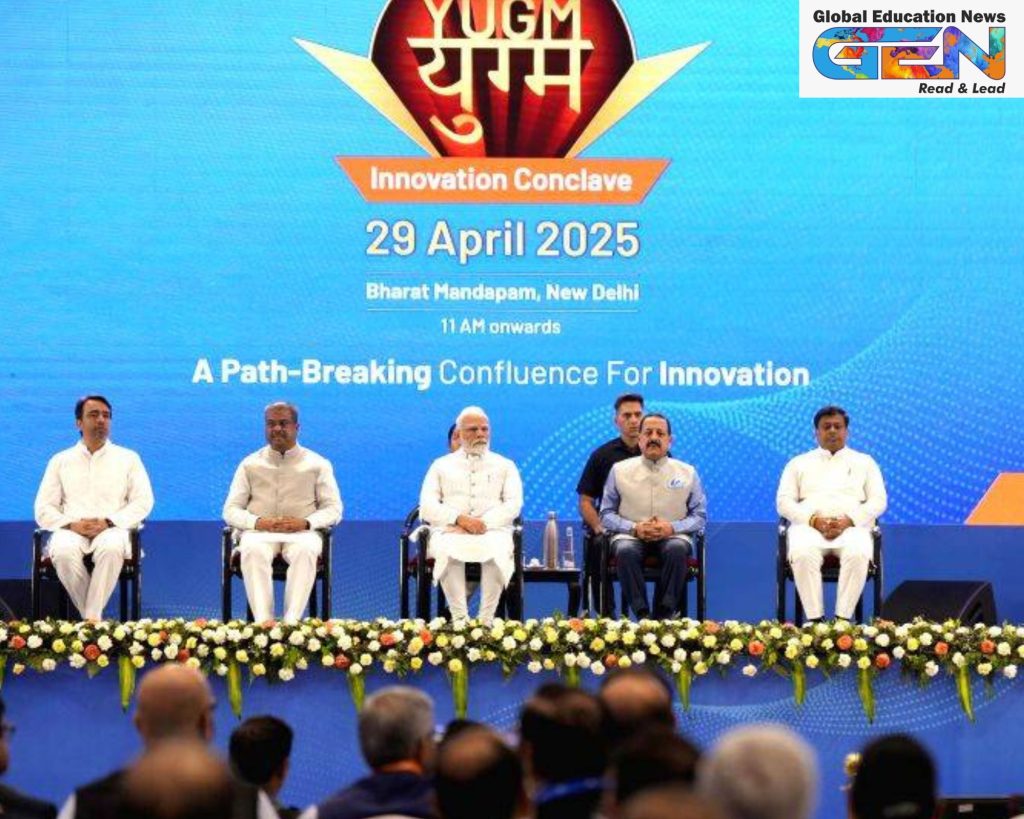
On April 29, 2025, Prime Minister Narendra Modi participated in the YUGM Conclave at Bharat Mandapam, New Delhi, a landmark event aimed at transforming India’s innovation ecosystem. The conclave, named YUGM (Sanskrit for “confluence”), brought together leaders from government, academia, industry, and the innovation sector to drive India’s vision of becoming a self-reliant and innovation-led nation by 2047. With a collaborative investment of ₹1,400 crore from the Wadhwani Foundation and government institutions, the event marked a significant step toward accelerating research-to-commercialization pipelines and fostering deep tech advancements.
This article delves into the highlights of the YUGM Conclave 2025, PM Modi’s vision for India’s youth and innovation, key projects launched, and the event’s role in shaping a Viksit Bharat (Developed India). Optimized for readers interested in Indian innovation, technology, and national development, this piece provides a comprehensive overview of the conclave’s impact.
What is the YUGM Conclave?
Key Points:
- Event Date and Venue: April 29, 2025, at Bharat Mandapam, New Delhi.
- Meaning of YUGM: “Confluence” in Sanskrit, symbolizing collaboration across sectors.
- Objective: Catalyze private investment and strengthen India’s innovation ecosystem.
- Investment: ₹1,400 crore joint funding by Wadhwani Foundation and government bodies.
The YUGM Conclave is a first-of-its-kind strategic gathering designed to unite stakeholders from government, academia, industry, and the innovation ecosystem. Held at Bharat Mandapam, the event aligns with PM Modi’s vision of a self-reliant India by promoting research commercialization and deep tech innovation. The conclave aims to position India as a global innovation hub by fostering partnerships and democratizing access to innovation across institutions.
PM Modi’s Address: Empowering India’s Youth
Key Points:
- Youth as Innovators: Modi praised India’s youth as “R&D-ready and disruptive,” driving research milestones.
- Trinity for Progress: Highlighted Talent, Temperament, and Technology as key drivers of India’s future.
- Education Reforms: Emphasized modernization of the education system to meet 21st-century needs.
- 25-Year Roadmap: Outlined a vision for Viksit Bharat by 2047, focusing on innovation and AI.
In his keynote address, PM Modi lauded the disruptive potential of India’s youth, stating, “The youth of the country today is R&D-ready and disruptive. They are setting new research milestones.” He underscored the role of Talent, Temperament, and Technology in transforming India’s future, particularly through artificial intelligence tailored to India’s needs. Modi also highlighted the New Education Policy as a driver of transformation, noting that university campuses are becoming hubs for breakthrough innovations.
Key Projects Launched at YUGM Conclave
Key Points:
- Superhubs: AI and Intelligent Systems at IIT Kanpur; Biosciences, Biotechnology, Health, and Medicine at IIT Bombay.
- Wadhwani Innovation Network (WIN): Centers at top research institutions to drive commercialization.
- ANRF Partnership: Collaboration with Anusandhan National Research Foundation for late-stage research funding.
- Focus Areas: AI, biotechnology, and deep tech to position India as a global leader.
The conclave saw the launch of several transformative initiatives to bolster India’s innovation landscape:
- Superhubs: Specialized research hubs at IIT Kanpur (AI and Intelligent Systems) and IIT Bombay (Biosciences, Biotechnology, Health, and Medicine) to lead cutting-edge research.
- Wadhwani Innovation Network (WIN) Centers: Established at premier institutions to bridge the gap between research and market-ready solutions.
- ANRF Collaboration: Partnership with the Anusandhan National Research Foundation to fund late-stage translation projects, enhancing research and innovation.
Highlights of the Conclave
Key Points:
- Roundtables and Panels: High-level discussions with government officials, industry, and academic leaders.
- Deep Tech Showcase: Featured cutting-edge innovations from Indian startups.
- Networking Opportunities: Fostered cross-sector collaborations and partnerships.
- Research Parks: Plans to establish 13 additional research parks to support innovation.
The YUGM Conclave was a dynamic platform for collaboration, featuring:
- High-Level Roundtables: Action-oriented dialogues to fast-track research-to-impact translation.
- Deep Tech Startup Showcase: Highlighted innovations in AI, biotechnology, and other frontier technologies.
- Networking Sessions: Connected stakeholders to spark partnerships and investments.
- Research Park Expansion: Union Minister Dharmendra Pradhan announced plans for 13 new research parks, building on the six established since 2014.
Goals of the YUGM Conclave
Key Points:
- Private Investment: Catalyze large-scale funding for India’s innovation ecosystem.
- Commercialization: Accelerate research-to-market pipelines in frontier technologies.
- Partnerships: Strengthen academia-industry-government collaboration.
- National Alignment: Support initiatives like ANRF and AICTE Innovation for Viksit Bharat 2047.
The conclave aimed to:
- Attract large-scale private investment to fuel innovation.
- Speed up research commercialization in fields like AI and biotechnology.
- Enhance academia-industry-government partnerships for seamless innovation.
- Advance national initiatives like the Anusandhan National Research Foundation and AICTE Innovation.
- Foster a unified innovation strategy toward a Developed India by 2047.
India’s Innovation Journey: A Broader Context
Key Points:
- Global Recognition: Indian institutions gaining prominence, with top universities expanding globally.
- Government Priority: Innovation a key focus under Modi’s leadership since 2014.
- Youth Empowerment: Emphasis on skilling youth to make India a global innovation hub.
- 21st Century Vision: Union Minister Jitendra Singh declared the 21st century as India’s era.
The YUGM Conclave aligns with India’s broader innovation goals. PM Modi noted the increasing global presence of Indian institutions, with top universities opening international branches. Union Minister Jitendra Singh emphasized that the Modi government has prioritized innovation over the past 11 years, positioning India for global leadership. The conclave’s focus on youth empowerment and skill development aims to make India a leader in research and innovation.
Conclusion
The YUGM Conclave 2025 marked a pivotal moment in India’s journey toward becoming a global innovation hub. With PM Narendra Modi at the helm, the event showcased India’s commitment to fostering research, commercialization, and deep tech advancements. The launch of Superhubs, WIN Centers, and partnerships with ANRF underscores the government’s vision for a self-reliant India. By empowering its youth and leveraging Talent, Temperament, and Technology, India is poised to lead the world in innovation by 2047.