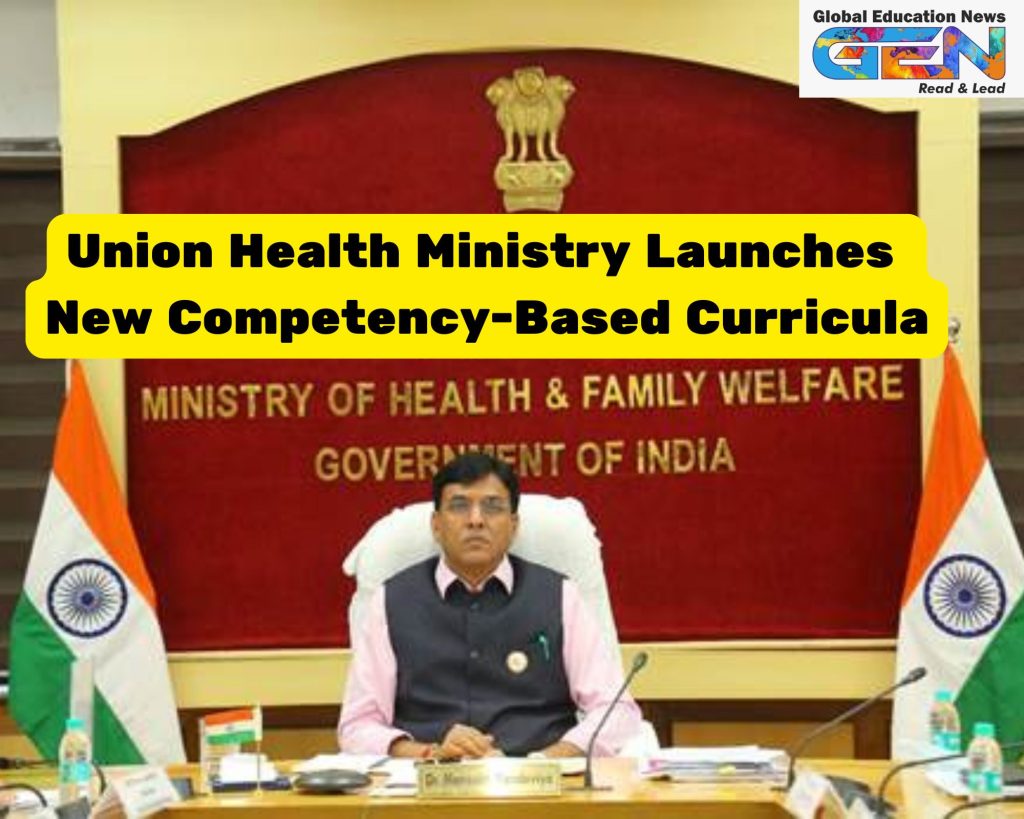
On April 23, 2025, the Union Health Ministry, in collaboration with the National Commission for Allied and Healthcare Professions (NCAHP), introduced new competency-based curricula for ten allied and healthcare professions in India. This transformative initiative aims to standardize education, enhance global competence, and meet the growing demand for skilled healthcare professionals. By aligning with international standards, these curricula are set to revolutionize healthcare education and strengthen India’s healthcare delivery system.
Overview of the New Curricula
The newly launched curricula cover a diverse range of allied healthcare professions, including:
- Physiotherapy
- Applied Psychology and Behavioural Health
- Optometry
- Nutrition and Dietetics
- Dialysis Therapy Technology and Dialysis Therapy
- Radiotherapy Technology
- Medical Radiology and Imaging Technology
- Anaesthesia and Operation Theatre Technology
- Health Information Management
- Physician Associates
These programs are designed to produce globally competent professionals capable of addressing the rising burden of diseases and the increasing need for allied health services. The curricula emphasize standardization, ensuring consistent educational quality across the nation, and adopt a competency-based approach that prioritizes practical skills over theoretical knowledge.
Key Features of the Competency-Based Curricula
The competency-based curricula are built on several core principles to ensure excellence in healthcare education:
- Standardization: Establishes minimum educational standards to maintain uniform quality for healthcare professionals nationwide.
- Competency-Based Learning: Focuses on practical application of skills in real-world healthcare settings, preparing students for industry demands.
- Global Alignment: Incorporates international benchmarks, including the National Commission for Allied and Healthcare Professions Act, 2021, to enhance career mobility and professional recognition.
- Comprehensive Development: Involves extensive consultations with academic experts, professional associations, and healthcare stakeholders to ensure relevance and rigor.
The curricula also provide clear guidelines on course content, eligibility criteria, training delivery methods, and institutional infrastructure requirements, fostering a robust framework for allied healthcare education.
Impact on India’s Healthcare Sector
The introduction of these curricula marks a significant step toward strengthening India’s healthcare system. By producing highly skilled allied healthcare professionals, the initiative addresses critical needs in preventive, promotive, curative, and rehabilitative healthcare. The Union Health Secretary, Punya Salila Srivastava, emphasized, “India is skilling its healthcare professionals not just for India, but for the globe.” This vision positions India as a global leader in healthcare education and workforce development.
The curricula are expected to:
- Enhance Skill-Based Training: Align educational outcomes with industry needs, ensuring graduates are job-ready.
- Promote Career Mobility: Facilitate professional recognition and opportunities for healthcare professionals both nationally and internationally.
- Address Disease Burden: Equip professionals to tackle the rising prevalence of diseases through specialized training.
- Support Swastha Bharat: Contribute to the vision of a Healthy India by improving access to quality healthcare services.
Implementation and Support Systems
The success of the new curricula hinges on robust implementation strategies. The Union Health Ministry has outlined several measures to ensure effective rollout:
- Institutional Preparedness: Institutions must upgrade facilities to meet curriculum requirements.
- Faculty Training: Educators will receive specialized training to deliver competency-based education.
- Infrastructure Development: Investments in modern infrastructure will support hands-on training.
- Continuous Monitoring: Regular assessments will maintain quality standards and address gaps.
To enhance accessibility, digital modules of the curricula will be crowdsourced, making them widely available for capacity building. The NCAHP has announced that these curricula will be mandatory from 2026 and will be accessible on their official website, promoting transparency and ease of access.
A Vision for One Nation, One Curriculum
The NCAHP Chairperson, Dr. Yagna Shukla, described the launch as a pivotal step toward achieving “One Nation, One Curriculum.” This initiative ensures uniformity in allied healthcare education, eliminating disparities across states and institutions. The first phase of the curriculum rollout focuses on the ten listed professions, with plans to release curricula for other professions under the NCAHP Act, 2021, in the near future.
Global Competence and Future Prospects
The new curricula are designed to meet international healthcare standards, enabling Indian professionals to compete in the global healthcare market. By fostering skills that align with industry trends, the initiative enhances career opportunities for graduates. The focus on preventive and rehabilitative care also positions allied healthcare professionals as key players in addressing global health challenges.
As the healthcare sector evolves, these curricula will play a crucial role in bridging the gap between education and industry needs. The Union Health Ministry’s commitment to capacity building and quality education underscores its dedication to building a resilient healthcare workforce.
Conclusion
The launch of the competency-based curricula for ten allied and healthcare professions is a landmark achievement for India’s healthcare education system. By prioritizing standardization, practical training, and global competence, the Union Health Ministry and NCAHP are paving the way for a stronger, more skilled healthcare workforce. As these curricula take effect, they promise to transform allied healthcare in India, contributing to a healthier nation and a competitive global presence.