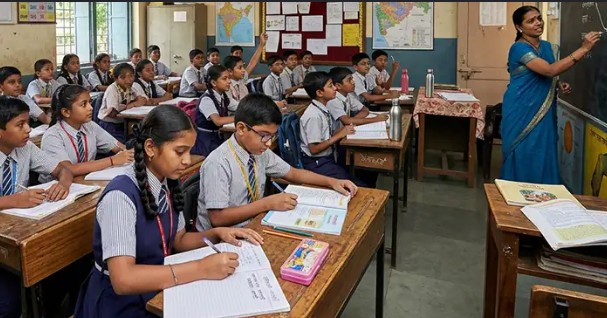
In a major step toward transforming school education, the Maharashtra government has approved a new curriculum framework for Class 6, which will be implemented from the 2026–27 academic session starting in June.
The decision was taken by the state-level steering committee under the leadership of the School Education Department, marking a significant shift toward modern, student-centric learning.
Aligned with NEP 2020: Focus on Holistic Development
The new curriculum is designed in line with the National Education Policy (NEP) 2020, aiming to move beyond rote learning and focus on:
- Concept-based understanding
- Critical thinking and problem-solving
- Skill-based and experiential learning
The framework is built around learning outcomes, ensuring students develop both academic knowledge and practical skills.
Phased Implementation Across Classes
The Class 6 curriculum reform is part of a larger statewide rollout plan:
- 2025–26: Implementation began with Class 1
- 2026–27: Classes 2, 3, 4, and 6
- 2027–28 onwards: Higher classes to follow
This phased approach ensures smooth transition and better adaptation for students and teachers.
New Textbooks by Balbharati
The responsibility for developing updated textbooks has been assigned to Balbharati, Maharashtra’s official textbook bureau.
- New books will be introduced from the upcoming academic session
- Content will reflect updated pedagogy and modern learning needs
- Emphasis on clarity, engagement, and real-life application
Key Changes in Class 6 Curriculum
The revised framework is expected to bring several important changes:
1. Integration with National Standards
Subjects like Mathematics and Science will be aligned more closely with NCERT-based frameworks, ensuring uniformity with national standards.
2. Introduction of Vocational Learning
Students may be introduced to basic vocational education, helping them develop practical skills from an early stage.
3. Focus on Experiential Learning
The curriculum emphasizes:
- Activity-based learning
- Projects and real-life applications
- Interactive classroom methods
4. Reduced Academic Burden
The syllabus is designed to balance difficulty levels, making learning more engaging and less stressful for students.
Teacher Training and Implementation Strategy
To ensure effective rollout, the state will conduct:
- Teacher training programs at district and state levels
- Workshops on new teaching methodologies
- Orientation sessions for schools
This step is crucial to ensure that the new curriculum is implemented effectively in classrooms.
Why This Change Matters
The new Class 6 curriculum is expected to:
- Prepare students for future-ready skills
- Improve conceptual understanding
- Align Maharashtra’s education system with national and global standards
- Reduce reliance on rote memorization
Education experts believe this reform will significantly improve learning outcomes and student engagement.