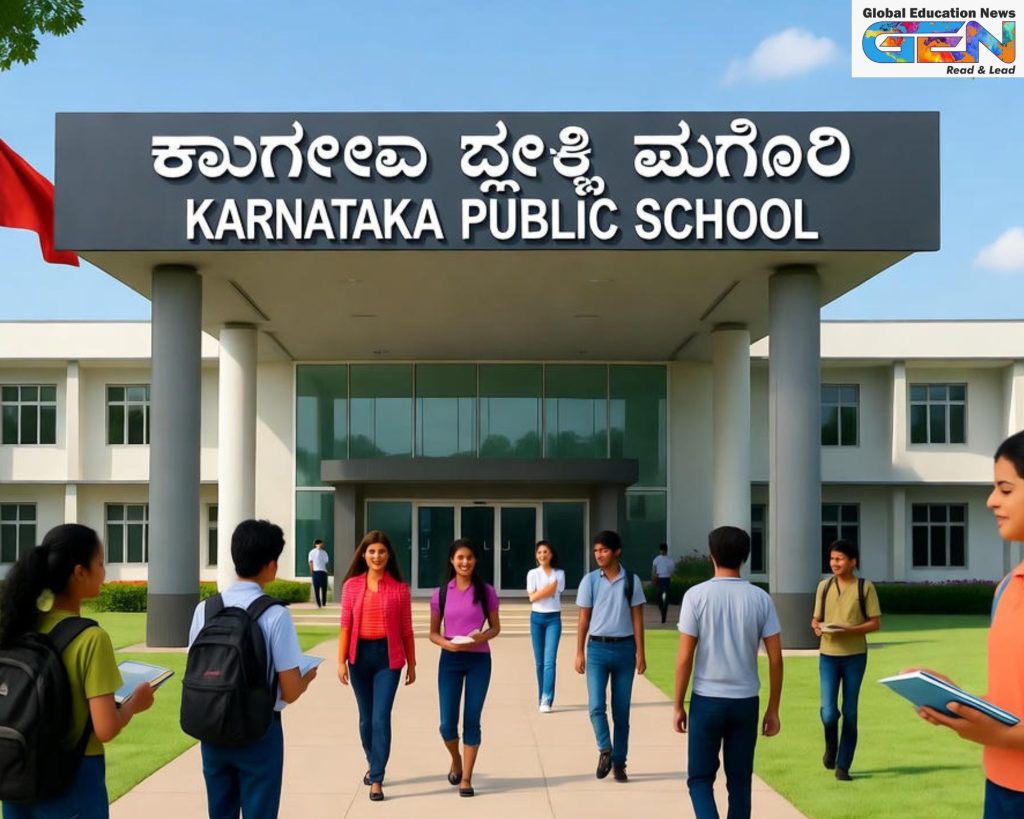
In a strategic move to elevate public education and bridge linguistic divides, the Karnataka government has announced the transformation of 800 existing schools into Karnataka Public Schools (KPS) starting from the 2026-27 academic year. This ambitious initiative, unveiled on January 7, 2026, aims to modernize infrastructure and introduce bilingual mediums—separate sections for Kannada and English from LKG to Class 12—enabling each KPS to accommodate at least 1,200 students. With an estimated Rs 3,200 crore investment, the plan underscores the state’s commitment to equitable access under NEP 2020, targeting urban-rural gaps where government school enrolment lags 20-25% behind private ones (per 2025 UDISE data). By floating a transparent Rs 18 crore tender for detailed project reports (DPRs), the Education Department is laying the groundwork for facilities like extra classrooms, science labs, and libraries. As Minister Madhu Bangarappa noted, “This will empower students with quality education in their mother tongue while opening English-medium doors.” This analysis unpacks the rollout, costs, benefits, and broader implications, revealing how KPS could redefine Karnataka’s 1.2 crore-student ecosystem.
The Announcement: A Bilingual Blueprint for Better Schools
The Karnataka Public Schools initiative emerges as a flagship under the state’s education roadmap, responding to demands for inclusive, high-quality public options amid rising private school fees (up 15% in 2025). The Education Department will select 800 schools based on enrolment potential and location diversity, prioritizing underserved districts like Kalaburagi and Raichur.
- Core Features:
- Bilingual Structure: Dedicated Kannada and English mediums from pre-primary to Class 12, fostering multilingual proficiency per NEP’s three-language formula.
- Capacity Expansion: Each KPS designed for 1,200 students, with phased upgrades to handle 20-30% enrolment growth.
- Tender Transparency: Rs 18 crore floated for agencies to prepare DPRs, ensuring compliance with national building codes and departmental norms.
Bangarappa emphasized: “KPS will provide world-class facilities, making government schools a preferred choice for parents.” The selection process begins immediately, with DPR submissions due within two months.
Implementation Roadmap: From Tender to Transformation
The rollout is phased and pragmatic, leveraging existing infrastructure while infusing fresh funds for sustainability.
- Phase 1 (2026-27): Tender award and DPR preparation for 400 schools; pilot upgrades in 100 high-potential sites.
- Phase 2 (2027-28): Construction and retrofitting for remaining 400; bilingual rollout with teacher training for 5,000 educators.
- Ongoing Support: Annual audits; integration with Samagra Shiksha for digital labs and sports facilities.
| Phase | Timeline | Key Activities | Budget Allocation |
|---|---|---|---|
| Preparation | Jan-Mar 2026 | Tender, DPRs | Rs 18 crore (tender) |
| Pilot Upgrades | Apr-Dec 2026 | 100 schools | Rs 800 crore |
| Full Rollout | 2027-28 | 700 schools | Rs 2,400 crore |
| Sustain & Scale | 2029+ | Maintenance, expansion | Rs 500 crore/year |
This blueprint ensures minimal disruption, with costs pegged at Rs 2-4 crore per school—covering classrooms, labs, libraries, and eco-friendly designs.
Objectives and Benefits: Equity, Employability, and Excellence
KPS isn’t expansion for expansion’s sake—it’s a targeted thrust to democratize quality education, addressing Karnataka’s 15% rural dropout rate and 30% urban-rural proficiency gap.
- Linguistic Equity: Bilingual mediums honor Kannada roots while equipping for global jobs—vital as 40% graduates seek English proficiency (2025 NASSCOM).
- Infrastructure Impetus: Modern labs and libraries boost STEM engagement, projected to lift Class 10 science scores by 10-15%.
- Enrolment Edge: Larger capacities and free facilities could reclaim 2-3 lakh students from private schools, saving families Rs 20,000-50,000 annually.
- Long-Term Lift: Aligns with NEP’s vocational integration, fostering 70% employability by 2030.
Bangarappa: “KPS will make government schools competitive, ensuring no child is left behind.”
Challenges: From Funding to Faculty
The road to 800 KPS isn’t pothole-free: Land acquisition in dense Bengaluru suburbs (20% delays expected) and teacher shortages (15% vacancies) loom. Budget overruns could hit Rs 500 crore if DPRs balloon costs. Mitigation: PPP models for labs and fast-track hires via KPSC.